2 Sep 2026, 21:10 GMTBy RFE/RL's Ukrainian Service
Russian officials alleged that a group of Ukrainian saboteurs crossed into western Russia and fired on civilians in villages in the Bryansk region. A group calling itself the Russian Volunteer Crops claimed responsibility. Kyiv suggested Moscow might be seeking a "false flag" pretext to stage new attacks on Ukraine.
2 Sep 2026, 21:10 GMTBy RFE/RL's Ukrainian Service
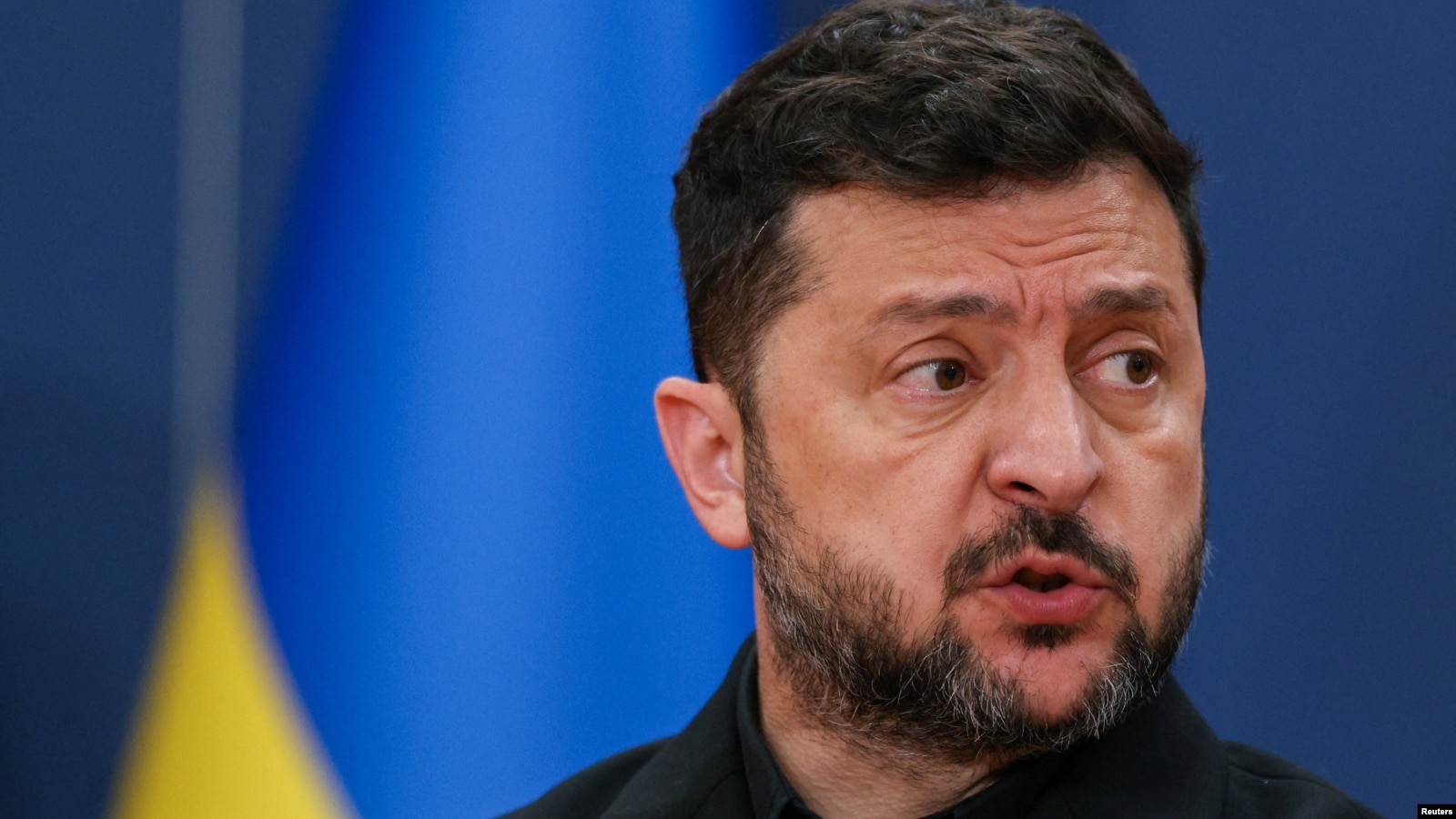
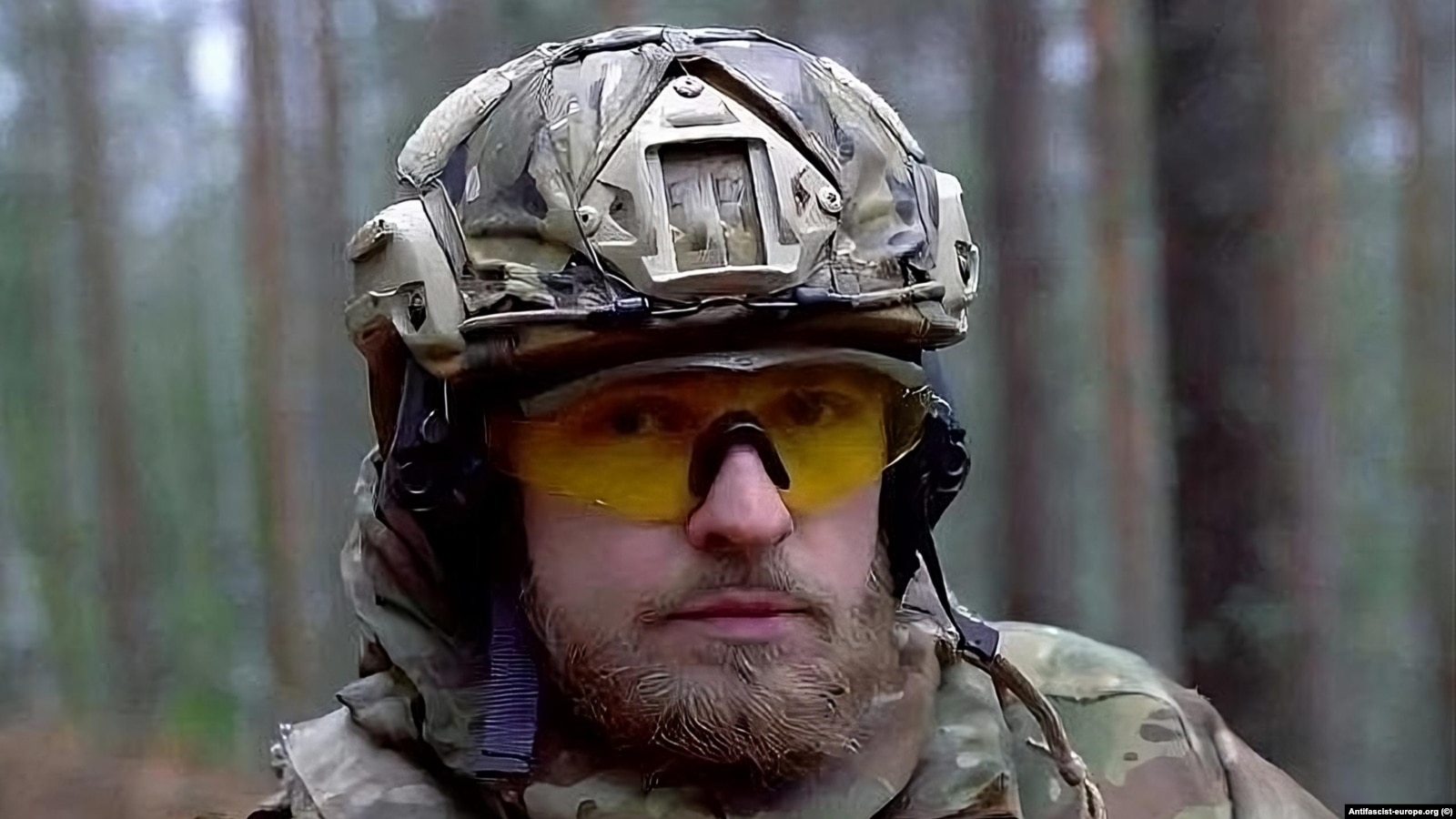
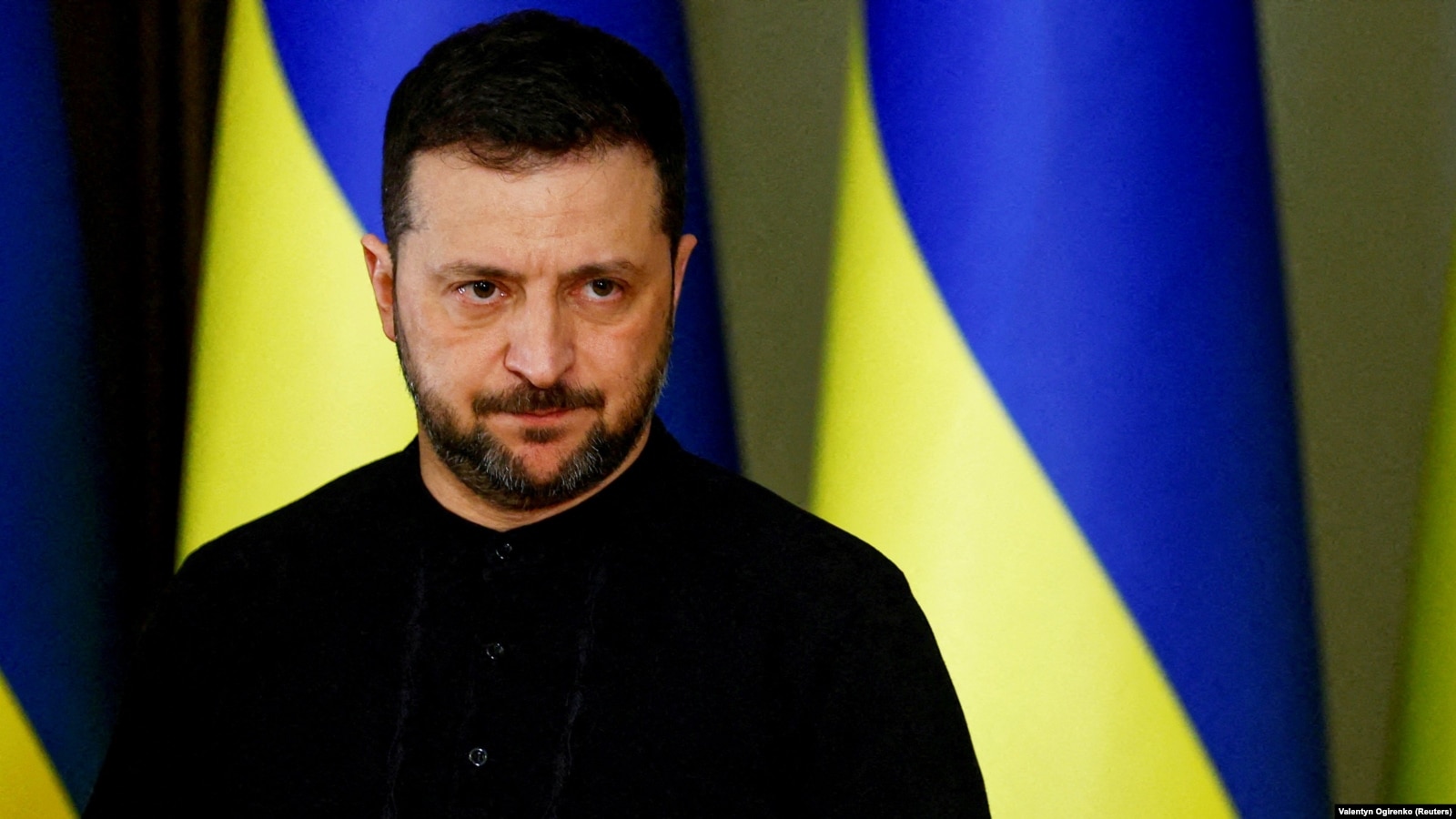
KYIV -- Ukrainian President Volodymyr Zelenskyy called for “accountability” and “personnel decisions” after a shootout in Kyiv involving the country’s major security services. In his daily evening video address, Zelenskyy said the incident took place between Ukraine’s Security Service, known as the SBU, and the country's military intelligence agency, the HUR, calling it “absolutely disgraceful.” “The only people anyone should be shooting at are the Russian occupiers, in defense of Ukraine,” he added. “No other exchange of gunfire will ever be treated by our state as something anyone is permitted to engage in.” Zelenskyy Warns Russia's Airspace 'Becoming Completely Dangerous' Gunfire woke residents in Kyiv’s Bereznyaky district early on September 2, with witnesses saying they saw wounded people and traces of blood at the scene of the incident . Shortly after the stand-off had ended, conflicting versions of what had happened emerged. The SBU issued two contradictory statements: first, saying that it was working alongside the HUR to avert a Russian “terrorist attack,” and then, saying that it had resisted a “group of individuals” who had tried to block a search effort. In a later comment to RFE/RL’s Ukrainian Service, a commander of HUR's “Tymur” special forces unit said that the SBU agents were “detaining HUR personnel and opening fire without warning” at them. The Russian Volunteer Corps The shootout appears to be connected to earlier reports concerning the arrest of Stepan Kaplunov, deputy commander of the Russian Volunteer Corps , a Ukrainian-backed paramilitary group affiliated with the HUR. A Murky Incursion: Who Are The Russian Volunteer Corps? Taras Borovskiy, Kaplunov's lawyer, told RFE/RL’s Ukrainian Service that his client was “abducted” on August 23, and that his whereabouts remained unknown until September 1. He added that the SBU had not responded to his requests for comment. From here the details of the story get even murkier. According to Borovskiy, overnight on September 2, the SBU brought Kaplunov to his apartment to conduct a search. But HUR representatives and his friends were already present there. The HUR commander said he reached an agreement with the SBU unit commander but “other SBU personnel” then opened fire. Separately, Denis Nikitin, the commander of the Russian Volunteer Corps, told RFE/RL that the SBU had not found anything compromising in Kaplunov's apartment. Later, Zelenskyy said prosecutors would investigate the incident.
BRUSSELS -- The recent incident at Leipzig Airport in which explosive-laden drones interrupted flights is the "new normal," European Commission President Ursula von der Leyen said on September 2, vowing more restrictive measures on Moscow. "Leipzig marks a new escalation on European soil, directly attributed to Russia," she said. "Every loophole Russia exploits is one we must close. We are looking at ways to cut even deeper into Russia's war chest." Von der Leyen was speaking alongside NATO Secretary General Mark Rutte a day after Germany officially blamed Russia for the August 4-5 drone incident and as the European Union and several member states summoned Moscow's ambassadors in protest. "Europeans are faced with a hard truth that this is the new normal," she said. Rutte said Russia had grown "increasingly reckless" with "more drones and missiles crossing into our airspace along our eastern flank, creating increased risk.". Ratcliffe's Moscow Warning: What We Know A Week Later, According To Ex-CIA Officers On September 1 German authorities said they would close the Russian Consulate in Bonn and terminate the lease on a Russian cultural center in Berlin as a result of the attempted drone attack. France, Belgium, Portugal, and the Netherlands announced on September 2 that they were summoning Russian ambassadors over the incident, and the European Union said it would summon Moscow's representative to Brussels. Europe Seeks A Response Alexander Astrov, a political analyst and associate professor at the Central European University in Vienna, told RFE/RL's Current Time that Europe faces the issue of responding to Russia's actions while remaining within international law. "How do you respond to what is now being called out as Russia's hybrid actions while remaining within the legal framework?" he asked, saying that the diplomatic steps taken so far are an attempt to do that. He added, though, that while "these attacks are part of the broader process of escalation of the war....all sides are interested in ensuring that this escalation remains a controlled one." European Commission President Ursula von der Leyen (right) and NATO Secretary General Mark Rutte hold a press conference in Brussels on September 2. Patriots For Ukraine? Von der Leyen also said that Ukraine had made a formal request for PAC-3 Patriot air defense systems following Russia's increasing attacks on Ukrainian cities and mounting civilian casualties. "Member states are currently looking at Ukraine's request, but I can say that it is going in the right direction," Von der Leyen noted. Several EU diplomats have told RFE/RL under condition of anonymity that Brussels is also currently pushing other allies such as Japan and South Korea to deliver air defenses to Kyiv ahead of the United Nations General Assembly in New York later this month. Separately, German Foreign Minister Johann Wadephul was briefing his EU counterparts at an informal gathering in Ireland on September 2 that is looking at levying further sanctions against Russia. Baltic States Arm For Russian Threat As Leaked Letter Shows Growing Fears With German media reporting that the alleged perpetrator of the Leipzig incident entered into the bloc using a Schengen tourist visa issued by Italy, EU foreign ministers also discussed an earlier proposal to curb their use . This something that Mediterranean countries heavily dependent on summer vacationers previously have opposed, with numbers of approvals of Schengen tourists visas for Russian nationals surging last year. Speaking after the meeting, the EU foreign policy chief Kaja Kallas, said there was “broad support” for the move but not unanimity. “Many member states have flagged this before that actually these kinds of tourist visas are used for the sabotage acts because these people need to get into the European Union so, if it is true, I hope that this also convinces certain member states who have been against moving on the visa restrictions,” she said. Ahead of the meeting, the EU foreign policy corps, the European External Action Service, sent out a proposal to EU capitals to impose visa bans and asset freezes on 1,600 Russian individuals and companies largely involved in the country's defense sector with a view to adopt the measures next month. The EU is also expected next week to prolong its current blacklist of 3,000 people and entities that the bloc has imposed sanctions on since Russia's full-scale invasion of Ukraine in 2022. Most EU member states want an extension by 12 months as opposed to the regular six months but Slovakia, whose government is considered Moscow-friendly, is still pushing for a six-month rollover and for some Russian oligarchs to be removed from the list.
Ukrainian President Volodymyr Zelenskyy warned airlines using Russian airspace about the threat posed by Ukrainian drones, saying the skies above Russia are no longer safe amid Moscow's continued escalation. "Today, we want to warn every airline that uses Russian airspace, every insurer, everyone who still uses key Russian airports: The Russian sky is becoming completely dangerous," Zelenskyy said in his daily evening video address on September 1. "Drone-infested skies are no place for civilian aviation," he said, providing no additional details on the scale of drone activity that should be expected in Russian airspace or when the threat would intensify. Zelenskyy's comment came as Kyiv has stepped up long-range strikes inside Russia, targeting military sites, oil and gas facilities, and retail logistics centers in an effort to push the Kremlin toward peace negotiations. Ukraine's Refinery Attacks Force Russia To Turn Abroad To Process Its Oil The Ukrainian president stressed that Kyiv was not threatening any civilian aircraft but said "there will simply be drones in Russia's skies on a scale that has to be taken into account." Asked about Zelenskyy's claim at a news conference in Kyrgyzstan, Russian President Vladimir Putin said Moscow would respond in case of any incidents, adding that such statements amount to "state terrorism." Commercial flights do not operate in or cross Ukraine during the full-scale war that Putin launched against Russia's neighbor in February 2022. In July 2014, early in the war pitting Kyiv's forces against Russian and Russian-backed forces in Ukraine's eastern Donbas region, a Russian missile shot down a Malaysia Airlines jet flying from Amsterdam to Kuala Lumpur, killing all 298 passengers and crew aboard. Earlier on September 1, Russian forces pounded regions across Ukraine as children across the country headed to school for their first day of classes. One of the strikes left at least four people dead and 13 others injured in the city of Boryspil in the Kyiv region, when a Russian missile struck near a residential building. Russian Strikes Pound Kyiv Region As Ukrainian Children Head Back To School “There is nothing left,” Natalya, a resident of Boryspil in the Kyiv region, told RFE/RL's Ukrainian Service as she surveyed what remained of her sister’s apartment in a building damaged by a Russian missile strike following a deadly attack on September 1. The strike took the lives of at least four people and injured at least 13 others, including Natalya's sister, her sister's husband, and their child. "My sister’s husband is being operated on right now," she said standing near the crater left from the strike. "[My sister's] child was admitted to intensive care." A total of 48 people were evacuated from the building following the attack. Natalya said she could barely recognize her sister's place, adding that the wall separating it from the neighboring apartment was gone. "There wasn’t even any wallpaper left. You can’t even tell where you are anymore," she said. "The ceiling, the walls -- everything has been blown out." As RFE/RL captured images of the aftermath in Boryspil, the personal belongings of local residents were scattered across the scene, including a child’s toy. Following the attack, Kyiv Regional Governor Tymur Tkachenko said Russian forces were “again purposely striking" civilian sites and residential buildings. Some local residents stare at what had been a familiar part of their neighborhood before the strike. Tkachenko added that cars, private houses, and a car-repair shop were also damaged in the Russian attack on Boryspil. Other people, like Natalya, were seen trying salvage anything they could from the badly damaged five-story building. “I was climbing around there, trying to find at least something -- some documents, some basic things that might have survived,” she said. In another attack, a Russian drone directly hit a high-rise residential building in the city of Kyiv. The incidents came as thousands of Ukrainian children were preparing to start their first day of classes in the new school year on September 1. "This is nothing but Russian terror against civilians," Zelenskyy said of the latest Russian attacks. He added that "this escalation cannot and will not remain confined to Ukrainian territory." "It is entirely natural and just that its consequences will also extend to Russia -- including Russian airspace, which already is, and will increasingly become, a space for our drones and our missiles that are actively and justly responding to Russia's war."
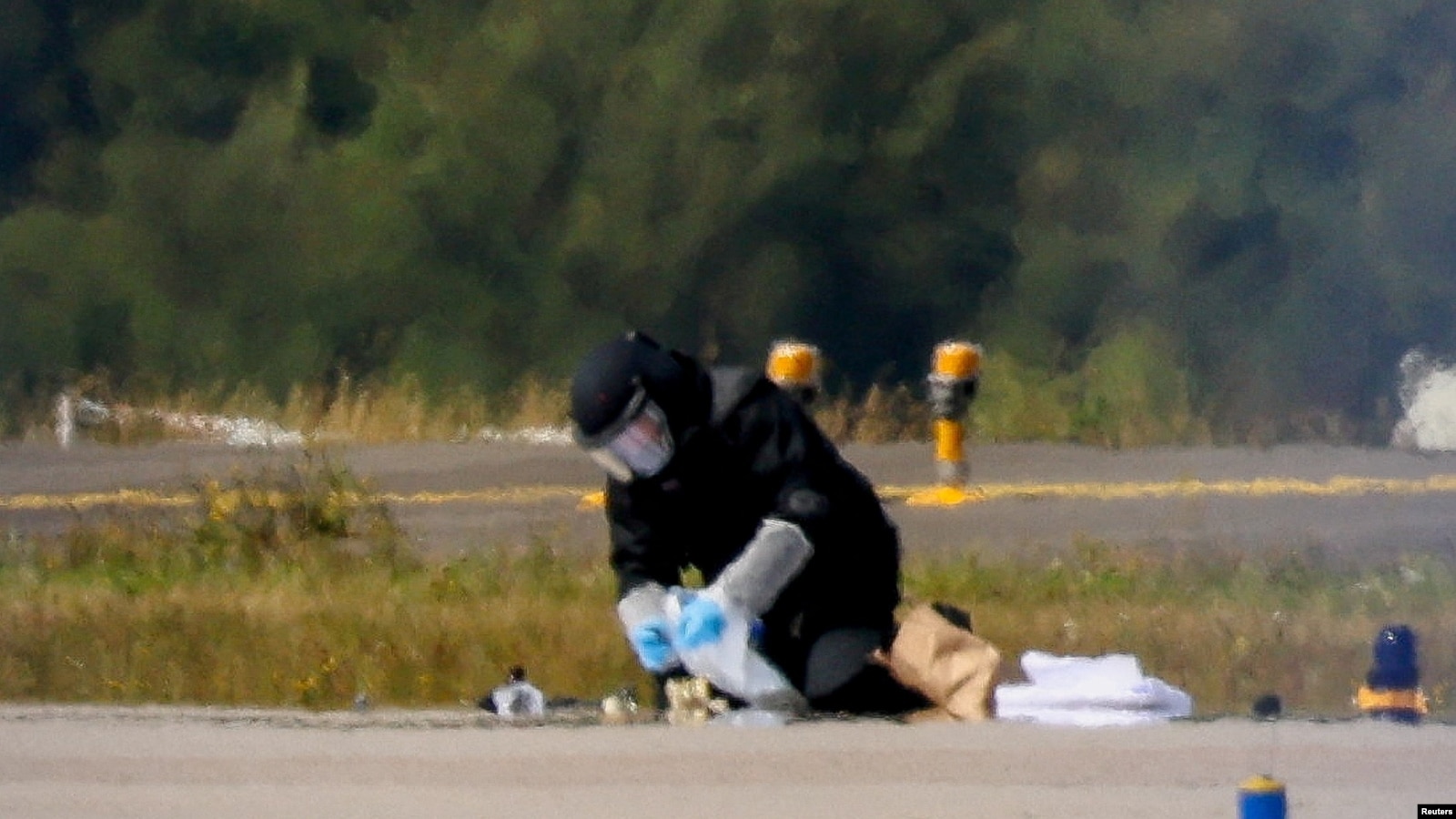
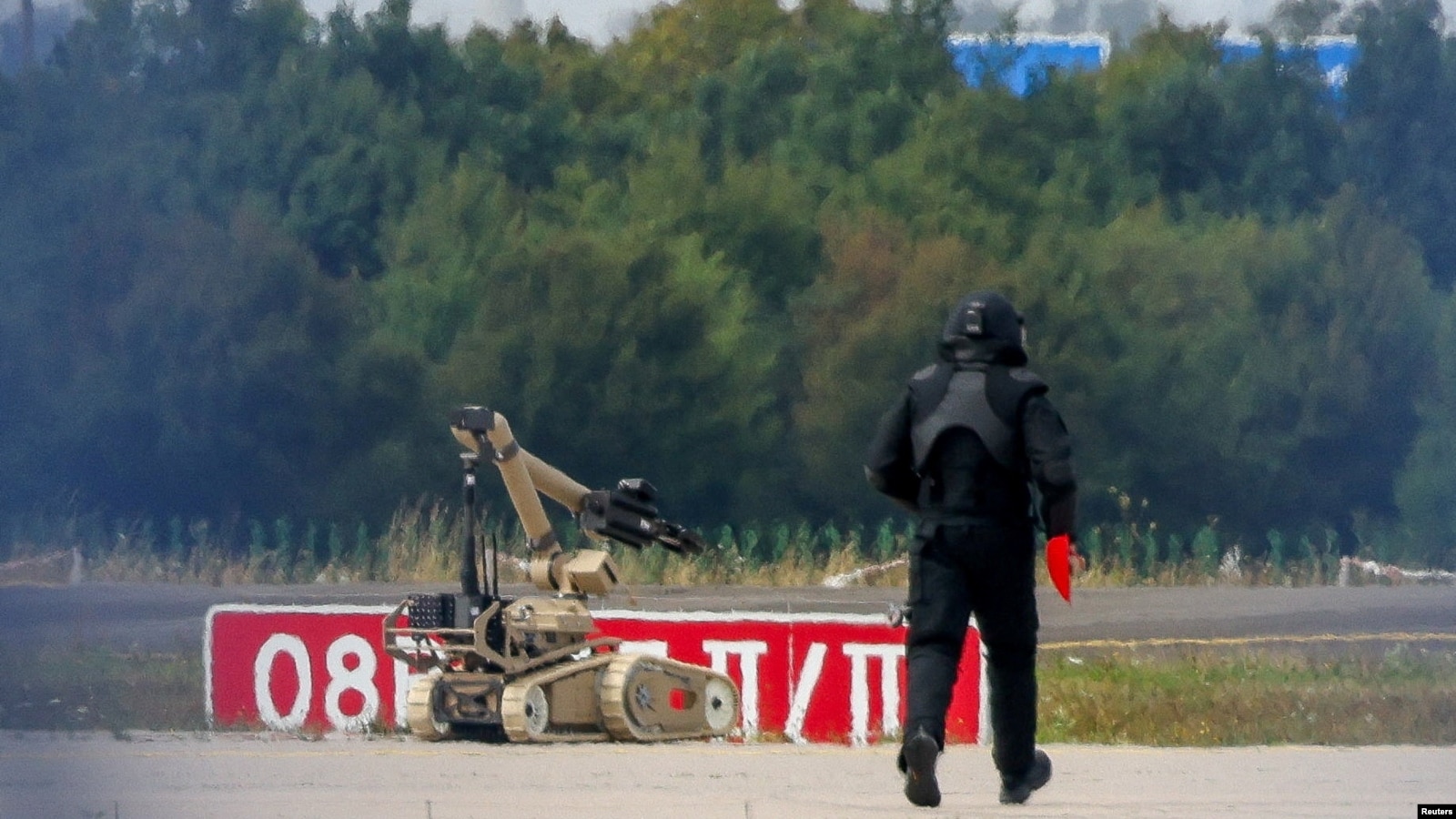
Germany has accused Russia of carrying out what the country's top police official called a “hybrid attack” involving an explosive-laden drone that disrupted flights at Leipzig airport in early August, saying it was part of a long-term campaign of destabilization operations against Europe. German authorities said they would close the Russian Consulate in Bonn and terminate the lease on a Russian cultural center in Berlin as a result of the attempted drone attack at the Leipzig/Halle Airport. The September 1 statement by German government officials came as authorities responded to what they called a sabotage attack involving a double-digit number of homemade incendiary devices found at a substation near a coal-fired power plant about 100 kilometers southeast of Berlin. No country or group has yet been blamed for that incident, in which officials said at least one of the makeshift devices detonated. Brandenburg state Interior Minister Jan Redmann did not rule out the possibility that a foreign power or left-wing activists were behind the attack. In the Leipzig incident, a drone carrying explosives was found near a Ukrainian cargo aircraft at the airport in eastern Germany on August 4. Germany Probes 'Hybrid Attack' After Explosive Drone Found Near Ukrainian Aircraft "Taken together, police investigations, patterns of the offences, and intelligence findings establish Russian responsibility for the attempted attack at Leipzig airport," German Interior Minister Alexander Dobrindt said. "We do not view the Leipzig incident in isolation, but rather see it in the context of other hybrid actions," he said. "We assume that Germany is the target of further hybrid attacks by Russia." "It fits into a broader pattern of Russian hybrid operations in Europe," Foreign Minister Johann Wadephul said, standing next to Dobrindt. He said that the Russian Consulate in Bonn would be closed later this month and that the lease for the “Russia House” cultural center in Berlin would be canceled. "We are tightening entry controls for Russian nationals," Wadephul said, adding that Germany would propose adding more Russian individuals to lists of those hit with EU sanctions. Russia’s ambassador to Germany, Sergei Nechayev, was seen entering the Foreign Ministry in Berlin around the time of the announcements. The Russian Embassy later said he dismissed the accusation of Russian involvement in the Leipzig incident as "unsubstantiated, absurd, and contrary to common sense." Kremlin spokesman Dmitry Peskov suggested that German officials had not provided evidence and said, "It is obvious that Germany is proceeding down a path of further escalation." Russian Foreign Ministry spokeswoman Maria Zakharova asserted that Germany had "invented a pretext" for shutting the Russia House and said "Moscow will give a response to all anti-Russian decisions." Ratcliffe's Moscow Warning: What We Know A Week Later, According To Ex-CIA Officers The accusation came amid persistent concern over Russian hybrid operations and the possibility that President Vladimir Putin could seek to test NATO resolve with more traditional attacks, potentially against Baltic alliance members. At least one purpose of CIA chief John Ratcliffe's visit to Moscow for meetings with intelligence officials on August 25 was to warn Russia against attacking NATO countries, sources familiar with the visit told RFE/RL and other media on condition of anonymity. NATO and the European Union quickly voiced support for Germany and said Russia’s actions would not cow them into decreasing support for Ukraine, which is defending itself against a full-scale Russian invasion now in its fifth year. NATO Secretary-General Mark Rutte pledged “full solidarity” and said the alliance would “continue to strengthen our ability to deter and defend all Allies against any threat -- including malign actions like those seen in Leipzig and elsewhere.” “Russia’s attempts to intimidate us, to undermine our unity and our willingness to support Ukraine are futile and will fail,” Rutte said on X. “Our support to Ukraine is unwavering, as is our ironclad commitment to NATO’s collective defense.” Also on X, European Commission President Ursula von der Leyen said the EU stands in “full solidarity” with Germany, and asserted that “hybrid attacks will not go without a clear response.” “Russia is seeking to sow distrust and fear among our societies. But it will fail. And we will stand by Ukraine for as long as it takes,” von der Leyen said. She said “additional sanctions” against Moscow would be prepared by EU foreign ministers at a meeting in Ireland on September 1-2. EU Foreign Ministers Meet In Ireland To Address Ukraine's Funding Shortfall For 2027 The EU has already prepared new sanctions on up to 1,600 Russian individuals and entities -- largely in the Russian defense sector -- with the suggestion that EU member states unanimously approve these blacklistings in October. On September 2, EU ambassadors are also due to sanction 10 Russian people and 17 entities involved in the abduction of Ukrainian children and decide to extend the asset freezes and visa bans the bloc has imposed on over 3,000 individuals or entities since the start of Russia’s full-scale invasion of Ukraine in February 2022. The attempted drone attack increased concerns after months of suspicious drone sightings over military and industrial sites in Germany. Police used a robot to defuse the device near a Ukrainian cargo plane. The German military and NATO allies transport military goods via the airport, which also serves as a base for Ukraine's Antonov Airlines. With reporting by RFE/RL Europe Editor Rikard Jozwiak in Brussels, AFP, and Reuters
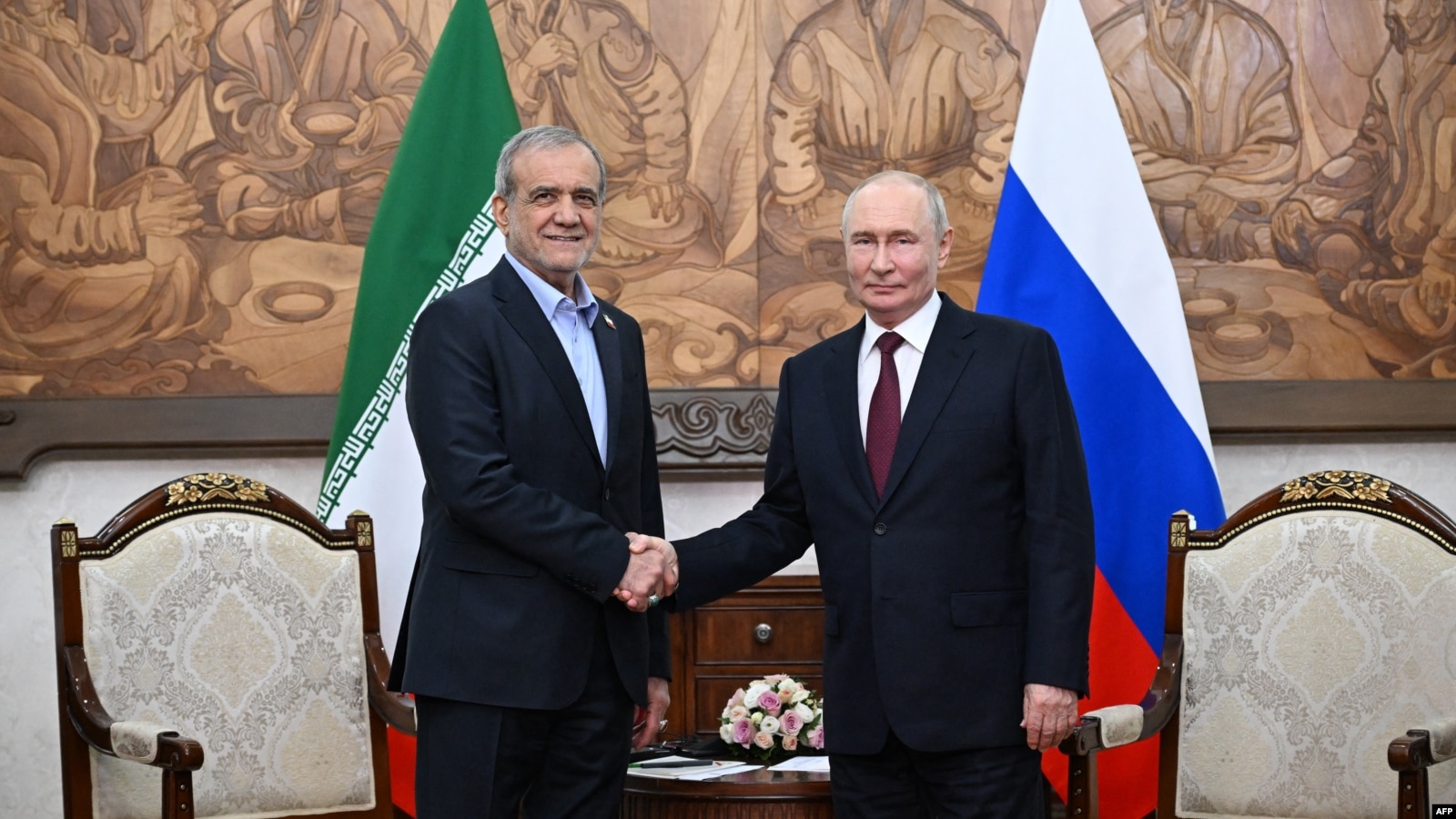
Iranian President Masud Pezeshkian thanked Russian President Vladimir Putin for Moscow’s position on the war in the Middle East, in their first meeting since the conflict broke out in February. Russia has supplied Iran with satellite images and other intelligence, helping Tehran target US facilities in the Persian Gulf in recent months, according to reports. The two allies have also expanded military and economic ties in recent years. “We appreciate and thank you for your positions at every stage, both during the period when the fighting and acts of aggression were taking place and under normal circumstances, when the United States was imposing sanctions on us, both at the United Nations and in international forums,” Pezeshkian told Putin at a meeting on the sidelines of the Shanghai Cooperation Organization (SCO) summit in Kyrgyzstan on September 1. Pezeshkian described Iran’s relationship with Russia as “strategic” and said Tehran and Moscow can work together to resist what he called US “unilateralism.” The meeting came after a new flareup in the six-month war. The United States said it attacked Iranian rocket launchers on a small island in the Strait of Hormuz on August 30, prompting Tehran to retaliate by hitting US military targets in Jordan. Tehran and Washington signed a memorandum of understanding in June aimed at ending the war, but the deal soon unraveled. Since then, Washington has reimposed a naval blockade on Iran and intensified economic pressure on Tehran. Iran has maintained its chokehold on the Strait of Hormuz, a key artery for global oil and gas supplies, and effectively closed the waterway to international maritime traffic. At the SCO summit, Pezeshkian said Tehran remained ready for diplomacy, but only if Washington returned to its obligations under the June agreement. “If the United States returns to its commitments under the aforementioned memorandum of understanding, the Islamic Republic of Iran will immediately reciprocate,” Pezeshkian said. Putin, meanwhile, said Moscow stood in solidarity with the Iranian people in the fight for their interests. The Russian president also said that Moscow and Tehran will maintain their economic and trade ties despite the current military and political environment. “We welcomed the signing of the Iranian-American cease-fire memorandum in June of this year, but unfortunately, the cease-fire proved unstable and too fragile,” Putin said. “In this difficult period, we're trying to provide you with the necessary support, we talked with you about this, we're supplying you with goods that you need.” The Russian delegation in the Kyrgyz capital, Bishkek, included Foreign Minister Sergei Lavrov, Deputy Prime Minister Aleksei Overchuk, and senior officials responsible for energy, transport, economic development, military-technical cooperation, and nuclear energy. Putin has held a series of bilateral talks in Bishkek, including with Chinese leader Xi Jinping, Indian Prime Minister Narendra Modi, and Kazakh President Qasym-Dzhomart Toqaev. He also has meetings scheduled with the leaders of other countries, including Tajikistan, Turkey, Armenia, and Kyrgyzstan on September 1.
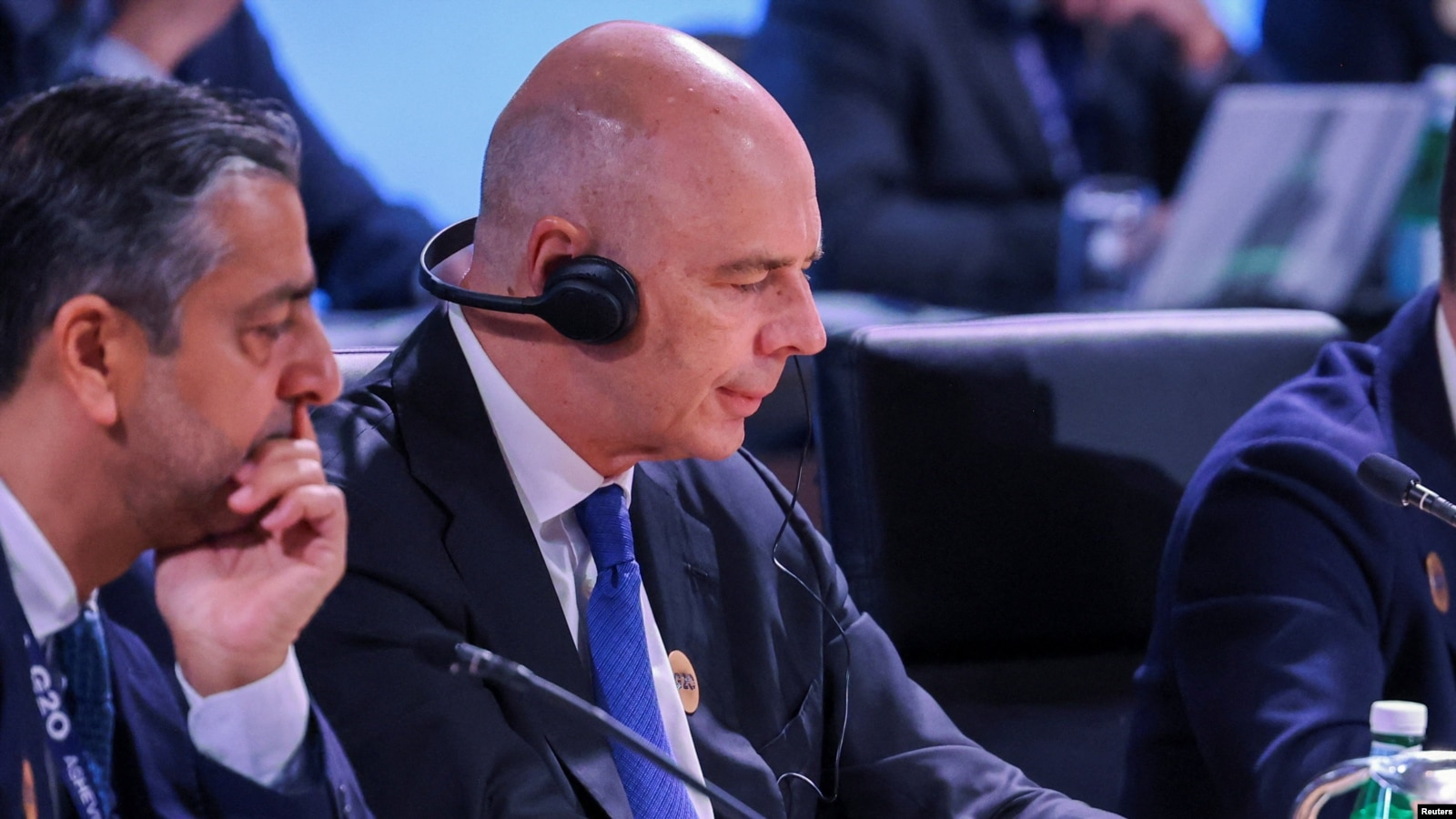
WASHINGTON -- Ukraine's top sanctions official has arrived in Washington seeking to keep alive a sweeping sanctions bill that cleared the Senate with overwhelming bipartisan support but now faces a tougher test in the House of Representatives. Vladyslav Vlasiuk, Ukrainian President Volodymyr Zelenskyy's sanctions commissioner, is scheduled to meet lawmakers as Kyiv presses Congress to advance the Lindsey O. Graham Sanctioning Russia and Iran Act of 2026. The legislation passed the Senate on August 7 by an 86-11 vote, reflecting rare bipartisan agreement. Vladyslav Vlasiuk visits the RFE/RL office in Washington on April 15. But the bill has yet to receive a vote in the House, where Democrats have raised concerns about provisions that would give President Donald Trump authority to impose tariffs of up to 100 percent on countries that buy Russian oil and gas or help Moscow evade sanctions. Democratic Leader Hakeem Jeffries of New York said on August 31 that his caucus had not taken a position on the bill. Democrats are concerned the legislation could give Trump additional tariff and sanctions powers that his administration could use too broadly. From Senate Landslide To House Uncertainty The legislation is the product of more than a year of negotiations involving Congress, the White House, and Ukrainian officials. It was championed by the late Republican Senator Lindsey Graham of South Carolina, who reached an agreement with the Trump administration before his death in July. A bipartisan group of senators subsequently carried the measure forward. Far From The Battlefield, Hawaii Pushes Trump On Weapons For Ukraine The Senate version would impose sanctions on Russian officials, oligarchs, and their family members, as well as financial institutions and foreign entities supporting Moscow's war effort. It also targets Russia's so-called shadow fleet, vessels used to transport oil and circumvent Western restrictions. The package extends the Iran Sanctions Act and includes measures targeting Iran's energy and weapons sectors. The White House has backed the legislation, portraying it as another tool Trump could use to increase pressure on Moscow and push Russia toward negotiations. The most contentious provision involves tariffs. Earlier versions of the bill contemplated tariffs as high as 500 percent. The Senate-passed version lowered the maximum to 100 percent and narrowed the measure to major purchasers of Russian oil or gas and countries involved in sanctions evasion. China and India could face some of the greatest exposure because of their purchases of Russian energy. Supporters argue that the provision is intended to give the White House leverage over countries that continue buying Russian energy rather than automatically trigger a sweeping trade war. Critics question how much discretion it would give Trump over when tariffs are imposed or lifted. US House Launches Push For Sweeping Russia, Iran Sanctions Bill After Senate Win Republican Representative Don Bacon of Nebraska is among those urging the House to act despite the disagreements. "The Russian Sanctions bill passed 86-11. The House should vote on this ASAP," Bacon said on August 31. "Some are letting perfection be the enemy of good in the House. Congress must take clear action in support of Ukraine and in opposition to Putin, and do it now." Senator Jeanne Shaheen of New Hampshire, a Democratic supporter of tougher measures against Moscow, called for congressional action on August 31 while criticizing the Trump administration's treatment of a senior Russian official. "As Russia kills civilians in Ukraine, the White House hosts Putin's sanctioned finance minister on US soil," Shaheen said, referring to Russian Finance Minister Anton Siluanov's attendance at a G20 meeting in North Carolina on August 31. "The Trump Admin needs to pressure Putin and his cronies, not offer them a platform. With the House back in DC, it's time to pass Russia sanctions." Ukraine Makes Its Case Vlasiuk's visit comes as Ukraine seeks to keep lawmakers focused on Russia's ability to finance and sustain its war. Kyiv has long argued that Russia's war effort depends heavily on revenue from energy exports and on networks of companies, financial institutions, and intermediaries that help Moscow circumvent sanctions. Ukrainian officials have increasingly urged Western governments to target those networks rather than simply add individual Russian officials to sanctions lists. Russia's Jet-Powered Drones: A Major New Threat To Ukraine Amid Speeding Arms Race Vlasiuk has also worked with European governments to coordinate sanctions against Russian weapons manufacturers and foreign suppliers supporting Russia's defense industry. In August, he told RFE/RL that the Senate vote sent "a strong signal from the American people" that Russia must face a higher price for its aggression and that support for Ukraine remains strong. "We now look forward to the bill's passage by the House and its final approval by Congress," Vlasiuk said. Zelenskyy's Role During his July visit to Washington, Zelenskyy met with senators and urged them to advance the sanctions package after months of congressional uncertainty. His intervention helped produce the 86-11 vote and demonstrated that support for additional pressure on Moscow could still cross party lines. Senator Richard Blumenthal, one of the legislation's Democratic supporters, has argued that the measure could increase the economic cost of Russia's war and strengthen Washington's leverage in negotiations. The Senate rejected an amendment that would have removed the provision concerning duties on countries purchasing Russian-origin crude oil or natural gas or facilitating sanctions evasion. The amendment failed 32-64 before the final bill passed 86-11. 'Shanghai' Grouping At 25: Rifts, Rivalries, And A Show Of Unity That vote underscored the importance supporters place on the tariff mechanism as a way to make the sanctions more effective. Blumenthal has said he offered to have Zelenskyy return to Washington to personally address House members, as he did with senators. As of August 31, however, it was unclear whether such a visit could take place in the coming weeks. The Politics Of Delay The immediate question is whether House leaders can preserve enough of the Senate coalition to bring the bill to the floor. Speaker Mike Johnson has not committed to a vote, and the legislation is competing for attention with funding measures and other priorities as lawmakers return from their summer recess. The House's narrow Republican majority makes bipartisan negotiations especially important. For Ukraine, delay carries risks. Kyiv wants the focus to remain on Russia's war economy: its oil revenue, sanctions-evasion networks, and ability to sustain weapons production. The Senate vote gave Kyiv evidence that bipartisan support for tougher Russia sanctions remains strong. But a prolonged House fight could turn that consensus into a broader argument over Trump's trade powers.
Ukrainian President Volodymyr Zelenskyy said he was briefed by US President Donald Trump's special envoys following their latest trip to Moscow and said the two Americans were working on plans for a follow-up visit to Kyiv in the near future. Meanwhile, while Russian President Vladimir Putin was in Bishkek to attend a regional summit, Finance Minister Anton Siluanov made a surprise visit to a G20 finance meeting in North Carolina, with some participants expressing anger over the appearance of the country's representative while it is at war with Ukraine. While the Ukraine battlefield remained relatively calm throughout the day, diplomatic activity took the spotlight on August 31. 'Shanghai' Grouping At 25: Rifts, Rivalries, And A Show Of Unity Trump has confirmed he will send envoys Steve Witkoff and Jared Kushner to Kyiv in the coming weeks in what will mark their first visit to Ukraine since taking leading roles in the administration's efforts to end Russia's full-scale invasion. Witkoff and Kushner have traveled to Moscow and met with Russian representatives in the US multiple times during Trump's second term, fueling some criticism that the administration has shown favoritism toward Putin and the Kremlin. "We will see what the US president's envoys can accomplish," Zelenskyy wrote on Telegram after holding a "detailed and constructive" call with the two. "September can change a lot, and together with our partners, we must do everything possible to protect people, protect lives, and achieve peace." "There needs to be the right mindset in Moscow -- from Putin, a mindset to end the war, not to keep fighting. For now, unfortunately, all the intel -- both ours and our partners' -- and all the signals from Russia indicate that the Russian leader personally wants more war," Zelenskyy wrote. Not 'Normal' Meanwhile, in Asheville, North Carolina, Russia's Siluanov attended his first G20 gathering since Moscow's full-scale invasion of Ukraine in February 2022 and the country's exclusion from such gatherings. Trump has spoken often about returning Russia to international groupings, such as the Group of 7 (G7) industrialized nations in the face of vehement opposition from most other member states. US officials host G20 finance ministers and central bank governors in North Carolina on August 31. The G20 comprises 19 countries and the European Union, and accounts for around 85 percent of the world's economy and two-thirds of its population. German Finance Minister Lars Klingbeil said the situation with Russia was not "normal" and expressed frustration that there was no forewarning of Siluanov's participation. "People are dying every day. We have just seen another escalation in the [Russian] attacks," Klingbeil said. "You cannot simply return to normality." “I find the signal sent by receiving the Russian finance minister here quite troubling," Klingbeil told reporters in Asheville. "I would have wanted greater clarity from the American side that he should not be received here as a normal guest." Officials from European countries told Reuters that European ministers and central bankers opposed appearing in the normal "family photo" of participants. It was then decided to take the photograph without Siluanov's involvement. At a meeting of G20 finance ministers in 2022 that Siluanov attended remotely, the United States under then-President Joe Biden led a multinational group in a walkout as Russian officials spoke. Asked about Siluanov's attendance this time, White House spokesman Kush Desai told AFP that the US administration has been working with Moscow to push for a deal that "would stop the endless bloodshed that the president has really condemned." Trump Dismisses Fears Of Russian Strike On NATO: 'I Am Not Concerned' "The president and the administration will never shy away from talking with the folks we need to talk to, to further that," he said. "That's what we're working on here at the G20." Russia’s Finance Ministry said Siluanov and US Treasury Secretary Scott Bessent held bilateral talks to discuss Russia-US cooperation on financial issues and interaction within the framework of the G20. A US official told AFP that the Treasury chief advocated for Trump's peace plan for Ukraine during the face-to-face meeting. With reporting by AFP and Reuters
A Finnish court has convicted a Russian former far-right militia member of committing war crimes against Ukrainian prisoners of war in the Donbas region in 2014. The Helsinki court sentenced Voislav Torden, also known as Yan Petrovsky, to life in the unusual case.
A Finnish appeals court has overturned portions of a guilty verdict against a Russian-born man convicted of war crimes in Ukraine, reducing his life sentence to 12 1/2 years behind bars. Voislav Torden, a 39-year-old Russian ultranationalist previously known as Yan Petrovsky, was convicted in Helsinki in March 2025 after being linked to the deaths in 2014 of 22 Ukrainian soldiers and the injury of four others. The appeals court on August 31 overturned Torden's convictions for shooting a wounded Ukrainian soldier and for mutilation, leading to the lower sentence. Helsinki Court Convicts Russian Of War Crimes In Ukraine During 2014 The court did reaffirm his guilt for an ambush in which attackers used a Ukrainian flag to deceive Ukrainian troops before opening fire. "The Court of Appeal finds that Torden is, in count one, liable for the deaths of the 22 Ukrainian soldiers referred to in the indictment and for severely wounding four soldiers," the verdict read. Torden's lawyer, Heikki Lampela, told Reuters that Torden denied all charges and intends to appeal the guilty verdict on the first count to Finland's Supreme Court. Torden was detained in Finland at Ukraine's request in 2023 as he tried to travel to France. The Finnish Supreme Court later blocked his extradition to Ukraine, citing concerns over conditions in Ukrainian prisons and the potential for Torden to face humiliation in custody. Torden, a former commander of the Rusich sabotage group, was fighting against Ukrainian forces in Ukraine's eastern Donetsk and Luhansk regions in 2014, years before Russia's full-scale invasion of February 2022. With reporting by Reuters
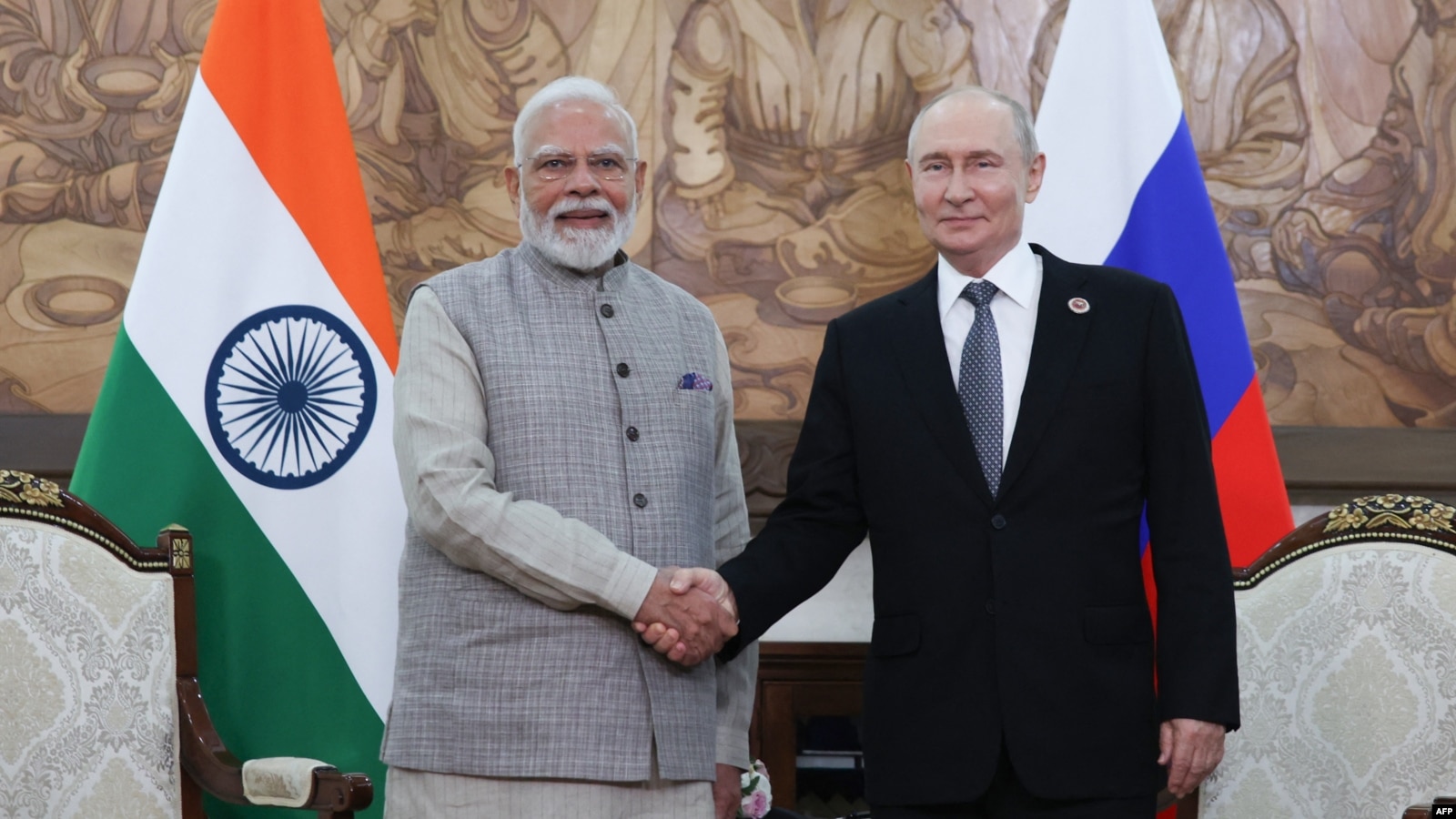
Facing increasing confrontations with the West, Russian President Vladimir Putin is looking eastward to restore his country's standing in the region at a major summit in Bishkek, the Kyrgyz capital. It comes at a time of increased difficulties for the Kremlin leader, with Russia's economy in tatters due to Western sanctions and Ukrainian drone strikes, ally Iran battered in war, and the leaders of former client states such as Syria and Venezuela ousted amid a muted Moscow response. Putin is set to hold bilateral meetings with at least nine world leaders, including Iranian President Masud Pezeshkian, starting on August 31 on the sidelines of the two-day Shanghai Cooperation Organization (SCO), which is celebrating its 25th anniversary. Aggressive Recruiters Are Rounding Up Russians To Fight In Ukraine. In One Town, They're Pushing Back On the first day, the Russian leader met with Chinese President Xi Jinping and Indian Prime Minister Narendra Modi. Kremlin spokesman Dmitry Peskov said Putin and Xi focused on bilateral issues and only discussed the war in Ukraine "marginally...essentially there was no discussion." Western nations have called on China to use its influence to pressure the Kremlin into ending its war on Ukraine. Russia's Interfax news agency reported Modi told Putin that India supported "every peace effort" to end the war in Ukraine, without providing further details. Putin is also expected to hold bilateral sessions with leaders of non-SCO nations, including Turkish President Recep Tayyip Erdogan and Armenian Prime Minister Nikol Pashinian, who has angered the Kremlin by seeking closer ties to the West for his small Caucasus nation. United Front Putin and Xi have often used SCO gatherings to put up a united front against Western influence in the region. Xi arrived late on August 30 and held his first meeting with Kyrgyz President Sadyr Japarov, who will serve as host of the summit. Along with Russia, Iran, India, and China, the SCO grouping consists of Belarus, Kazakhstan, Kyrgyzstan, Pakistan, Uzbekistan, and Tajikistan. Not all members are allies, of course, with nuclear powers Pakistan and India often on the brink of war with each other. Russian President Vladimir Putin and Indian Prime Minister Narendra Modi greet each other on the sidelines of the Shanghai Cooperation Organization summit in Bishkek on August 31. The organization began as the "Shanghai Five" in 1996 but began expanding to other regional nations starting in 2001. Moscow and Tehran are both under crippling Western sanctions -- Russia for its full-scale invasion of Ukraine in February 2022 and Iran for a multitude of issues, including its support for extremist activity in the Middle East and its alleged pursuit of a nuclear weapon. Kyiv and the West have demanded Iran cease from providing deadly Shahed drones to Russia for use in the Ukraine war, while US officials told RFE/RL that Russia is providing Iran with targeting information to attack US troops and military assets in the Middle East, confirming a Washington Post report . 'Key Subjects' Kremlin aide Yury Ushakov said "one of the key subjects" in the talks between Putin and Pezeshkian will be the Middle East crisis. "You know how relevant this meeting is in light of the current uneasy atmosphere in the Middle East and the situation surrounding Iran," he added. Also on the agenda will be the $25 billion agreement signed by Tehran with Russia's state nuclear company Rosatom to build four nuclear power plants in Iran. Leaders of SCO nations attend the 2025 summit in the Chinese city of Tianjin. Naser al-Tamimi, a UK-based analyst and founder of MidEast Strategia, wrote on X that the SCO can help largely isolated Iran, "but only to a point." "The SCO offers Iran broader political cover, helps reduce its international isolation, and expands opportunities for trade and settlements in yuan, rubles, and other national currencies. In doing so, it can modestly reduce Tehran's dependence on the Western financial system." "But the SCO is not an economic shield against US sanctions. It lacks a fully developed alternative financial architecture, provides no reliable protection for major banks and companies exposed to secondary sanctions, and cannot compel China or India to absorb high economic costs on Iran’s behalf." Potentially Tense Armenian Meeting Along with Turkey, other nonmember nations and others participating and observing will include Armenia, Azerbaijan, UN chief Antonio Guterres, and heads of several Moscow-oriented international organizations. Putin is scheduled to meet Armenian Prime Minister Nikol Pashinian, whose country has long been an ally of Russia but which has angered Moscow by seeking to move closer to the West. Mobilization Migration: Is There An Uptick In Russians Fleeing Amid Fears Of A New Draft? Tensions heightened between the two countries after Armenian police on August 25 arrested former President Robert Kocharian, now leader of the country's second-largest opposition party, amid accusations of corruption-related offenses. Kocharian, 71, served as Armenia's president between 1998 and 2008. He currently leads the Armenia Alliance, which is considered pro-Moscow and finished third in recent parliamentary elections in June. Yerevan has also angered Moscow by expressing its ambition to eventually join the European Union. Former Armenian President Arrested On Corruption Charges "We will insist that Armenia cannot aspire for EU membership while hugely benefiting from cooperation within the European Economic Union (EEU)," said Ushakov, referring to the five-member trade bloc that also includes Belarus, Kazakhstan, and Kyrgyzstan. Following the Bishkek event, Putin is scheduled to travel to Vladivostok for the Eastern Economic Forum on Russia's Pacific coast from September 1-4. He is also set to meet with leaders of several other countries there, including the Indonesian president and Mongolian prime minister. With reporting by Reuters
Iranian state television released video on August 31 that it said showed drones and missiles being fired at US military targets in the Middle East. Tehran said it was retaliation for the first US strikes on its territory in a month.
WASHINGTON -- US forces struck two Iranian rocket launchers on Larak Island in the Strait of Hormuz after the Islamic Revolutionary Guards Corps (IRGC) was observed preparing to launch rockets carrying sea mines into the vital waterway, a US official confirmed to RFE/RL. The August 30 strikes mark the first publicly reported direct US attack on Iranian military positions in more than a month and come as Washington seeks to restore shipping through one of the world's most strategically important maritime chokepoints. Trump Says Renewed Military Campaign Against Iran Won't Last 'Too Long' The US official said IRGC forces were preparing to launch the rockets with sea mines into the strait. Last week, US Central Command said American forces had completed clearing sea mines from the strait's international shipping routes and were keeping a close watch on activity there. "US forces are monitoring the area closely and remain prepared to protect the free flow of commerce through this essential waterway," the official said. US Central Command said that "US forces took limited, precise action against IRGC mine-laying forces posing an imminent threat in the Strait of Hormuz. In essence, Iran created the threat and the US military eliminated it to protect civilian mariners, commercial shipping, and the free flow of global commerce." Iran's hard-line IRGC vowed retaliation. In a statement carried by Iranian state media, it acknowledged "the martyrdom and injury of several of our fighters and compatriots" and said the attack would "result in the punishment of the aggressor." The IRGC later said it fired ballistic missiles at two bases housing US forces in Jordan in retaliation. Jordan, a close US ally, said it intercepted eight incoming missiles that entered its airspace early on August 31. Iran Fires Drones, Missiles At US Allies In Middle East A Warning Over Hormuz Experts interviewed by RFE/RL said the US strike is less significant as an isolated military action than as a demonstration that Washington is prepared to use force to prevent Iran from restoring its ability to threaten shipping through Hormuz. Alex Plitsas, a nonresident senior fellow with the Atlantic Council and a former Pentagon official, said the latest exchange began after Iran struck a ship off the coast of Oman. "Today's tit-for-tat strikes began after Iran struck a ship off the coast of Oman and then was attempting to launch a small number of mines into the strait," Plitsas told RFE/RL. "The US struck the launchers." Plitsas said he believed Iran's attack on the ship was "in direct response to US statements about increased oil flows out of the Strait of Hormuz in recent weeks," intended to demonstrate that Tehran could still strike maritime targets and increase the risk level for shippers. The distinction between a physically blocked waterway and a waterway made too dangerous for commercial traffic is crucial, he said. Six Months Into The Iran War, These 4 Issues Could Shape What's Next "The strait itself is physically open," Plitsas said. "Reduced flow at this point is largely due to the risk of an Iranian attack on a ship." That means clearing mines and destroying identified launch sites may not be enough to restore normal traffic. Iran can continue using missiles and drones to threaten vessels, and the US cannot eliminate every potential launch site or weapon. "It'll be virtually impossible to strike every Iranian missile or drone, so the Iranians can continue to harass ships and keep the strait held at risk for some time," Plitsas said. He said the current situation could persist in the absence of a return to large-scale combat, until pressure on Iran produces a negotiated settlement. The result is a difficult test for Washington. The military objective is to protect the waterway, but commercial operators must also be convinced that the risk of sailing through Hormuz has fallen enough to justify resuming regular traffic. Not A New Phase Of War Jason Brodsky, policy director at United Against Nuclear Iran, said the strike was a signal that Washington would not allow Iran to reverse what he described as American gains in recent weeks in ensuring freedom of navigation in Hormuz. "Today's strike is a signal from the US that it is not going to allow Iran to reverse the American gains in recent weeks over ensuring freedom of navigation in the Strait of Hormuz," Brodsky told RFE/RL. But Brodsky cautioned against portraying the attack as the beginning of an entirely new phase of the conflict. "It's not a decisive shift to a new phase of the war," he said. "Rather it is a reminder that the US has the will to police the Strait of Hormuz." Crackdown On Iran's Popular YouTube Channel Could Herald More Restrictions The more consequential development may be Iran's response. Speaking before the report of the IRGC's retaliatory strikes, Brodsky said Tehran is expected to lash out as it suffers economically, and that US policymakers understand the dynamic. "How the US responds to any Iranian attacks will matter most," he said. "A decisive American response will be required to demonstrate that the US has the endurance to continue the blockade for as long as Iran refuses to submit to US demands." That could create a cycle in which Iran seeks to impose costs on US forces or shipping without returning to full-scale war, while Washington responds whenever it determines that Iranian actions threaten navigation. Hormuz Open, But Traffic Severely Constrained Ian Ralby, head of the maritime-security firm Auxilium Worldwide, said the US strike underscores that the conflict between the US and Iran remains unresolved. "Today's strike indicates what any serious observer has known all along, which is there remains an international armed conflict between the US and Iran," Ralby told RFE/RL. He said the attack showed there are "a number of unresolved issues that do not have any clear timeline for their resolution." The continued weakness of shipping through Hormuz illustrates the problem. Ralby said traffic is among the lowest seen during the conflict, with about five vessels a day traveling in either direction and some days with no traffic at all. For Ralby, that demonstrates that Washington remains "poised and ready and willing to use force against Iran -- both at sea and in its sovereign territory -- in order to accomplish its goals." But military action alone cannot remove the risks facing commercial operators. Even an attack that does not close the waterway can deter ships, increase insurance costs and push companies toward alternative routes. The next Iranian moves will therefore be critical. Tehran's pledge to punish the aggressor came as the IRGC reported casualties in the Larak Island attack, creating pressure on Iranian leaders to demonstrate that US attacks will carry a price. US Launching 'Economic Onslaught' On Iran, Demands Countries Cut 'Lifelines' That Sustain Tehran Ralby cautioned that any escalation may not remain confined to Hormuz. He said the region has multiple potential flashpoints and warned that frustration with the status quo could lead one of the parties to act in a way that triggers renewed violence. "The situation in Hormuz is unlikely to be resolved anytime soon," Ralby said. "There are short tempers and short fuses among a number of the players." Iran has often attacked US bases across the region, Ralby noted, while the involvement of the Houthis and piracy incidents create additional opportunities for violence. The next escalation could therefore spread "well beyond the geographic confines of the strait of Hormuz." He also pointed to Lebanon and Gaza as flashpoints where continuing violence could prompt Iran or the Houthis to attack in new ways. "So this thing could spiral further out of control than it has at any moment," Ralby said. Global Economic Stakes Rise The consequences of a prolonged disruption in Hormuz would extend well beyond the military confrontation. Ralby said the global economic picture is becoming increasingly concerning as the Northern Hemisphere approaches winter and heating-oil demand is expected to rise. He warned that the problem could shift from higher energy prices to questions of physical supply and potential shortages, depending on the severity of the winter. "We become closer and closer to the winter period for the northern hemisphere with a demand for heating oil will start to spike in the next two months," Ralby said, raising concerns about "not just price but supply and then overall shortage." China could add another layer of uncertainty. Ralby said Beijing has been artificially decreasing its demand for oil, but a renewed increase in Chinese consumption could send oil prices higher and deepen the economic effects of the standoff. He warned that such pressure could also encourage more states to conduct transactions with China outside the dollar-based financial mechanisms that have helped underpin US economic influence for decades. A Fragile Status Quo For now, the central question is whether the August 30 strike and the IRGC retaliation remain isolated exchanges or become the start of another cycle of escalation. US Is Underestimating The Iran-Russia-China-North Korea Axis, Warns Mark Montgomery Washington has shown that its effort to protect navigation extends beyond clearing mines from shipping routes. It is also prepared to strike Iranian military assets when it believes they are being used to threaten the waterway. Iran, meanwhile, retains the ability to keep commercial shipping at risk without necessarily attempting a conventional blockade. That leaves Hormuz in an unstable middle ground: physically open, but with traffic severely constrained by the threat of attack. Plitsas said that status quo could persist for some time if neither side returns to large-scale combat. But Ralby's warning about regional flashpoints and the economic pressure building around Hormuz underscores how difficult it may be to contain the conflict indefinitely. The immediate test will be how Washington responds to the latest Iranian retaliation in Jordan. The longer-term challenge is whether the US can make the waterway sufficiently secure for commercial operators without triggering a wider war.
29 Aug 2026, 22:00 GMTBy RFE/RL's Ukrainian Service
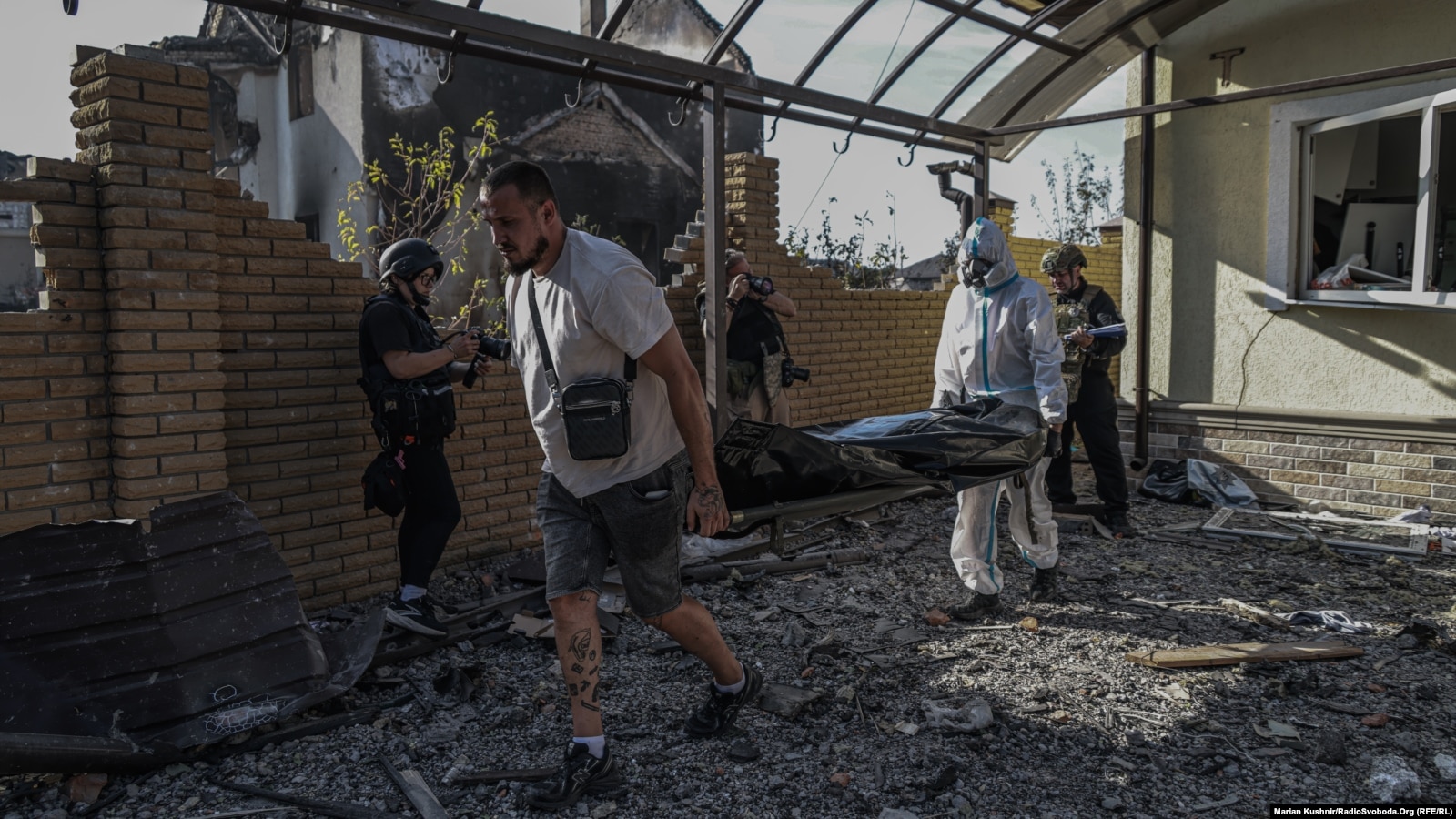
KYIV -- Ukrainian crews are continuing to search for victims of the deadly Russian attack outside of Kyiv, while local residents -- as well as President Volodymyr Zelenskyy -- demanded answers as to why explosives were stored in a warehouse so near private housing. "A terrible situation and terrible negligence on the part of those who stored explosives right next to people," Zelenskyy said late on August 29 in his nightly video address. The death count now stands at 38. Trump Dismisses Fears Of Russian Strike On NATO: 'I Am Not Concerned' Zelenskyy said the Russian drone strike was on an ammunition storage site "that definitely shouldn’t have been there.... Shells, mines, other ammunition, and drones detonated." He added that a criminal investigation was under way. "All the facts must be fully investigated. Another such crime -- after what happened in Vyshneve -- is absolutely unacceptable. I expect the details to be presented to the public promptly," he said. In July, a similar incident occurred in Vyshneve, just outside Kyiv, when a Russian strike caused explosions at a warehouse, killing nine people and damaging more than 280 houses. Explosive Storage Following the latest attack, Prime Minister Serhiy Koretsky also criticized officials for storing explosive materials near residential areas. He said making such mistakes was "criminal negligence.” Along with the fatalities, dozens of people were injured from the overnight Russian drone strike on Ukraine’s Bucha district in the Kyiv region. Local authorities said the August 28 drone strike caused a major fire and explosions at the warehouse, which is said to be the major cause of the casualties. Baltic States Arm For Russian Threat As Leaked Letter Shows Growing Fears Reporting from the scene, RFE/RL’s Ukrainian Service correspondent Maryan Kushnir said that “the whole area is in ruins,” adding that the strike also affected a nursing home, where “many” people were killed. According to Tymur Tkachenko, a top district administration official, those killed in Bucha also included the head of the Dmytrivka community in the district, Taras Didych. Tkachenko said it was a “great loss” for the region. Operational HQ The official added that an operational headquarters had been set up in Dmytrivka to provide food as well as other support to the people in the affected region. As sounds of detonations continued in Myla village, local resident Zhanna told RFE/RL that she had lost her husband in the incident, adding that he had previously survived the Russian occupation. Exclusive: 'It's Not A War Crime If It Was Fun.' Three Years Of Gory Messages By A Russian General “Why can’t this be organized?” she asked through tears, referring to the placement of explosives in the village. Another Myla local, Oleksandr, said the village’s residents didn’t know what was stored in the warehouse there. “Nobody told us anything... People aren’t informed. I think everything is being done the wrong way.”
KYIV -- The death toll from an overnight Russian drone strike on Ukraine’s Bucha district in the Kyiv region has risen to 38, as rescue operations continued on August 29 and officials fear that the toll could rise further. Tymur Tkachenko, a top district administration official, said on his Telegram channel that rescuers and relevant services continued to work at the scene. Local authorities say the August 28 drone strike in the Kyiv region caused a major fire and explosions at a nearby warehouse, which is said to be the major cause of the casualties. The aftermath of an ammunition detonation in the village of Myla near Kyiv, following a Russian strike. Tkachenko said that dozens of people including children, suffered injuries in the attack, which caused a large fire that spread to residential buildings in the village of Myla. Earlier, he had said that the death toll may not be final and expressed his "sincere condolences to the families and loved ones” of those affected. Reporting from the scene, RFE/RL’s Ukrainian Service correspondent Maryan Kushnir said that “the whole area is in ruins,” adding that the strike also affected a nursing home, where “many” people were killed. According to Tkachenko, those killed in Bucha also included the head of the Dmytrivka community in the district, Taras Didych. The district official said it was a “great loss” for the region. Tkachenko said an operational headquarters has been set up in Dmytrivka to provide food as well as other support to the people in the affected region. Fireballs In The Sky Multiple media outlets and video footage circulating on social media show an explosion followed by fireballs rising into the sky. Ukraine's Prosecutor-General's Office said in a statement that an investigation had been launched to look into the apparent placement and storage of explosives near residential areas. Ukrainian President Volodymyr Zelenskyy said more than 300 emergency service employees are working on the rescue operations. "There was a strike on the warehouse followed by a detonation. Unfortunately, there is significant destruction of the surrounding infrastructure -- residential buildings, a boarding house for the elderly and people with disabilities were damaged," Zelenskyy said. As sounds of detonations continued in the village, local resident Zhanna told RFE/RL that she had lost her husband in the incident, adding that he had previously survived the Russian occupation. “Why can’t this be organized?” she asked through tears, referring to the placement of explosives in the village. Myla resident Zhanna. Another Myla local, Oleksandr, said the village’s residents didn’t know what was stored in the warehouse there. “Nobody told us anything... People aren’t informed. I think everything is being done the wrong way.” Earlier, Ukrainian Prime Minister Serhiy Koretsky criticized the officials for storing explosive materials near residential areas. He said making such mistakes was "criminal negligence.” In July, a similar incident occurred in the Vyshneve region of Kyiv where a Russian strike caused explosions at a warehouse, killing nine people and damaging more than 280 houses. Zelenskyy said he had heard about the prime minister’s statement and that "those who allowed this must be held accountable for their decisions.” Meanwhile, Polish Prime Minister Donald Tusk asked for air support for Ukraine in the face of continued “escalation” from Russia. In a social media post, Tusk said that “the escalation from Russia's side is progressing,” adding that “Ukraine needs greater air support, which is also crucial for our security.” The Polish prime minister said the next six months will be decisive, calling it “a task for all of Europe” to get ready for “various scenarios.” “We cannot rule out provocations from Russia against one of NATO's members,” he warned.
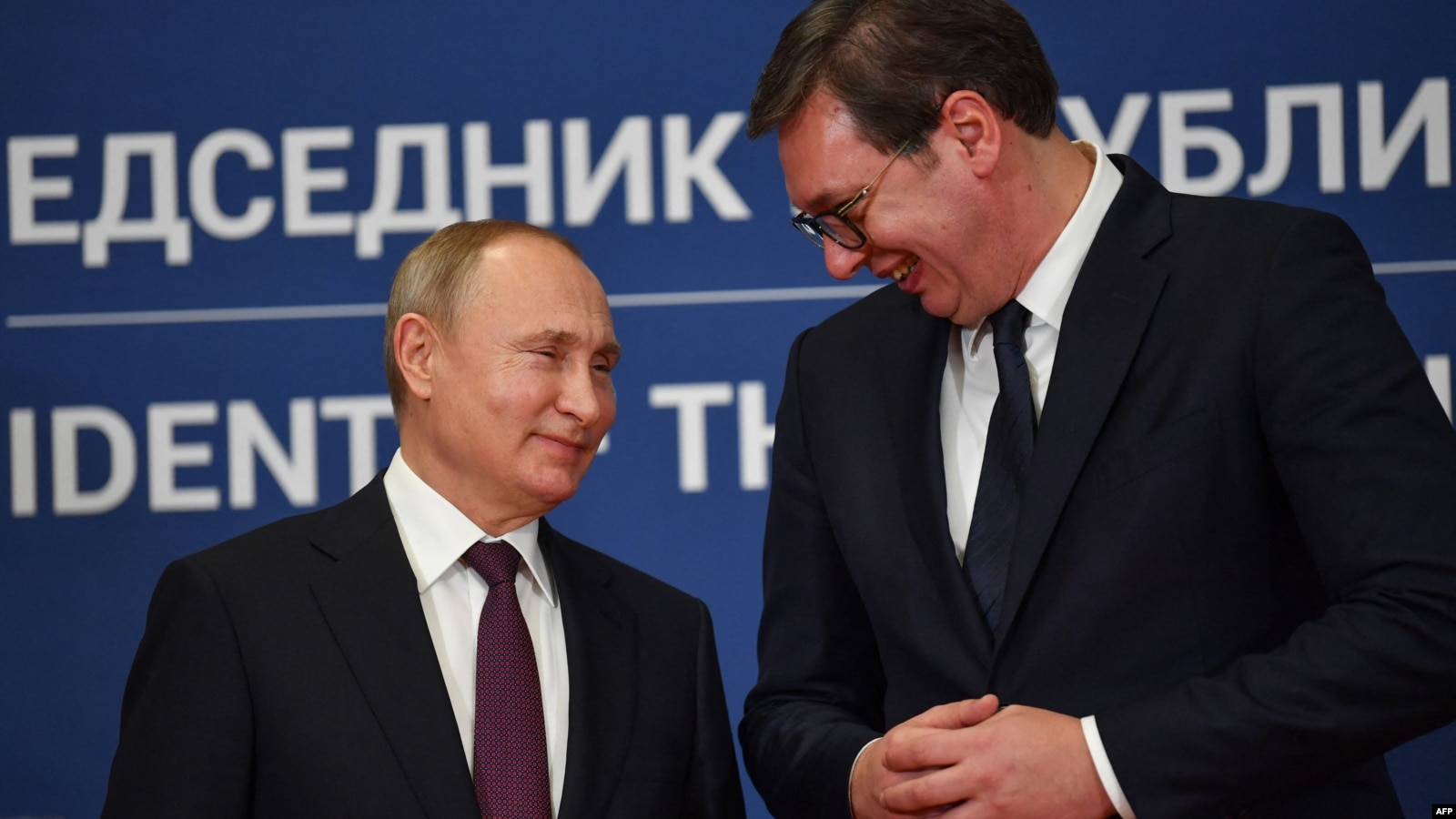
A bipartisan group of US lawmakers has taken aim at the government of longtime Serbian President Aleksandar Vucic, citing what it calls “serious setbacks” in democracy and the rule of law, as well as Belgrade’s ties with US adversaries Iran, Russia, and China. Republican Representative Joe Wilson, a co-sponsor of the legislation, said that “under President Vucic, Serbia has deliberately moved further and further away from the rule of law and closer to enemies of freedom, such as the war criminal [Russian President Vladimir] Putin, the Communist Party of China, and the terrorist regime in Tehran.” “Despite widespread protests against corruption, Vucic’s government threatens to destabilize the region and beyond. The people of Serbia deserve better,” Wilson said after submitting the bill on August 27. Serbia Seeks To Maintain Balancing Act As Zelenskyy Visits Belgrade The bill, also sponsored by Democrat Bill Keating, a fellow member of the House Foreign Affairs Committee, would impose visa bans and sanctions on individuals who undermine the stability of the Western Balkans or the territorial integrity of any state in the region. It would also target individuals who take part in “undermining democratic processes and institutions, corruption, serious human rights violations, or actions that obstruct regional agreements and frameworks for security, peace, cooperation, or mutual recognition.” The legislation, known as the Serbia Act, specifically calls out Vucic over what it describes as the excessive use of force against recent student-led protests and calls for an investigation into, and accountability for, the 2024 railway tragedy in Novi Sad that helped ignite the demonstrations. The measure is not yet law. It would have to pass the full House and Senate before being sent to the president for signature. US-Serbia Relations Keating said that “democracy, rule of law, and anti-corruption must remain key pillars in the US-Serbia bilateral relationship.” “The United States has an enduring interest in a stable, democratic, and sovereign Serbia that is committed to regional peace and security and firmly anchored in Euro-Atlantic institutions and free from malign external influence,” the bill text states. The proposed legislation would also direct Secretary of State Marco Rubio to press Belgrade on ensuring free and fair elections, fighting corruption, strengthening the rule of law, and addressing Serbia’s ties with Iran, Russia, and China. If those issues are not adequately addressed, Keating and Wilson said the United States should suspend its participation in the US-Serbia Strategic Dialogue. The dialogue was held in Washington in July, with the two sides issuing a joint statement outlining areas of cooperation. Vucic, who has been president of Serbia since 2017 after serving as prime minister for three years, has long sought to balance his country’s aspirations to join the European Union with its historically close ties to Russia. He has faced nearly two years of student-led street protests, initially sparked by the collapse of a railway-station roof in Novi Sad in November 2024 that killed 16 people. The demonstrations later expanded into broader complaints about Vucic’s government and allegations of corruption. Vucic and pro-government media have accused the students and their professors of working with unidentified Western security services in an effort to remove him from power. He has provided no evidence to support the claims. Vucic's Next Move? In July, Vucic said he would resign as Serbia’s president, despite having almost a year remaining in his term. Few expect that to mean he will leave Serbian politics, where he has been the dominant figure for more than a decade. Vucic, 56, has already been elected president twice and is constitutionally barred from seeking a third term. Analysts say that by stepping down, Vucic could potentially return as prime minister if his ruling Serbian Progressive Party (SNS) wins early parliamentary elections. Vucic has said the elections will be held in October, although they were not otherwise due until December 2027. Could Vucic Become Serbia's Prime Minister Again? “His possible move to the position of prime minister would simply place him, constitutionally, where he already is -- the country’s key political figure who makes all the important decisions,” Dusan Spasojevic, a professor at the Faculty of Political Sciences at the University of Belgrade, told RFE/RL’s Balkan Service in July. The bill also lays out conditions under which Washington could seek closer ties with Belgrade. If the Serbian government takes steps to strengthen its Euro-Atlantic path, including through a credible and independent investigation into the Novi Sad railway collapse and accountability for the excessive use of force against peaceful protesters, the legislation says the US president should take steps to improve bilateral relations. Those steps could include measures aimed at strengthening Serbia’s democratic institutions and its resilience to what the legislation describes as harmful foreign influence. With reporting by RFE/RL's Balkan Service and senior Washington correspondent Alex Raufoglu
WASHINGTON -- The United States said it was aware of threats by Iran's armed forces to put Persian-language media outlets including RFE/RL's Radio Farda on a list of potential military targets, and pointed to what it said was Tehran's record of harassment and attempted attacks against journalists and dissidents abroad. In an August 28 response to a query from RFE/RL, a State Department spokesperson said, "We are aware of these reports." "The Iranian regime has repeatedly harassed and attempted to kidnap and kill journalists and Iranian dissidents worldwide simply for exercising their freedoms. This is longstanding, despicable behavior from a regime that has propagated terror globally for decades," the spokesperson said. "The United States stands with innocent civilians targeted by Iran and continues working with allies and partners to expose these threats, share threat information, and hold perpetrators accountable," the spokesperson continued. In a televised interview earlier this week, Iranian armed forces spokesman Brigadier General Abolfazl Shekarchi named Radio Farda, Iran International, BBC Persian, and Manoto, and said their employees could be included in Iran's "bank of military targets." He called them "soldiers of Zionism and criminal America" and claimed, without providing evidence, that the outlets were connected variously to the CIA, Mossad, and other foreign intelligence services. 'Do Not Execute': Iranian Writers And Artists Join Outcry After Public Hangings In Isfahan David Kramer, executive director of the George W. Bush Institute and a former US assistant secretary of state for democracy, human rights, and labor, said Tehran's warning reflected the importance of the media outlets it said could be targeted. "It's not a surprise that the Iranian regime would view outlets like Radio Farda and BBC Persian-language service as threats, since they don't want the Iranian people to know what's really happening," Kramer told RFE/RL. "The regime's reaction shows that these services have a real impact inside Iran, whereas the regime prefers to operate through silence and violence against its own people and its neighbors," he said. Radio Farda is the Iranian service of Radio Free Europe/Radio Liberty (RFE/RL), which says its mission is to "promote democratic values by providing accurate, uncensored news and open debate in countries where a free press is threatened and disinformation is pervasive." Iran Parliament Advances Bill Criminalizing Contact With Foreign Media and Institutions Kramer said the media outlets "must be protected to be able to do their important work in advancing the interests of the American people through soft power, while also letting the Iranian people know they are not forgotten." The Czech Republic, which hosts RFE/RL and Radio Farda in Prague, has protested the threats. Foreign Minister Petr Macinka said he was summoning the Iranian ambassador to appear at the ministry over the matter, Czech media reported. "Radio Farda, based in Prague, has been one of the few channels getting verified information to the Iranian population. Its importance was especially clear during the mass repression which the Iranian regime subjected its people to in the winter," Czech Foreign Ministry spokesman Adam Corgo told Czech Radio. New Executions A Sign Of Growing Repression In Iran Amid War He was referring to a deadly crackdown on nationwide protests in Iran in January. Foreign-based Iranian rights groups say they have verified around 7,000 deaths but that the real death toll is likely higher. Thomas Melia, a former senior State Department official focusing on human rights and now a senior fellow at Georgetown University's Center for Democracy and Civil Society, said the threat should be taken seriously. He said Radio Farda personnel in Prague and elsewhere "need to heighten their security awareness," pointing to the Iranian state's actions targeting dissidents abroad. Melia also said Tehran's threat underscored the importance of Radio Farda's work. "It's a sign of how important the work of Farda is, that the Iranian regime is unhappy that the true facts and information and news reports that Farda broadcasts are getting to the Iranian people, and they want to cut that off," Melia said. Christopher Walker, vice president of the Washington-based Center for European Policy Analysis, said Iran takes the competition over information seriously and has invested heavily in its state information capabilities. "The Iranian authorities take media and information competition very seriously," Walker said. "It's why they are understood to spend hundreds of millions of dollars annually on their state information capabilities around the world." Walker described the threats against international Persian-language outlets and other independent sources as part of what he called Tehran's "longstanding pattern of transnational censorship and repression." He also placed the Iranian threats within a broader confrontation over information between authoritarian governments and Western democracies. Cooperating Autocrats Form A 'CRINK' In The Road For The US, Western Democracies "This is part of a global shadow war being waged on the West by regimes in Moscow, Beijing, as well as Tehran," Walker said, to which "free countries need a far more cohesive and determined response." Retired Vice Admiral Robert Harward, a former deputy commander of US Central Command, said Iran's hostility toward independent media was rooted in the nature of the clerical authorities who have held power since the 1979 Islamic Revolution. "At its core, the regime has always been against free press and anybody willing to speak, and they've been able to control that internally," Harward told RFE/RL. "Now, as they get more desperate, they're going to go after all the external pressure because it tells the truth about what a despotic regime it is," he said. RFE/RL reports in 24 languages to 18 countries. It is a private, nonprofit American media corporation funded by a grant from the US Congress through the United States Agency for Global Media.
16 Aug 2026, 07:59 GMTBy RFE/RL's Russian Service, RFE/RL's Ukrainian Service
Russia and Ukraine traded overnight attacks into August 16, with Ukrainian officials reporting at least five killed in Russian strikes and damage to the country’s largest steel plant, while Russian officials said Ukrainian drones killed at least six and set warehouses ablaze.
Ukraine said it struck a major Russian rocket and space facility with domestically produced Flamingo cruise missiles on August 15, as Kyiv continued its campaign of long-range attacks deep inside Russia.
14 Aug 2026, 08:48 GMTBy RFE/RL's Ukrainian Service
Flames consumed a housing block in Kramatorsk following a strike by Russian forces. Video by RFE/RL's Ukrainian Service showed fire crews battling the blaze, which rose through several stories of the residential building after what was reported to be a guided aerial bomb made a direct hit.