
US Agency for Global Media

News and Information from Around the World

Active filters Source: Rfa English Rss
Clear all
7 Jul 2026, 17:23 GMT By Taejun Kang for RFA

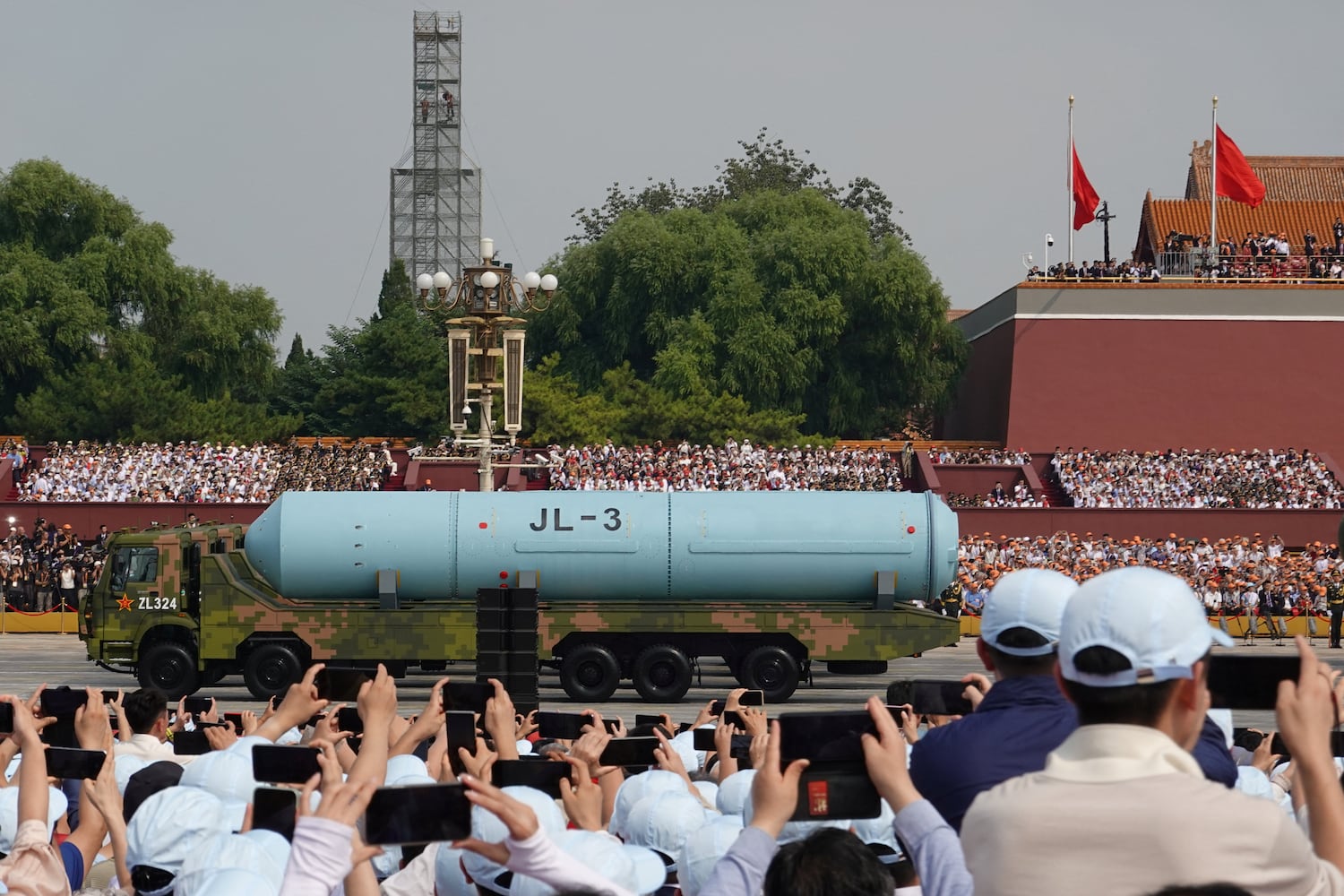
China’s test of a submarine-launched ballistic missile into the Pacific this week was aimed at signaling its growing military reach to U.S. allies across the region, analysts told Radio Free Asia, as Beijing sought to frame the launch as a routine exercise. China’s state-run Xinhua news agency reported Monday that a Chinese navy submarine launched a missile carrying a dummy warhead toward international waters in the Pacific at 12:01 p.m. local time, describing it as a “routine arrangement” in annual military training and not directed at any specific country or target. Analysts said the timing and trajectory suggested Beijing was using the test to send a broad political and military message across the Asia-Pacific. “China’s latest ICBM test serves several purposes,” William Yang, a Northeast Asia analyst at the Belgium-based International Crisis Group, told RFA. “It demonstrates the progress in China’s advanced missile capabilities, sends a signal to regional countries, including Australia and other Pacific states, about Beijing’s ability to respond resolutely to what it views as a challenge to its interests, and allows the People’s Liberation Army to maintain regular military drills across the Asia Pacific region.” A nuclear-powered Type 094A Jin-class ballistic missile submarine of the Chinese People's Liberation Army (PLA) Navy during a military display in the South China Sea April 12, 2018. (Reuters) Though Yang referred to it as an ICBM, or intercontinental ballistic missile, Xinhua did not specifically use those words. The U.S. State Department called it an “intercontinental-range ballistic missile,” in a statement where it criticized the launch at a time when “the United States is working harder than ever to prevent nuclear proliferation,” and “China is doing the opposite.” The launch also drew criticism from Japan, Australia, New Zealand and Taiwan, with several governments saying they had received only short notice. The test touched a nerve across the region because it came against the backdrop of intensifying strategic competition in the Pacific, where China, the United States and its allies have been vying for influence over sea lanes, security ties with Pacific Island countries, and military access to the region. For China, the Pacific islands have become an increasingly important diplomatic and strategic arena as Beijing seeks to expand its presence beyond East Asia. For Australia, New Zealand and the United States, the region has become a frontline in efforts to prevent China from translating economic influence into a deeper security foothold. Australia-Fiji treaty The missile landed in the South Pacific Nuclear Free Zone only hours after Australia and Fiji signed a mutual defense treaty. Yang said the timing was “also a political signal to Canberra and other U.S. allies that China will not be deterred by their efforts to undercut China’s interests in deepening its influence in the Pacific region.” The defense pact, known as the Ocean of Peace, commits Australia and Fiji to assist each other if attacked. It was signed as Canberra has sought to rebuild security ties and trust in the Pacific after years of concern among island governments over climate change, development needs and outside interference. Australian Prime Minister Anthony Albanese shakes hands with Fiji's Prime Minister Sitiveni Rabuka before a bilateral meeting at the Grand Pacific Hotel in Suva on July 6, 2026. (Leon Lord/AFP) China has meanwhile deepened engagement with several Pacific island states through policing, aid and infrastructure agreements, raising alarm in Washington and allied capitals over the possibility of a more permanent Chinese security role in the region. The launch occurred during “a crowded window of allied activity” that included not only the treaty signing – but also on the heels of RIMPAC, Valiant Shield, and Resolute Dragon – U.S.-led bilateral or multilateral military exercises focusing on the broader Pacific region, Aadil Brar, a Taipei-based independent analyst and former visiting scholar at National Chengchi University, told RFA. Message sent Though the Chinese navy said that the launch was directed at no particular country or target, Brar said the distance and direction was deliberate. “That trajectory alone shows the real aim was less about any single target and more about proving China can range deep into the Central Pacific, threading through waters used by the Philippines, Guam-based U.S. forces, and Pacific island states, all at once,” he said. The route described by Brar, from the Chinese coast across the Philippine Sea and south of Guam before landing near the Marshall Islands and Nauru, would have taken the missile through a corridor that matters strategically to both Washington and Beijing. It passes through waters used by U.S. forces based in Guam, near routes that could be critical for moving reinforcements in a regional conflict, including one involving Taiwan. Brar said Taiwan was not directly overflown this time, but the test still carried implications for the island because it demonstrated China’s ability “to hold reinforcement routes at risk well beyond the first island chain,” the arc of islands running from Japan through Taiwan and the Philippines to Borneo, forming a key maritime boundary around China’s near seas. A map of the first and second Pacific island chains. (AFP) Such abilities would complicate any U.S. intervention in a hypothetical Taiwan Strait crisis, he said. Taiwan, which China claims as its own territory, has long warned that Beijing is stepping up military pressure on the democratically governed island through war games, air and naval patrols, and missile development. Chinese officials have not ruled out the use of force to bring Taiwan under Beijing’s control. Still, Yang said he did not think the launch was directly related to Taiwan in this case, arguing that Beijing’s “target audience is the wider region rather than the Taiwanese government,” given its timing alongside the Australia-Fiji agreement and the missile’s launch and impact areas. The test launch might not have been the best strategy for China, Gregory Brown, director of the Alliance Futures Initiative, a Washington-based think tank, told RFA. “I don’t know that the intention from the Chinese is actually to threaten the Pacific Islands or Australia. It certainly got everybody’s attention,” said Brown. “It’s probably an own goal for China to have done this now, because now there’s reason to say this is the sort of thing and sort of behavior why Fiji would want to sign a treaty with Australia or maybe get closer to the United States.” China last publicly conducted an intercontinental ballistic missile test in 2024, in a launch that underscored the country’s growing strategic capabilities and prompted renewed scrutiny of the pace and opacity of its nuclear modernization. Editing and additional reporting by Eugene Whong.

Download metadata bundle
3 Jul 2026, 15:10 GMT By Tenzin Dickyi for RFA Tibetan

The incident comes one day after China’s ‘ethnic unity law’ came into effect.

Download original video Download metadata bundle
Video
Credit: Tenzin Dickyi for RFA Tibetan
3 Jul 2026, 15:10 GMT By Tenzin Dickyi for RFA Tibetan

The incident comes one day after China’s ‘ethnic unity law’ came into effect.

Download original video Download metadata bundle
Video
Credit: Tenzin Dickyi for RFA Tibetan
3 Jul 2026, 15:10 GMT By Tenzin Dickyi for RFA Tibetan

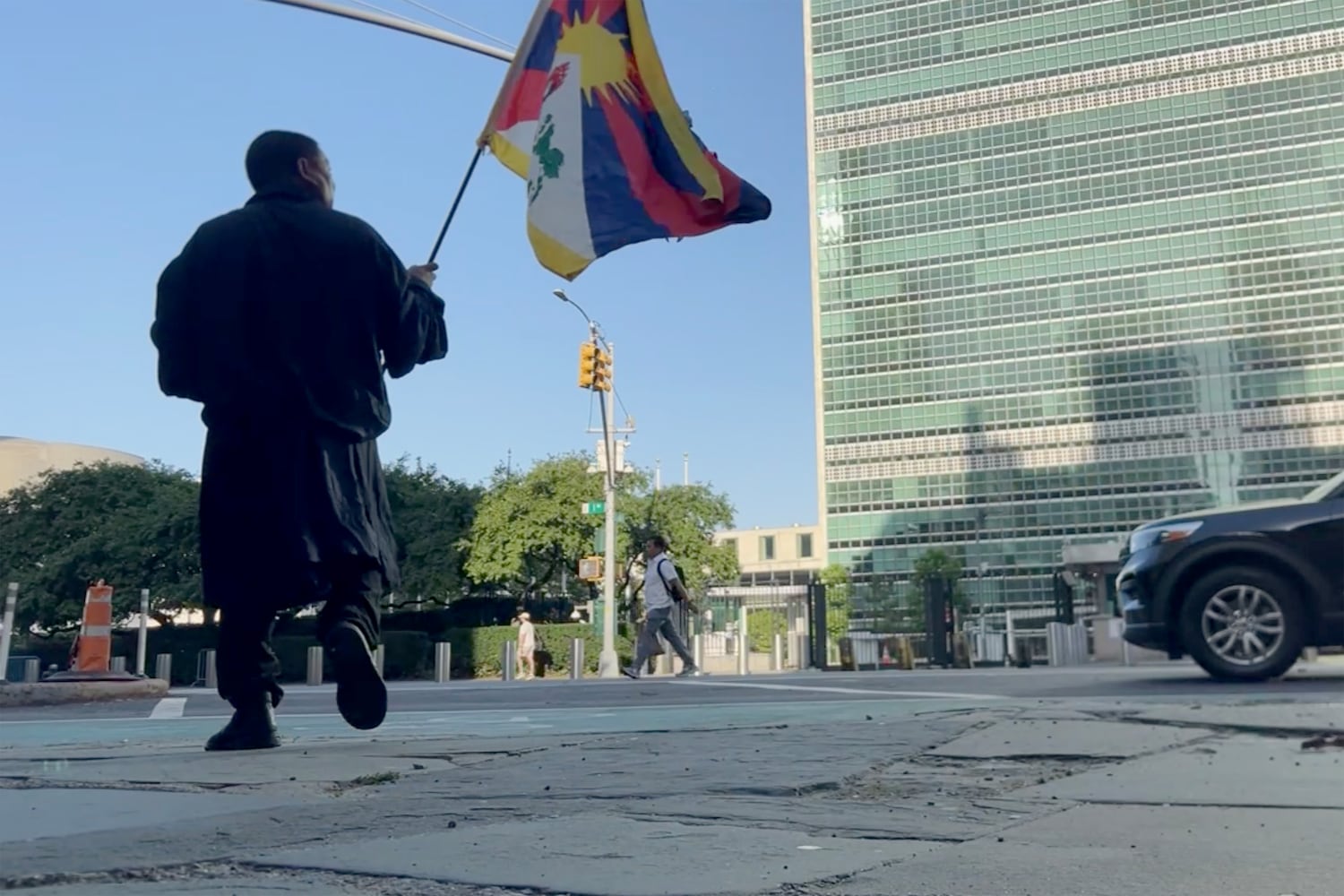
Content warning: This story contains language that readers may find disturbing. A Tibetan activist died Thursday after setting himself on fire outside the United Nations headquarters in New York. Tibetan activist Lobga Rangzen's New York funeral Lobsang Palden, popularly known as Lobga Rangzen, a longtime Tibetan activist based in New York, died at Bellevue Hospital after succumbing to his injuries, Jamphel Choesang, president of the Regional Tibetan Youth Congress of New York and New Jersey, told Radio Free Asia. The self-immolation comes one day after China’s new ethnic unity law went into effect, with critics warning that the law brings accelerated forced assimilation and cultural erasure of Tibetans and Uyghurs. It also brings fears of Beijing’s increasing transnational repression and its ability to stifle dissident voices overseas. “The unfolding genocide inside Tibet and the enforcement of the draconian ‘Ethnic Unity and Progress Law’ on July 1 are what drove Lobga Rangzen to this tragic decision,” Penpa Tsering, head of the Central Tibetan Administration said in a released statement on Friday. Lobga Rangzen poses for a photo in New York in this image posted to his Facebook page on July 2, 2026. (Lobga Rangzen via Facebook) Rangzen was a well-known Tibetan activist who participated in demonstrations and campaigns calling for Tibetan freedom and raising awareness of human rights issues under Chinese rule. Before the incident, Rangzen posted a Facebook video where he spoke about the situation in Tibet and the importance of efforts to preserve Tibetan language and culture. He also criticized Chinese government policies in Tibet, which he described as an “erasure” of Tibetan identity, and urged Tibetans in exile to increase their efforts in their struggle. Content warning: Below is language that readers may find disturbing. In a subsequent Facebook livestream post, Rangzen propped the camera on the sidewalk and walked a few steps to a traffic median across from the U.N. building and placed a large Tibetan flag on a traffic post. Moments later, he set himself on fire. In the video, cars were seen driving past on First Avenue, honking their horns. Rangzen fell to the ground. Two men in security uniforms reached him a minute and 10 seconds later with fire extinguishers. Lobga Rangzen in an undated photo. (Lobga Rangzen via Facebook) Tibetans have previously committed acts of self-immolation to protest against Beijing’s policies in Tibet and regions with large Tibetan populations in exile. Penpa Tsering said that from 2009 to around 2022, roughly 157 Tibetans have self-immolated inside Tibet, referring to this act as “offering of the body” for the Tibetan cause. Thupten Choenyi, a friend of Lobga Rangzen, told Radio Free Asia: “About 15 minutes before he set himself on fire, I had a video call with him on WhatsApp. It was around 5:30 P.M. Unlike our previous conversations, he spoke very quietly and sounded deeply disappointed. He told me, ‘I think China will never listen to us.’” “He was smoking during the call, and I told him not to smoke. He replied that he doesn’t drink, but he does smoke. He was also sipping from a Coke bottle, and his T-shirt was wet. I asked him where he was, and he said he was in front of the United Nations.” “Then he suddenly asked, ‘Can I take a screenshot of our video call?’ I said yes, and he sent it to me immediately. A short time later, he set himself on fire. He also called a few of his close friends before carrying out the act. I am very sad right now.” Penpa Tsering, leader of the Central Tibetan Administration, speaks to reporters in Dharamsala, India, July 3, 2026. (Tenzin Dhonyoe/RFA Tibetan) Penpa Tsering, attending the International Tibetan Youth Conference in Dharamsala, India, said that Rangzen had always carried the Tibetan cause and devoted his time to it in New York. He said that wherever it happens, inside or outside Tibet, those who give their lives for the Tibetan cause must be remembered. He announced that the Kashag (cabinet of the Central Tibetan Administration) had met that morning to organize a day of memorial prayers. Sonam Tso, who was among more than 100 participants at the conference, told RFA, “It is heartbreaking to hear of his death, yet I hope it will help more people around the world learn about Tibet and the Tibetan cause.” Sonam Tso speaks to RFA Tibetan in Dharamsala, India, July 3, 2026. (Tenzin Dhonyoe/RFA Tibetan) Tibetans gathered outside the United Nations headquarters for a candlelight vigil and prayers following Rangzen’s death Thursday evening. As news of the passing of Rangzen spread, Tibetan communities including groups in Dharamsala, Australia, Taiwan and elsewhere in the United States have begun holding prayer gatherings in his remembrance. Responding to the immolation at a daily Beijing news conference on Friday, Chinese foreign ministry spokesperson Guo Jiakun said Tibet has been an inalienable part of the country’s territory since ancient times and Beijing believes “relevant countries will handle the matter in accordance with domestic laws.” Additional reporting by Dickey Kundol, Tenzin Dhonyoe, Tashi Wangchuk, and Kalden Lodoe. Contributions from Reuters. Edited by Charlie Dharapak. Tibetans mourn death of activist

Download metadata bundle
3 Jul 2026, 02:00 GMT By Taejun Kang for RFA

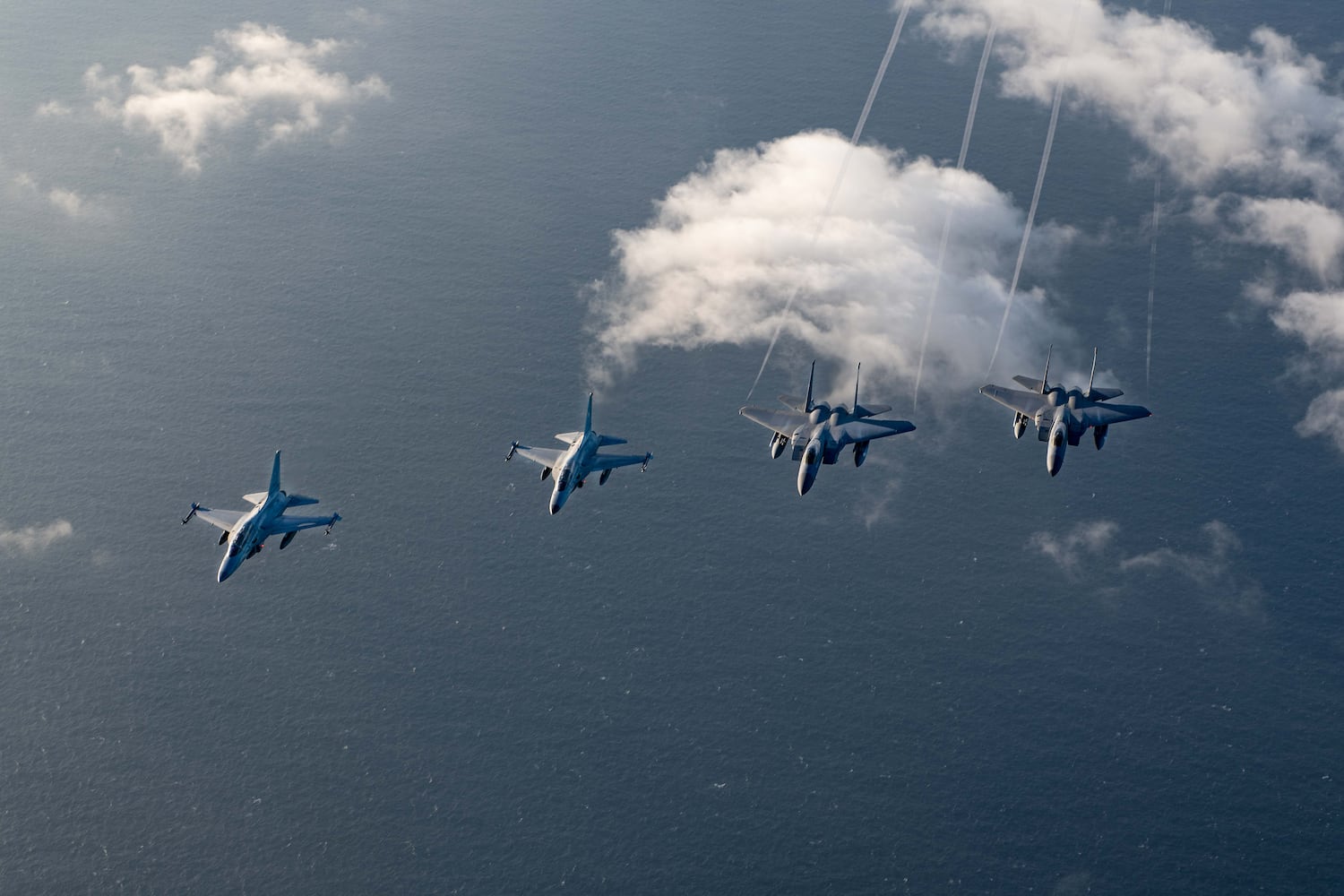
China remains focused on the United States as its chief geopolitical rival, even though a recent Chinese report on military activity in the South China Sea highlighted the growing role of Washington’s allies in the region, experts told Radio Free Asia. The report, published by the China-based South China Sea Strategic Situation Probing Initiative, or SCSPI, found that U.S. military activity in the South China Sea remained extensive in 2025, despite signs of operational strain due to Washington’s increased activity in the Middle East. Although the SCSPI is not government-led, it is widely viewed by analysts as broadly reflecting Beijing’s strategic outlook, and the report indicated increased Japanese and Philippine deployment to the South China Sea. “China increasingly views Japan and the Philippines’ efforts to deepen defense cooperation … as attempts by both countries to challenge China’s core interests and cross a red line,” William Yang, a Northeast Asia analyst at the Belgium-based International Crisis Group, told RFA. Japan participated in 71 U.S.-led exercises in and around the South China Sea last year – the highest number among U.S. partners – followed by the Philippines with 32, and Yang said the focus on Tokyo and Manila shows that Beijing considers Washington’s allies more formidable than in the past. A member of the Philippine Navy looks out at the Japan Maritime Self-Defense Force's destroyer Takanami during a joint maritime exercise in the South China Sea on June 14, 2025. (Jiji Press/AFP) “They see both countries’ assertive approach toward maritime disputes with China as a threat to its maritime interests and sovereignty claims and believe it is necessary to start increasing pressure on both countries,” Yang said. He added that Chinese officials have been “increasingly criticizing Japan and the Philippines for provoking regional instability by engaging on the Taiwan issue” and “have taken steps to increase economic and grey zone coercion against both countries in recent months.” Washington distracted? Despite the increased attention to Washington’s allies in the report, Beijing’s largest concern is still U.S. activities in the sea, Yang said. “However, in light of the U.S.-China detente under Trump and Washington’s continuous entanglement in the Middle East, Beijing thinks it needs to seize this window of opportunity to increase pressure on particular U.S. allies in the region amid Washington’s distraction,” he said. The SCSPI report concluded that indeed growth in some U.S. strategic platforms had slowed – It recorded nine U.S. carrier strike group deployments into the South China Sea in 2025, up slightly from eight the previous year, but said the overall intensity of carrier operations had declined because of extended deployments in the Middle East, maintenance demands, and operational accidents involving several carriers. Philippine marines take position next to U.S. amphibious assault vehicles during an amphibious landing exercise at the beach of the Philippine navy training center facing the South China Sea in San Antonio, Zambales province, Philippines on Oct. 6, 2018. (Ted Aljibe/AFP) Analysts say the more significant issue for China is not the number of U.S. carriers entering the South China Sea, but how allied networks are making American military presence more persistent. “The report focuses on Japan and the Philippines because they are two of the most important allied pressure points on China’s maritime perimeter, but they create different military problems for Beijing,” Sylwia M. Gorska, a Ph.D candidate in international relations at the University of Lancashire in the United Kingdom, told RFA. Multilateral containment? She said that the Philippines represents China’s “forward-access problem, pointing to its proximity to the disputed Scarborough Shoal and Spratly Islands, the Luzon Strait, the Bashi Channel and Taiwan’s southern approaches. “From Beijing’s perspective, the Philippines is no longer only a South China Sea claimant,” she said, “It is becoming a practical access and surveillance platform.” She said Manila’s increased surveillance capabilities would be useful for intelligence, surveillance and reconnaissance flights, or ISR; maritime-domain awareness; joint patrols, logistics; missile-capable deployments; and crisis response along the southern First Island Chain, the arc of islands running from Japan through Taiwan and the Philippines to Borneo, forming a key maritime boundary around China’s near seas. A map of the first and second Pacific island chains. (AFP) Japan, meanwhile, presents “the depth-and-integration problem,” she said. “It does not need to be a South China Sea claimant to affect the military balance there,” said Gorska, adding that Tokyo’s surveillance capabilities, anti-submarine warfare, logistics, missile defense and interoperability with U.S. forces link the South China Sea with Taiwan, the East China Sea and the wider western Pacific. But Gorska cautioned against interpreting the report as evidence that Beijing now sees Japan and the Philippines as greater threats than the United States, saying it “should not be read as a move from a U.S.-centric threat perception to an ally-centric one.” American “backbone” Any resistance to China’s projections of power in the region would still be led by Washington, Gorska said, adding that the U.S. would provide “the operational backbone of any serious regional contingency: command-and-control, ISR, undersea warfare, long-range strike, strategic mobility and extended deterrence.” Gorska said that China’s sharper focus reflects concerns that allied cooperation is turning periodic U.S. deployments into a more enduring military posture. “The issue is not a shift from ‘U.S. threat’ to ‘ally threat’. It is China’s sharper focus on how allied geography and interoperability compress the time available to localize a crisis before U.S.-aligned forces can sense, reinforce and act.” Yang said that Beijing’s long-term strategic assessment remains largely unchanged. “I don’t think there is a major strategic shift in Beijing,” he said. “Their threat assessment remains largely the same, which is to prevent U.S. containment of China’s capability to project its power across the region and into the Pacific.” But the report indicates that Beijing cannot ignore Washington’s allies and the opportunities presented by U.S. military activity in the Middle East. China “does see the need and an opening to sharpen its approach and increase pressure on Japan and the Philippines at a time when U.S. attention and resource allocation to Asia is undermined and distorted.” Edited by Eugene Whong.

Download metadata bundle
2 Jul 2026, 14:08 GMT By Harlyne Joku for RFA

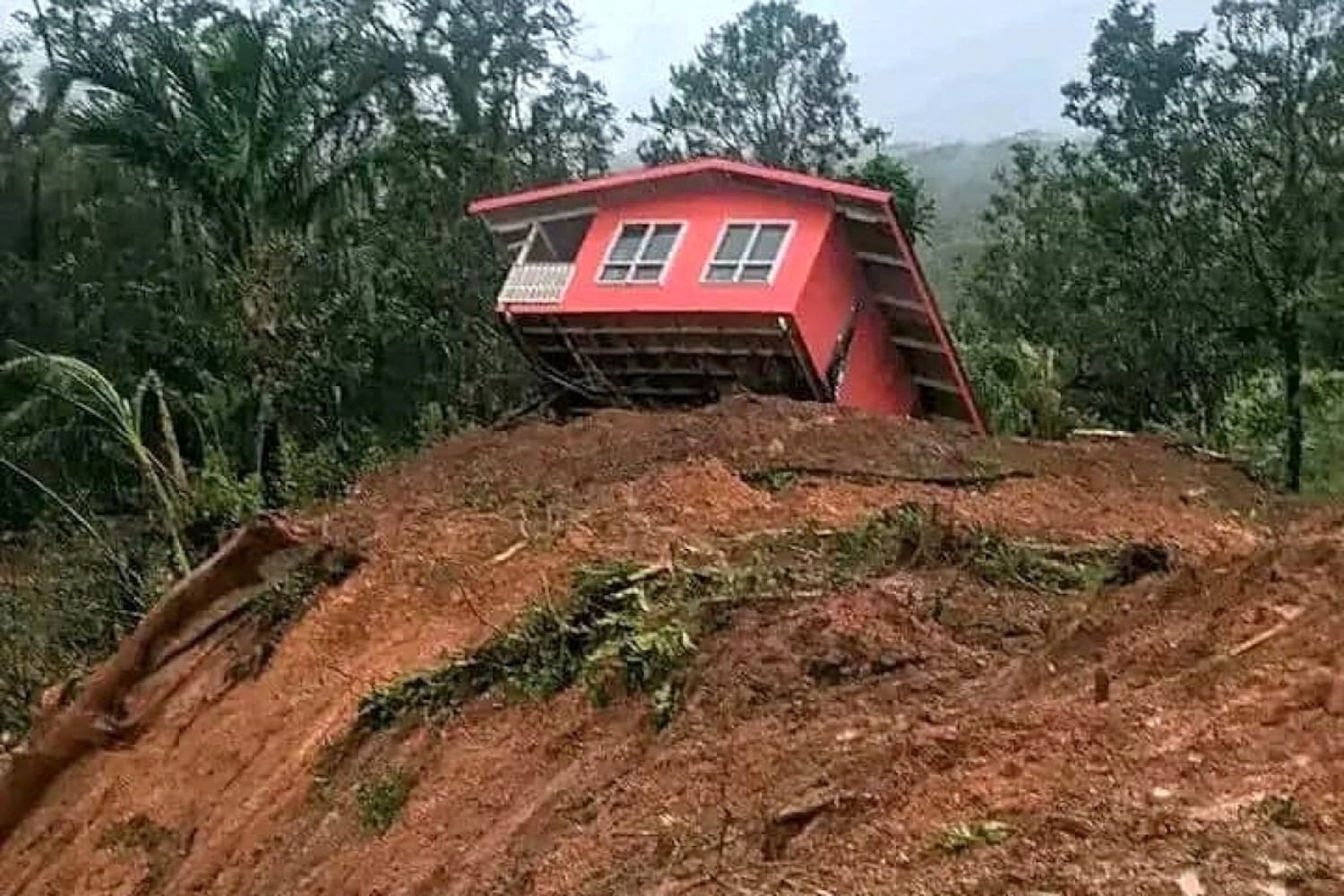
PORT MORESBY, Papua New Guinea — After Cyclone Maila devastated parts of Papua New Guinea in April, disaster relief funds poured into the country, but many of the affected residents told Radio Free Asia that they have received little or no assistance from authorities. In early April, the cyclone appeared over the Solomon Sea, between PNG and the Solomon Islands. It rapidly increased in intensity and severely damaged roads and homes, and submerged crops. PNG authorities reported 25 fatalities due to landslides and flooding. Though authorities have been trying to assist affected residents, they have not yet been able to reach everyone. Marina Kaisa Eroro, who lives with her family in Samarai Island off the southeastern tip of the New Guinean mainland, told RFA. A file photo of Marina Kaisa Eroro, a resident of Samarai Island in Milne Province, Papua New Guinea. (Marina Kaisa Eroro/RFA) The cyclone blew down her breadfruit, betel nut, and fruit trees, she said. “The trees fell on our water tank and damaged our source of drinking water,” said Eroro. “No assistance at all came from the authorities.” Eroro said that councillors from the ward, the lowest division of the local government, had visited to determine the extent of damage. The island is under the jurisdiction of the Bwanabwana Rural local-level government, or LLG, in the Samarai-Murua district of Milne Bay Province. The province is headquartered on the mainland, though many of its administrative bodies are located on Samarai, which was the provincial capital until 1968. In this file photo, trees that were knocked down by Cyclone Maila have damaged a water tank on Samarai Island, Milne Bay province, Papua New Guinea. (Marina Kaisa Eroro/RFA) “No national or provincial government official visited our area to assess the damage,” said Eroro. Even in cases where residents do get assistance, it is minimal, Cora Diala, who lives in the village of Waraka in Weraura LLG, in the Rabraba district of Alotau, on the mainland part of Milne Bay province, told RFA. Cora Diala, a 77-year-old widow from Weraura village, Milne Bay province, Papua New Guinea, in a file photo. (Fay Duega/RFA) “Last month was the first time we saw relief supplies from the government,” she said, adding that the extent of the relief was a 1 kilogram packet of rice for most people. “Widows like me got two packets of rice. Nothing else.” Relief aid After the storm had dissipated, foreign governments began offering money to the PNG government as aid. On May 14, the Chinese Embassy in Port Moresby handed over US$1 million to the PNG government in a public handover ceremony, during which Chargé d’affaires Pang Hanzhao, after giving the oversized check to several senior officials, including Prime Minister James Marape, expressed condolences to the affected people, saying “a friend in need is a friend indeed.” Marape expressed his gratitude, saying the assistance came at a critical time, when the government was continuing to “support communities affected by Cyclone Maila, and is gratefully appreciated by the PNG Government and people.” Other countries also provided assistance, including $1.72 million (2.5 million Australian dollars) from Australia to both PNG and the Solomon Islands. The U.S., meanwhile, delivered relief supplies through existing disaster preparedness programs. A truck damaged by floodwaters in the Ramazon River in the Tinputz district in Northern Bougainville, an autonomous region in Papua New Guinea, due to heavy rains from tropical cyclone Maila. (AFP) But the government has not distributed assistance to everyone affected. It focused only on the areas and communities that needed assistance most, Randal Ganisi, the acting disaster coordinator in Milne Bay province, told RFA. “Much of the relief supplies was given to Murua Island communities who were severely affected by the tropical cyclone Maila than those only partly affected,” said Ganisi. “However other districts of Milne Bay province were not supported with relief supplies due to the fact that they were not severely affected.” Though he provided a list of LLGs that the supplies were delivered to, he was not able to provide an outline of how much cash and food supplies were sent to each territory. RFA contacted the National Coordinator for an update on the distribution but received no response. Edited by Eugene Whong.

Download metadata bundle