
US Agency for Global Media

News and Information from Around the World

Clear all
28 Aug 2026, 23:43 GMT By Bryan Manabat for RFA

SAIPAN, Northern Mariana Islands — As the U.S. government moves forward with plans to open more than 65 million acres of federal waters around the Northern Mariana Islands to potential seabed mineral exploration, business leaders and Indigenous advocates told Radio Free Asia the U.S. territory must not be sidelined in decisions driven partly by national‑security priorities. The proposed leasing notice, released August 17 by the Marine Minerals Administration, or MMA, follows earlier steps identifying vast areas of ocean for possible mineral development around the territory, officially called the Commonwealth of the Northern Mariana Islands, or CNMI. The plan has triggered intense debate across the islands, where concerns span environmental risks, cultural impacts, fisheries, tourism, and democratic accountability. Though the plan could be economically beneficial, the business community in the CNMI is approaching it with caution, Joshua Wise, president of the Saipan Chamber of Commerce, told RFA. This map shows the mineral lease sale areas near CNMI as identified by the Bureau of Ocean Energy Management, or BOEM. In July, BOEM was reunified with the Bureau of Safety and Environmental Enforcement to form the Marine Minerals Administration. (MMA) “There are legitimate concerns, but there may also be significant economic opportunities that deserve to be fully understood,” Wise said, adding that critical minerals have become central to U.S. national security, manufacturing, technology, and supply‑chain resilience — meaning the CNMI could become part of a broader federal strategy. “If resources located near the CNMI ultimately become part of that national strategy, then we should be asking what role the Commonwealth will have and what economic opportunities could be created here,” he said. Resource rivalry The push for offshore critical minerals comes as the United States and China compete for control of the materials that power modern technology — including batteries, semiconductors, electric vehicles, renewable‑energy systems, and advanced defense platforms. China currently dominates global processing of rare earth elements, cobalt, nickel, graphite, and battery components, giving it significant leverage over global supply chains. U.S. officials have warned that this dependence poses strategic vulnerabilities for national security and manufacturing. “Critical minerals are essential to America’s national security, economic strength and resource sovereignty,” Matt Giacona, acting director of the MMA, said in the Aug. 17 announcement. “The United States cannot afford to depend on foreign nations for the resources that power our economy and support our defense industrial base. The Marine Minerals Administration is working to unlock the critical mineral potential of the U.S. Outer Continental Shelf responsibly, transparently and with the rigorous environmental review the American people expect.” Washington is exploring new sources of critical minerals, including the deep ocean, where polymetallic nodules and crusts contain metals essential for clean‑energy and defense technologies. MMA’s interest in CNMI waters is the potential future node in U.S. supply‑chain resilience efforts. History has shown what can happen when national‑security priorities override local interests, Gregorie Michael Towai (Eipéráng), a researcher of and advocate for indigenous people in the territory, told RFA. He cited the 67 U.S. nuclear tests in the Marshall Islands between 1946 and 1958 and the long‑term contamination there, as well as the continuing discovery of unexploded ordnance across the Marianas as lessons from history. The abandoned Pacific Barrier Radar III in Saipan, Northern Mariana Islands, June 27, 2024. (Yuichi Yamazaki/AFP) “Decisions justified by national security can create consequences for Pacific communities that endure long after the strategic circumstances that originally justified them have changed.” Towai stressed that deep‑sea mining is not equivalent to nuclear testing — but the imbalance of power is similar. He said the CNMI must insist on credible independent science, meaningful public participation, and enforceable guarantees before any commitments are made. Consultation, he said, must be capable of changing the decision, not merely documenting that communities were heard. “National security matters, but the security of Pacific communities matters too. That includes clean water, healthy fisheries, cultural continuity, food security, and the ability of future generations to inherit an environment that has not been irreversibly altered,” Towai added. Red flags Even if the plan provides contracts for CNMI companies and jobs for its people, there are unanswered questions surrounding how exploration or mineral development could affect industries that already sustain the CNMI, Wise said. “Our marine environment directly supports industries that already exist today, particularly tourism and fisheries,” he said. “So we need a much clearer understanding of what future exploration or mineral development could mean for those industries.” People walk past a beach during sunset in Saipan, Northern Mariana Islands on June 27, 2024. (Yuichi Yamazaki/AFP) Wise said the CNMI needs baseline environmental data, protections for fisheries, and much greater clarity about both risks and benefits. “The question should be: if this moves forward, can it be done responsibly, can our existing industries be protected, and will the people and businesses of the CNMI have a meaningful seat at the table and a meaningful share in the opportunities that may result?” he said. Government officials said that they need other assurances prior to the plan being enacted. In public statements, CNMI Governor David M. Apatang said the federal notice triggers a 60‑day review period during which the CNMI will insist on strict environmental and cultural safeguards, while U.S. Delegate Kimberlyn King‑Hinds said that she is advancing legislation to secure revenue sharing, mandatory mitigation studies, and formal consultation with CNMI leaders. But the CNMI’s legal authority over offshore waters remains limited. It can demand safeguards and challenge inadequate environmental review, but it cannot block the MMA from advancing leasing in federal waters. Under the Covenant and federal court rulings, submerged lands beyond the 12‑mile territorial sea fall under exclusive federal jurisdiction. But the Pacific Ocean is more than just a boundary for people native to the Pacific, Towai said. “For Indigenous peoples of Oceania, the ocean is part of our homeland,” he said. “Decisions about the seabed cannot be evaluated exclusively through mineral values, lease blocks, and federal jurisdiction.” Edited by Eugene Whong.

Download metadata bundle
20 Aug 2026, 22:45 GMT By Eugene Whong for RFA

Report by the Alliance Futures Initiative documents how Beijing promoted the 15th FYP in the region

Download original video Download metadata bundle
Video
Credit: Eugene Whong for RFA
20 Aug 2026, 22:45 GMT By Eugene Whong for RFA

China “very likely” coordinated a targeted campaign across the Pacific to demonstrate that local development strategies should align with Beijing’s latest five-year-plan, a recent report by The Alliance Futures Initiative says. In the report, titled “China’s Model on the Offensive: Why China’s Five-Year Plan Promotion in the Pacific Matters ,” the Washington-based think tank documented how in eight of the nine Pacific island countries where Beijing has an embassy, the heads of mission published op-eds in the local media touting the merits of China’s latest sweeping national policy framework proposed late last year and formally adopted in March. “To international audiences, the PRC deliberately reframes the FYP from a domestic planning document into a predictable, scientific blueprint for global growth and cooperation,” the report said. The campaign was not limited to media placement. Chinese diplomats also engaged in direct bilateral governance outreach, hosted diplomatic briefings – either open to the media or closed – with influential figures in business and government. The ultimate goal was to make the case that local development strategies were in line with the five-year plan, or that China was a more stable and reliable partner than its main rival with interests in the region, the United States. The Alliance Futures Initiative, or TAFI, tracked the activities of Chinese Embassies since October 2025, finding more than 30 cases where ambassadors promoted the five-year plan. “The frequency, similarity, and timing of output strongly imply MFA guidance,” the report said, referring to China’s Ministry of Foreign Affairs. “Variance in message intensity, ideological depth, and host-country alignment claims tracks local conditions and individual ambassador style.” The power of persuasion A key aspect of the campaign is how China is using persuasion rather than coercion to influence the Pacific countries to fall in line, Jonah Bock, TAFI’s assistant director for research, who authored the report, told Radio Free Asia. Bock highlighted key examples where China attempted to directly persuade key government officials. In Vanuatu, Ambassador Li Minggang extolled the virtues of China’s civil service oversight in a meeting with Ombudsman Hamilson Bulu and in Naoero, formerly Nauru, Ambassador Lyu Jin discussed judicial cooperation with Chief Justice Jay Udit. Chinese ambassador to Vanuatu Li Minggang in a meeting in Port Vila with Vanuatu's ombudsman Hamlison Bulu, March 3, 2026. (Chinese embassy in Vanuatu) “An ombudsman audits the government and a judiciary constrains it,” he said. “So these are really helping shape how Pacific governments actually function in China’s own model. And the importance of this is really normalization.” Successfully persuading these countries to peacefully adopt a Chinese model is the goal of the campaign, he said. “Coercion is expensive and it generates resistance. But persuasion does not. It’s relatively cheap for China to do,” Bock said. “If they can get these countries already using China’s development strategies, its models, then these officials will start to think like China and be more willing of their own ideas to cooperate with China.” Selling alignment The TAFI report said that throughout the campaign, ambassadors focused on three topics when explaining why aligning with the five-year plan would benefit their host countries: green development, economic openness, and shared prosperity. In Fiji, the Federated States of Micronesia, or FSM, and Tonga, the embassies pushed out messaging that touted China’s concern for the environment, saying Beijing had “contributed one-quarter of the world’s new green area” and built the “world’s largest clean power generation system.” “Beijing tailored this message for climate-conscious Pacific audiences, with the FSM embassy noting that ‘green development has become a defining feature of contemporary China, where skies are bluer, waters are clearer, and lands are cleaner,’” the report said. Solar panels and wind turbines at a renewable energy farm in Lingwu, in China's northern Ningxia region, Dec. 22, 2025 (AFP) In Fiji and Papua New Guinea, or PNG, messaging also “championed” anti-protectionism, the report said. “The Fiji embassy noted that China has ‘lifted all foreign investment restrictions in the manufacturing sector,’ and the PNG embassy opined that ‘while unilateralism and protectionism are on the rise… China remains firmly committed to opening up.’” Messaging also focused on poverty alleviation and personal income increasing as a result of rapid economic growth, according to the report. In FSM, Ambassador Wu Wei’s op-ed said that due to China’s robust education and security systems, the “people’s sense of gain, happiness, and security have been significantly enhanced.” “The themes Chinese ambassadors chose to emphasize … are not incidental,” the report said. “Each topic serves one or more of Beijing’s broader strategic objectives in the region, functioning simultaneously as a pitch for deeper cooperation, a contrast with Western alternatives, and a legitimization of the CCP’s political model.” Solidifying counter strategies If China were to achieve all its objectives in the Pacific, the region would be hostile to the United States and the interests of Washington and its allies, especially Taiwan, Bock told RFA. “We would have no more countries that recognize Taiwan. At the end of the day, that really is China’s first objective,” he said. “We would also start to see more economic dependencies, countries whose economic lifelines rely on China, which helps China again deepen their own influence.” Jonah Bock, TAFI's assistant director for research, interviewed by Eugene Whong at Radio Free Asia's offices in Washington, Aug. 13, 2026 (RFA Video) He said adoption of China’s governance models would sow the seeds of authoritarianism in the region. But the report outlined recommendations for the United States to counter the campaign. It identified FSM, the Marshall Islands, Palau and PNG as a “strategic core” due to their “defense access and second-island-chain positioning” and suggested that efforts to shore up relationships with this core should take priority over symmetrical levels of engagement with the whole region. It also suggested that Washington contest the same institutional grounds through judicial exchanges, legal-sector training, and civil service partnerships, noting that they “cost a fraction of infrastructure competition and defend exactly the ground now under cultivation.” TAFI also recommended helping Pacific governments in areas that they are already requesting, and to use private capital in circumstances where government aid moves too slowly. “These are things that are … already happening,” Bock told RFA. “For instance, for the Solomon Islands … five staff in their parliament just went to D.C. for a program, with the U.S. Congress on legislative processes.” He said this was the type of exchange that the report recommends and that he would like to see more of these. Additionally the report said that Washington could simply highlight Chinese actions in the Pacific to discredit Beijing’s claims of non-interference in the internal matters of other countries, a key part of China’s foreign policy that it often often invokes when deflecting criticism of its domestic policies. “Beijing’s non-interference claim is falsifiable, and PRC embassies have falsified it in their own published material,” the report said. “The United States does not need to argue this case. It needs to document it and let Pacific audiences draw conclusions.” Edited by Charlie Dharapak.

Download metadata bundle
5 Aug 2026, 02:52 GMT By Harlyne Joku for RFA

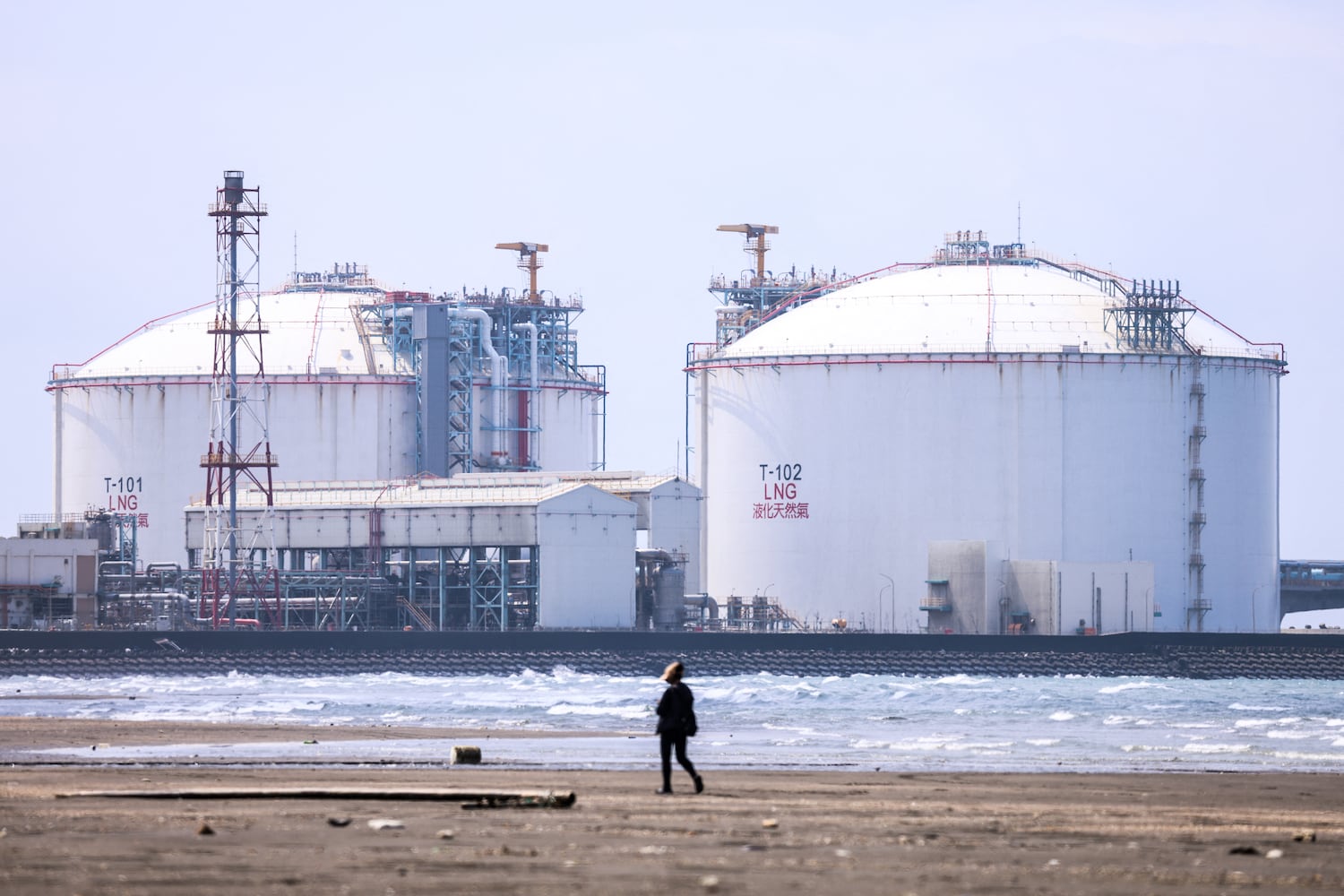
PORT MORESBY, Papua New Guinea – Papua New Guinea’s decision to close Taiwan’s trade office in Port Moresby is puzzling from a diplomatic standpoint, but it signals a coming expansion of its economic relationship with China, experts told Radio Free Asia. Last month, PNG’s Foreign Affairs Minister Justin Tkatchenko announced in an official statement the immediate cessation of operations and the formal closure of the physical presence of the Chinese Taipei Economics Office, citing Port Moresby’s “unwavering commitment to honoring, respecting and upholding Papua New Guinea’s foundational One-China Policy,” which aligns with Beijing’s view, the “One-China Principle,” which states that Taiwan is an inalienable part of its territory. The decision was confusing, Paul Barker, executive director of the PNG Institute of National Affairs, a Port Moresby-based think tank, told RFA. “One really wonders why one would take this action at this point,” he said. “PNG has always stated its position of friends to all and enemies to none and choosing to chart its own path in the region, together with its Pacific partners and its ASEAN colleagues.” Staff from the Taipei Economic and Cultural Office in Papua New Guinea donating rice to the Catholic Archdiocese of Port Moresby, Dec. 20, 2021. (Taipei Economic Office in Papua New Guinea) Barker noted that PNG last year signed a mutual defense treaty with Australia, and has defense arrangements with other regional parties including China, Indonesia and the U.S. “PNG recognized the One China Policy almost immediately after independence, but has also maintained ongoing trade, investment and cultural and related engagement with Taiwan throughout, which seems entirely reasonable, after all so does China with Taiwan, with many aspects of their economies quite connected,” Barker said. One China? PNG’s One-China Policy differs from a policy by the same name held by the United States government. While Port Moresby’s policy recognizes Beijing’s view, the U.S. policy merely acknowledges it and takes no official stance on Taiwan’s sovereignty. Both policies recognize the PRC government as the sole and legal government of China and in practice this has still left room for unofficial relations with Taiwan, and similar arrangements exist in many countries around the world. But unofficial relations with Taipei and Papua New Guinea will soon cease, according to Tkatchenko’s statement. Taiwan’s Ministry of Foreign Affairs strongly protested the closure of its office, vowing to continue to operate it “as normal.” It was not immediately clear to RFA what it would mean to operate the office as normal when it is not recognized by the host government. In the wake of the decision, Taiwan initiated a review of liquefied natural gas imports from PNG and decided to halt spot purchases, which prompted Beijing to announce it would increase its purchases of the commodity from the Pacific Island country. A visitor walks on a beach with the background of Guan-Tang LNG Receiving Terminal, a major liquefied natural gas import facility in Taiwan, March 25, 2026. (I-Hwa Cheng/AFP) Taiwan’s response follows a pattern of cutting ties with governments that downgrade its status, Jonah Bock, assistant director for research at the Alliance Futures Initiative, a Washington-based think tank, told RFA. “It is important for Taiwan to maintain even informal ties with states that do not recognize it,” Bock said. “But it is necessary to send a signal that these actions taken will not go unpunished. The audience is not just Port Moresby but every other country with ties to Taiwan.” Bock said that the closure of Taiwan’s office in PNG was part of a larger campaign to further isolate Taiwan. “In the Pacific Islands only three countries—Palau, the Marshall Islands, and Tuvalu—still recognize Taiwan and none appear poised to flip recognition in the short term,” Bock said. “But recognition is only part of Beijing’s objectives; it also seeks to eliminate Taiwan’s remaining international space. That means going after Taiwan’s continuing relationships—e.g. the closing of the Taipei Trade Office in PNG.” Bock noted how similar measures have been occurring in various areas of the Pacific, with Fiji having closed its office in Taipei in 2017 and having revoked diplomatic privileges to Taiwan’s office in Suva in 2018. Bock further noted that PNG itself closed its trade office in Taipei in 2023, and Nauru directed all government officials to uphold the One-China Principle in all activities last year. “Chinese diplomats in the region are already working to push other countries to end their own ties to Taiwan,” he said. “Short of unification, none of this stops. China will continue to aggressively pursue any action that reduces Taiwan’s international space—its ethos of national rejuvenation relies on unification. It is not an option for China to stop the contest.” Beyond geopolitics and trade Barker explained that the decision would affect more than gas exports and trade. “Educational and cultural links are also strong with scholarships and exchanges, with some useful ongoing development programs in agriculture, and valued investment in PNG,” he said. “The cultural associations between Taiwan and its indigenous population and PNG and the Pacific, of course, go far back, with the dispersion of people from Taiwan and the origins of the Austronesian language stemming from Taiwan going back some 6,000 years.” He said the cultural links to the indigenous people of Taiwan meant that PNG should try to maintain some sort of engagement with Taipei and that this should not undermine any relationship it has with Beijing. In this image released by the Chinese government, PNG Prime Minister James Marape visits Guangdong, China, April 28, 2026. (Chinese government media) But Bock said that money talks, and although the office’s closure does not appear to be in PNG’s economic interest in the short term due to cancelled Taiwanese contracts, the timing suggests that arrangements for expanding the economic relationship with China must be in place. “The move is to curry favor with the PRC and the goal is vast sums of Chinese money,” Bock said. He explained how Prime Minister James Marape visited China in April to explore increasing trade and investment, then in May, the two countries signed an economic framework agreement, and in July the two sides held high-level discussions about the coming PNG-China Business Forum & Trade Expo in Guangzhou. “In the months prior to the closure, China and PNG laid the groundwork for a much larger economic relationship. Closing the office is PNG’s payment to ensure China delivers.” Editing and additional reporting by Eugene Whong in Washington.

Download metadata bundle
1 Aug 2026, 02:41 GMT By Charley Piringi for RFA

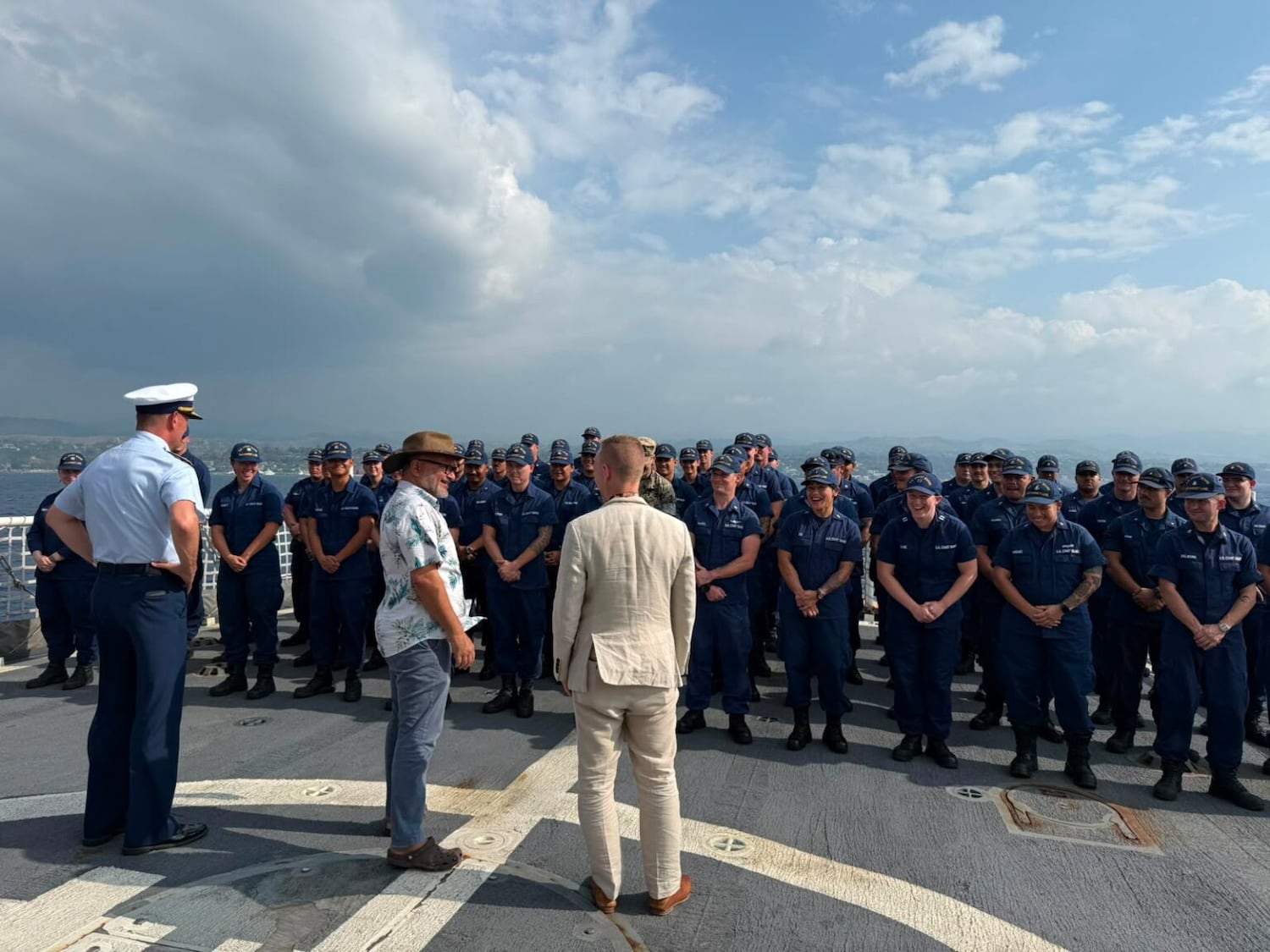
HONIARA – The Solomon Islands’ decision this week to enter into a security pact with the United States while already locked into a security agreement with China is in line with its strict “friend to all and enemy to none” foreign policy, experts told Radio Free Asia. Prime Minister Matthew Wale and U.S. Chargé d’Affaires P. Daniel O’Hara signed the finalized agreement Tuesday aboard the U.S. Coast Guard Cutter Harriet Lane, which had visited Honiara for the occasion. Commonly known as a shiprider agreement, the Agreement Concerning Counter Illicit Transnational Maritime Activity establishes a legal framework allowing Solomon Islands law enforcement officers to be embedded on U.S. Coast Guard vessels. The initiative forms part of Washington’s broader deployment designed to enhance regional stability and counter illegal, unreported, and unregulated fishing across the Pacific. Solomon Islands Prime Minister Matthew Wale (front right) and Chargé d'Affaires P. Daniel O'Hara of the U.S. Embassy sign a shiprider agreement aboard the visiting U.S. Coast Guard Cutter Harriet Lane off the coast of Honiara, July 28, 2026. (Solomon Islands government) The move has drawn sharp criticism from opposition leader and former Prime Minister Manasseh Sogavare, who previously aligned the Pacific nation closer with Beijing by signing a controversial and secretive security agreement with China in 2022. Though it may seem like Honiara is hedging its bets by entering into security deals with both Washington and Beijing, engaging with both geopolitical rivals is standard practice, Alexander L. Vuving of the Hawaii-based Daniel K. Inouye Asia-Pacific Center for Security Studies, told RFA. “This mirrors the actions of many other small countries in Southeast Asia, South Asia, and Oceania, signaling that the Solomon Islands cares about its autonomy and wishes to avoid taking sides,” he said. He also dispelled concerns regarding tensions with Beijing over Taiwan, stating, “The shiprider agreement focuses purely on maritime security within the Solomon Islands’ Exclusive Economic Zone, which does not conflict with or affect the One China Policy.” Maintaining neutrality The signing occurred a day after the prime minister concluded diplomatic visits to the United States and Japan. Upon his arrival at Honiara International Airport on Monday, Wale emphasized to reporters that the Solomon Islands has no desire to become a proxy battleground for larger powers. “We are not in a geopolitical game. We are not interested! Let the big boys sort out the big stuff,” he said. He stated that the country’s foreign policy is meaningless unless backed by reliable development partners, asserting that the nation intends to cooperate with all major powers while letting larger global players manage their own geopolitical rivalries. He acknowledged China as a critical trading and development ally, affirming that his administration would continue to work closely with Beijing to protect national interests and improve local livelihoods. Youth walk past an under-construction medical center financed by the Chinese government, in Honiara, Solomon Islands, April 21, 2024. (Saeed Khan/AFP) On a previous diplomatic visit last month to Canberra, Wale and Australian Prime Minister Anthony Albanese signed a memorandum of understanding concerning security and police cooperation, and agreed to begin negotiations on a treaty that would redefine the bilateral relationship. “Regional powers have largely viewed the recent security agreements with Australia and the US as a positive pivot or rebalance of the country’s foreign policy,” Dr. Vuving said. But he warned that ultimately the ability to maintain more or less neutral stance depends on the domestic political situation. “The long-term sustainability of this delicate approach requires a parallel balance in domestic politics,” he said. “Any lack of commitment to autonomy could result in increased pressure from rivaling great powers to pick a side.” That’s politics Though Wale’s government believes the shiprider agreement to be beneficial, the opposition has strongly criticized the deal. Manasseh Sogavare, a former four-term Prime Minister who critics have said is very pro-China and who most recently led the country between 2019 and 2024, warned that welcoming the U.S. military could compromise the nation’s sovereignty. During Sogavare’s most recent term, he orchestrated a dramatic geopolitical shift in the South Pacific by aligning the Solomon Islands with China and severing diplomatic ties with Taiwan. U.S. officials quickly rejected Sogavare’s criticisms emphasizing that the arrangement is built entirely on mutual respect for local sovereignty. O’Hara clarified that the agreement actively reinforces local authority by providing American operational capability while keeping all law enforcement decisions under domestic control. “This agreement is about mutual benefit,” O’Hara stated after the signing. “Your officers will enforce your own laws in your own waters. You decide which vessels to investigate. You determine the violations. You set the penalties.” Entering into international agreements with a mostly executive approach based on the political leanings of whomever holds the office of the prime minister has left some everyday citizens frustrated by a lack of transparency. “Did Wale consider Solomon Islanders before signing any foreign agreements?” Brian Wanealafa, a Solomon Islands resident, told RFA. “He should make consultations first, or even bring that before parliament.” Wanealafa said the criticism extended beyond just Wale. “The same is with Sogavare, when he signed the security pact with China,” he said, referring to the 2022 agreement. “They should think of the citizens and do nationwide consultations, or bring to Parliament and dissect the agreements openly for people to understand.” Legal and Sovereign Realities Criticism that the agreement compromises the Solomon Islands’ sovereignty is invalid because it conflates political concerns with legal principles, Joseph Foukona, a history professor at the University of Hawaii at Manoa, who hails from the Solomon Islands, told RFA. Foukona described the sovereignty argument as “twisted,” saying it centers more on “political concerns than legal ones.” “Signing the Shiprider Agreement without parliamentary scrutiny is a non-issue, as it falls well within the executive government’s powers,” he said. “Previous administrations have similarly bypassed parliamentary oversight for memorandums of understanding and treaties.” He emphasized that the US partnership perfectly aligns with international environmental and maritime treaties the Solomon Islands has already signed. “These international treaties require a maritime enforcement mechanism to be effective,” Foukona said. “The Shiprider Agreement simply provides the platforms – U.S. Coast Guard vessels – for Solomon Islands law enforcement officers to enforce their own maritime laws and treaty provisions.” Ultimately, under the pact, local officers will enforce their own laws in their own territorial waters, retaining final and absolute authority over all maritime policing decisions, he said. Edited by Eugene Whong.

Download metadata bundle
29 Jul 2026, 02:33 GMT By Taejun Kang for RFA

Taiwan has halted spot purchases of natural gas from Papua New Guinea as a response to Port Moresby ordering the closure of Taipei’s trade office in the South Pacific country. The decision followed Taipei’s review on imports originating from PNG of liquefied natural gas, or LNG, and the move amounts to a warning that countries with ties to Taiwan could face consequences rather than full-scale economic coercion, experts told Radio Free Asia. “It functions as immediate diplomatic signaling, but also sits within an emerging, if still constrained, strategic adjustment,”Jozef Huljak, a PhD candidate in political science at Constantine the Philosopher University in Slovakia whose research examines Taiwan’s cultural and public diplomacy, told RFA when the decision was in its review stage. Huljak explained the immediate message was that Papua New Guinea’s decision would not be “cost-free,” while also signaling to other governments that downgrading unofficial ties with Taiwan could carry consequences. “The LNG review is primarily a signal, but one embedded in a gradual shift toward more calibrated responses as Taiwan’s informal diplomacy comes under sustained pressure,” he said. Downgrading ties Papua New Guinea on July 15 announced that it would close Taiwan’s representative office in Port Moresby, saying that the move was meant to align with its “One-China policy” and to deepen trust and economic ties with Beijing. Port Moresby has never recognized Taiwan since gaining independence in 1975 and establishing relations with China the following year. The Taiwan trade office, which opened in 1990, served as Taipei’s de facto diplomatic mission while facilitating trade and investment. Taipei blamed the decision on Chinese political and economic pressure, while the United States expressed concern. Beijing, meanwhile, praised the move. Two days after the announcement, Taiwan’s Foreign Minister Lin Chia-lung said the country was reviewing its broader economic exchanges with Papua New Guinea, including LNG imports of about 1.2 million metric tons a year – roughly one-third of Papua New Guinea’s LNG exports – while stressing that Taipei’s agricultural and fisheries cooperation had also supported local development. On Tuesday, Lin said that the country would stop spot purchases of LNG from PNG, AFP reported. Spot purchases are one-off arrangements to cover immediate needs rather than long term agreements for periodic deliveries. The ExxonMobil PNG Limited operated Liquefied Natural Gas (LNG) plant at Caution Bay, located on the outskirts of Port Moresby, Papua New Guinea, Nov 19, 2018. (David Gray/Reuters) Liquefied natural gas, or LNG, is Papua New Guinea’s largest export commodity, accounting for roughly half of its overall exports. While Taiwan is the destination for about a third of PNG’s LNG exports, that only accounts for about 8% of Taiwan’s imports of LNG. Stopping the spot purchases is somewhat of a departure from Taipei’s previous course. Taiwan has traditionally sought to distinguish itself from China by presenting itself as a reliable partner that does not use trade or investment as political leverage. Beijing, meanwhile, has repeatedly been accused by Western governments and observers of employing economic coercion against countries that challenge its interests. The stoppage of LNG spot purchases, however, is not the first such move by Taiwan – it also recently removed Cambodia from visa facilitation programs after Phnom Penh publicly backed Beijing’s position on Taiwan. Together, these moves suggest Taipei is becoming more willing to attach consequences to governments that reduce cooperation with Taiwan, even if the measures stop short of outright retaliation, Huljak said. Tit for tat? Still, analysts cautioned that Taiwan’s options remain constrained. “I think ... comments made by Foreign Minister Lin still should be primarily viewed as first and foremost diplomatic signaling,” William Yang, a Northeast Asia analyst at the Belgium-based International Crisis Group, told RFA, also while the decision was still in the review stage. “It’s a warning or it’s a reminder, rather than Taiwan already embracing the idea about weaponizing its existing trade link and relationship with other countries to counter their willingness to ... give in to Chinese pressure,” he said. Yang said Taiwan was also likely examining its energy relationship with Papua New Guinea not just as a form of leverage, but also as a legitimate precaution due to its heavy reliance on LNG. Taiwan imports about 95% of its energy, and if Beijing is able to influence countries supplying critical resources, “Taiwan will have to also take a precautionary look and examination of its existing trade relationship with a particular country that has shown the willingness to actually bow to China’s pressure,” he said. Newly constructed worker's accommodation can be seen in front of the ExxonMobil PNG Limited operated Liquefied Natural Gas (LNG) plant at Caution Bay, located on the outskirts of Port Moresby, Papua New Guinea, Nov. 19, 2018. (David Gray/Reuters) Despite PNG accounting for less than one-tenth of Taiwan’s LNG imports, it provides an important source of supply diversification at a time when natural gas generates nearly half of Taiwan’s electricity following the shutdown of its last nuclear reactor in 2025, according to Huljak. “A full break would therefore carry higher costs for Taiwan’s energy security than for PNG’s export revenues,” Huljak said. “The review is real, but escalation is structurally constrained.” Message to other partners The episode nevertheless carries broader implications beyond Papua New Guinea, analysts told RFA. The impending trade office closure suggests Beijing is increasingly targeting Taiwan’s informal international presence rather than focusing only on the island’s dwindling group of formal diplomatic allies, Huljak said. “If left unanswered, Papua New Guinea risks becoming a template,” he said. “Governments could align with Beijing, accept economic incentives, and assume that Taiwan lacks the capacity to respond.” Taiwan’s objective, he said, is to challenge that assumption by demonstrating that even unofficial relationships have value and that ending them may carry opportunity costs. Meanwhile, Yang believes any decision by Taiwan to reduce LNG imports from Papua New Guinea would resonate beyond the immediate dispute. “If Taipei does follow through on ... reducing or ending its LNG trade with PNG, it obviously will be sending a signal to the rest of the Pacific countries,” he said. “It would not simply just sit idly and allow these countries’ decisions to further shrink Taiwan’s international diplomatic space,” Yang added, describing it as a demonstration of Taipei’s resolve to protect its interests and sovereignty. Edited by Eugene Whong.

Download metadata bundle
10 Jul 2026, 21:49 GMT By Eugene Whong for RFA

Ocean of Peace Alliance open for others to join, but could it lead to a NATO-style military bloc?

Download original video Download metadata bundle
Video
Credit: Eugene Whong for RFA
10 Jul 2026, 21:49 GMT By Eugene Whong for RFA

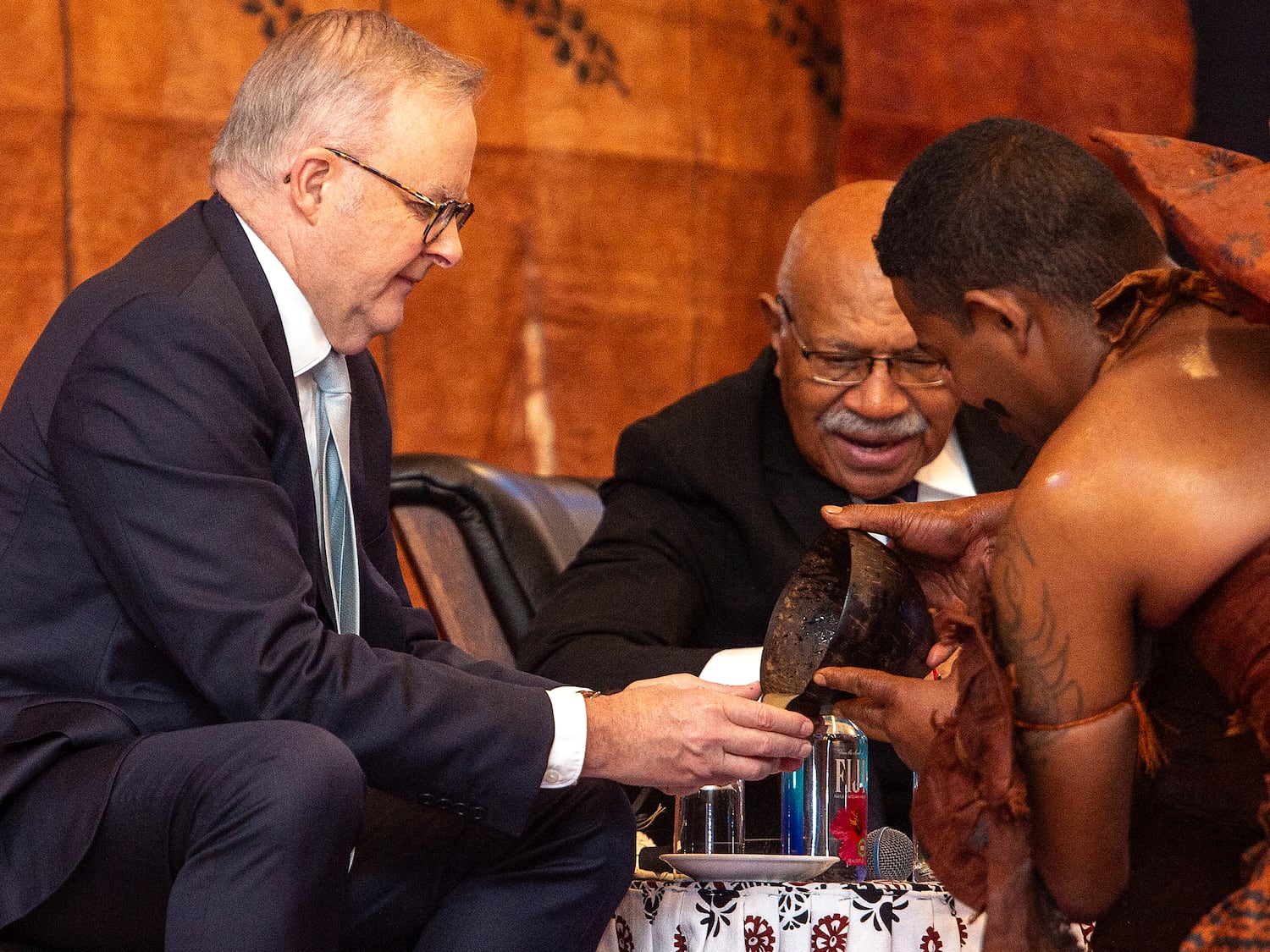
When Australia and Fiji signed a mutual defense treaty this week, a key component of the agreement was that other Pacific island countries could join. Experts told Radio Free Asia that this was a sign that Australia is providing much needed leadership in the region. The Ocean of Peace Alliance, signed Monday in Suva by prime ministers Sitiveni Rabuka of Fiji and Anthony Albanese of Australia, requires that in the event of an attack on either country, both would “act to meet the common danger.” Though the exact wording of the treaty does not absolutely require both sides to mobilize their military forces in such a situation, it still ties the security of the two countries together more closely than their previous agreements, the experts said. The treaty “marks the continued march of Australia’s diplomacy,” Alan Tidwell, director of the center for Australian, New Zealand and Pacific Studies at Georgetown University in Washington, DC, told RFA. Is the Fiji-Australia Alliance the start of the Pacific version of NATO? (RFA Video) “Internationally, the treaty signals to competitors that Australia is leading an effort to align parties in a Westerly tilt,” he said. Tidwell noted that the alliance is the latest in a series of agreements with several Pacific Island countries including Tuvalu, Nauru, Papua New Guinea, and Vanuatu. “Australia has firmly established itself as the standard bearer of Western engagement with Pacific Island democracies in the South Pacific.” The Ocean of Peace Alliance is Fiji’s first, and Australia’s fourth – Canberra signed a bilateral defense treaty with Papua New Guinea in 2025, and with the United States and New Zealand in 1951. Hours after Rabuka and Albanese signed the treaty, China’s foreign ministry spokesperson Mao Ning told reporters during a press conference that Beijing hopes that “the country concerned” would respect the Pacific island countries’ independence. “China always upholds the principles of mutual respect, equality, mutual benefit, openness and inclusiveness in carrying out cooperation with Pacific island nations,” she said. “We do not engage in geopolitical rivalry or seek selfish political gains.” Pacific NATO? On Thursday, Newsweek published a report that suggested that opening up the alliance for others to join could lead to a South Pacific version of NATO to counter China. Sailors stand on board HMAS Canberra, facing the Opera House in Sydney, Australia, March 21, 2026. (Hollie Adams/Reuters) With Australia in an alliance with the United States, and Washington in its own alliances, in theory the mutual defense clause could be triggered by events far away from either Fiji or Australia. But several experts told RFA that that the prospect was unlikely. Republic of Fiji Military Forces personnel practice servicing cargo for transport with a member of the Royal Australian Air Force during the Australian International Airshow in Avalon, Australia March 26, 2025. (Hollie Adams/Reuters) “I would not say that this treaty is the start of a major defense bloc like NATO,” Kathryn Paik, deputy director and senior fellow with the Australia Chair at the Washington-based Center for Strategic and International Studies, or CSIS, told RFA. “However, the flexibility built into this agreement to allow additional partners points to Australia’s creativity in crafting fit-for-purpose agreements and treaties throughout the region to continue to build out the regional security architecture.” She said that it allows Pacific Island countries more power in decisions regarding their own defense. “If others join – especially other Pacific Island nations – it will demonstrate an increasing prioritization of Pacific-led security agreements and the need for collective defense in the face of potential external threats,” Paik said. Though the language of the treaty sounds similar to NATO’s Article 5, the Ocean of Peace Alliance, even if joined by other countries, would be fundamentally different, Gregory Brown, director of the Alliance Futures Initiative, a Washington-based think tank, told RFA. “Just like NATO, you are required under the alliance and under the treaty to consult your constitutional processes in the event of an attack on either one,” he said. “Australia doesn’t have to defend Fiji as if it’s Australia and Fiji doesn’t have to defend Australia as if it’s Fiji. They’re required to take it back to their constituent processes to respond in some fashion.” Ocean of Peace The name of the Ocean of Peace Alliance gets its name from Rabuka’s central foreign policy platform, which advocates for the Pacific countries to address challenges like climate change, geopolitics and strategic competition through consensus and cooperation, while rejecting coercion and militarism. Rabuka also hoped to apply the principles of Fiji taking a “friends to all and enemies to none” approach to navigating regional competition between China and the United States. Leaders of Pacific island nations at the Pacific Islands Forum summit in Honiara, Solomon Islands, on Sept. 11, 2025. (Ben Strang/AFP) In 2025, leaders of the Pacific Islands Forum adopted the “Blue Pacific Ocean of Peace Declaration,” based on Rabuka’s vision. But Brown said the Ocean of Peace Alliance is somewhat of a departure from Rabuka’s earlier messaging. “I think maybe Rabuka has been reading Aristotle who, a couple thousand years ago, told us that ‘friends to all’ means ‘friends to none,’” he said. “In fact what Rabuka has decided is that ‘I’m going to sign a mutual defense treaty,’ which by definition is a departure from just friends to all.” “He’s identified a threat to Fiji and he’s decided to align his security with one set of partners against that threat,” said Brown. “For me, that’s not a betrayal of Fijian sovereignty. It’s an exercise in strategic autonomy.” In addition to signing into the Ocean of Peace Alliance, Australia and Fiji also signed into effect the Vuvale Union, another treaty-level agreement that integrates the two countries economically. Hours after the agreements were signed, China fired an intercontinental-range ballistic missile into the South Pacific Nuclear Free Zone, in what experts told RFA was a message to U.S. allies, but which Beijing said was a routine test. New Zealand’s Prime Minister Christopher Luxon said in a statement Thursday that Wellington would discuss with Suva and Canberra about the prospect of joining the alliance. Edited by Charlie Dharapak.

Download metadata bundle
2 Jul 2026, 14:08 GMT By Harlyne Joku for RFA

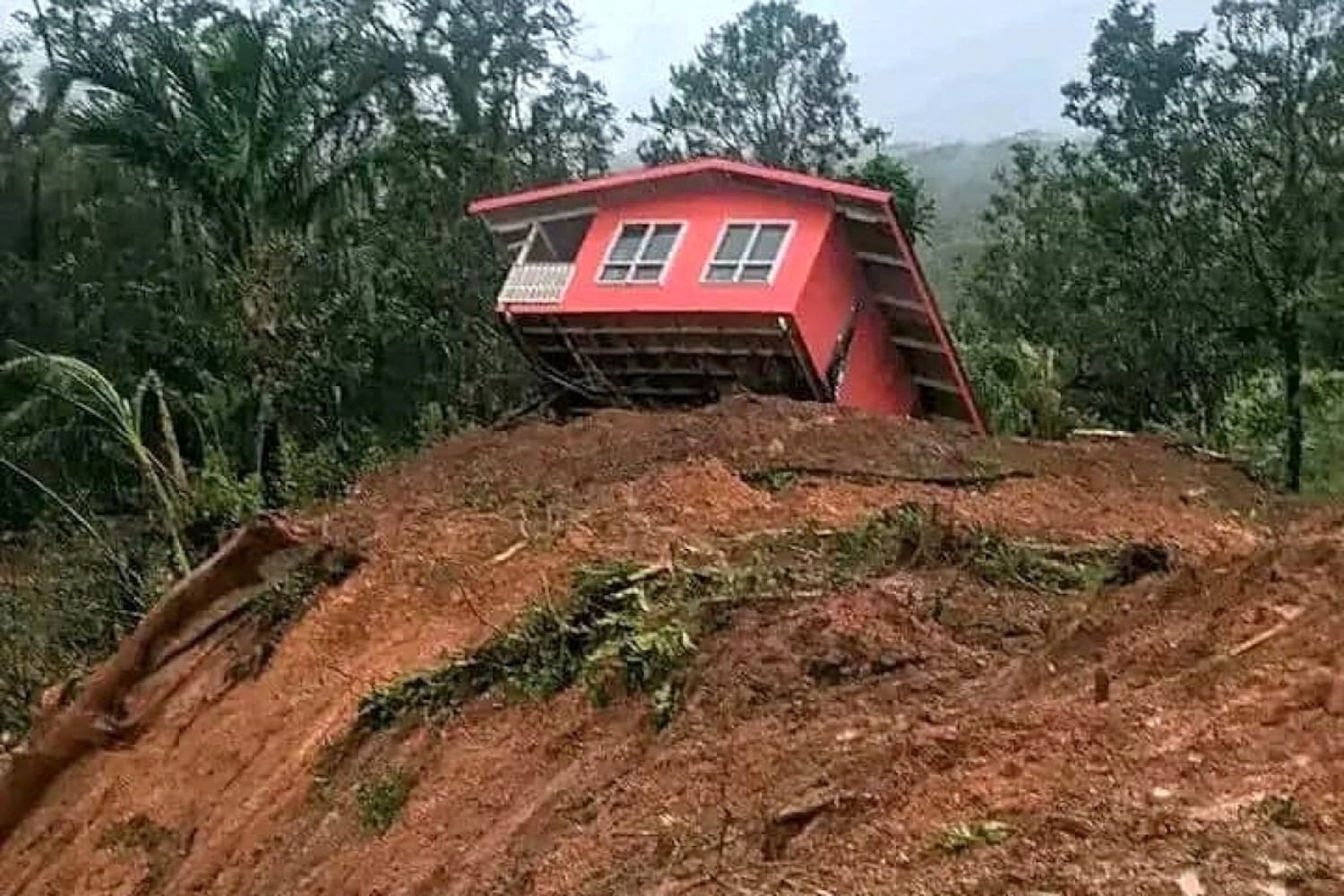
PORT MORESBY, Papua New Guinea — After Cyclone Maila devastated parts of Papua New Guinea in April, disaster relief funds poured into the country, but many of the affected residents told Radio Free Asia that they have received little or no assistance from authorities. In early April, the cyclone appeared over the Solomon Sea, between PNG and the Solomon Islands. It rapidly increased in intensity and severely damaged roads and homes, and submerged crops. PNG authorities reported 25 fatalities due to landslides and flooding. Though authorities have been trying to assist affected residents, they have not yet been able to reach everyone. Marina Kaisa Eroro, who lives with her family in Samarai Island off the southeastern tip of the New Guinean mainland, told RFA. A file photo of Marina Kaisa Eroro, a resident of Samarai Island in Milne Province, Papua New Guinea. (Marina Kaisa Eroro/RFA) The cyclone blew down her breadfruit, betel nut, and fruit trees, she said. “The trees fell on our water tank and damaged our source of drinking water,” said Eroro. “No assistance at all came from the authorities.” Eroro said that councillors from the ward, the lowest division of the local government, had visited to determine the extent of damage. The island is under the jurisdiction of the Bwanabwana Rural local-level government, or LLG, in the Samarai-Murua district of Milne Bay Province. The province is headquartered on the mainland, though many of its administrative bodies are located on Samarai, which was the provincial capital until 1968. In this file photo, trees that were knocked down by Cyclone Maila have damaged a water tank on Samarai Island, Milne Bay province, Papua New Guinea. (Marina Kaisa Eroro/RFA) “No national or provincial government official visited our area to assess the damage,” said Eroro. Even in cases where residents do get assistance, it is minimal, Cora Diala, who lives in the village of Waraka in Weraura LLG, in the Rabraba district of Alotau, on the mainland part of Milne Bay province, told RFA. Cora Diala, a 77-year-old widow from Weraura village, Milne Bay province, Papua New Guinea, in a file photo. (Fay Duega/RFA) “Last month was the first time we saw relief supplies from the government,” she said, adding that the extent of the relief was a 1 kilogram packet of rice for most people. “Widows like me got two packets of rice. Nothing else.” Relief aid After the storm had dissipated, foreign governments began offering money to the PNG government as aid. On May 14, the Chinese Embassy in Port Moresby handed over US$1 million to the PNG government in a public handover ceremony, during which Chargé d’affaires Pang Hanzhao, after giving the oversized check to several senior officials, including Prime Minister James Marape, expressed condolences to the affected people, saying “a friend in need is a friend indeed.” Marape expressed his gratitude, saying the assistance came at a critical time, when the government was continuing to “support communities affected by Cyclone Maila, and is gratefully appreciated by the PNG Government and people.” Other countries also provided assistance, including $1.72 million (2.5 million Australian dollars) from Australia to both PNG and the Solomon Islands. The U.S., meanwhile, delivered relief supplies through existing disaster preparedness programs. A truck damaged by floodwaters in the Ramazon River in the Tinputz district in Northern Bougainville, an autonomous region in Papua New Guinea, due to heavy rains from tropical cyclone Maila. (AFP) But the government has not distributed assistance to everyone affected. It focused only on the areas and communities that needed assistance most, Randal Ganisi, the acting disaster coordinator in Milne Bay province, told RFA. “Much of the relief supplies was given to Murua Island communities who were severely affected by the tropical cyclone Maila than those only partly affected,” said Ganisi. “However other districts of Milne Bay province were not supported with relief supplies due to the fact that they were not severely affected.” Though he provided a list of LLGs that the supplies were delivered to, he was not able to provide an outline of how much cash and food supplies were sent to each territory. RFA contacted the National Coordinator for an update on the distribution but received no response. Edited by Eugene Whong.

Download metadata bundle