
US Agency for Global Media

News and Information from Around the World

Clear all
1 Sep 2026, 20:38 GMT By Eugene Whong for RFA

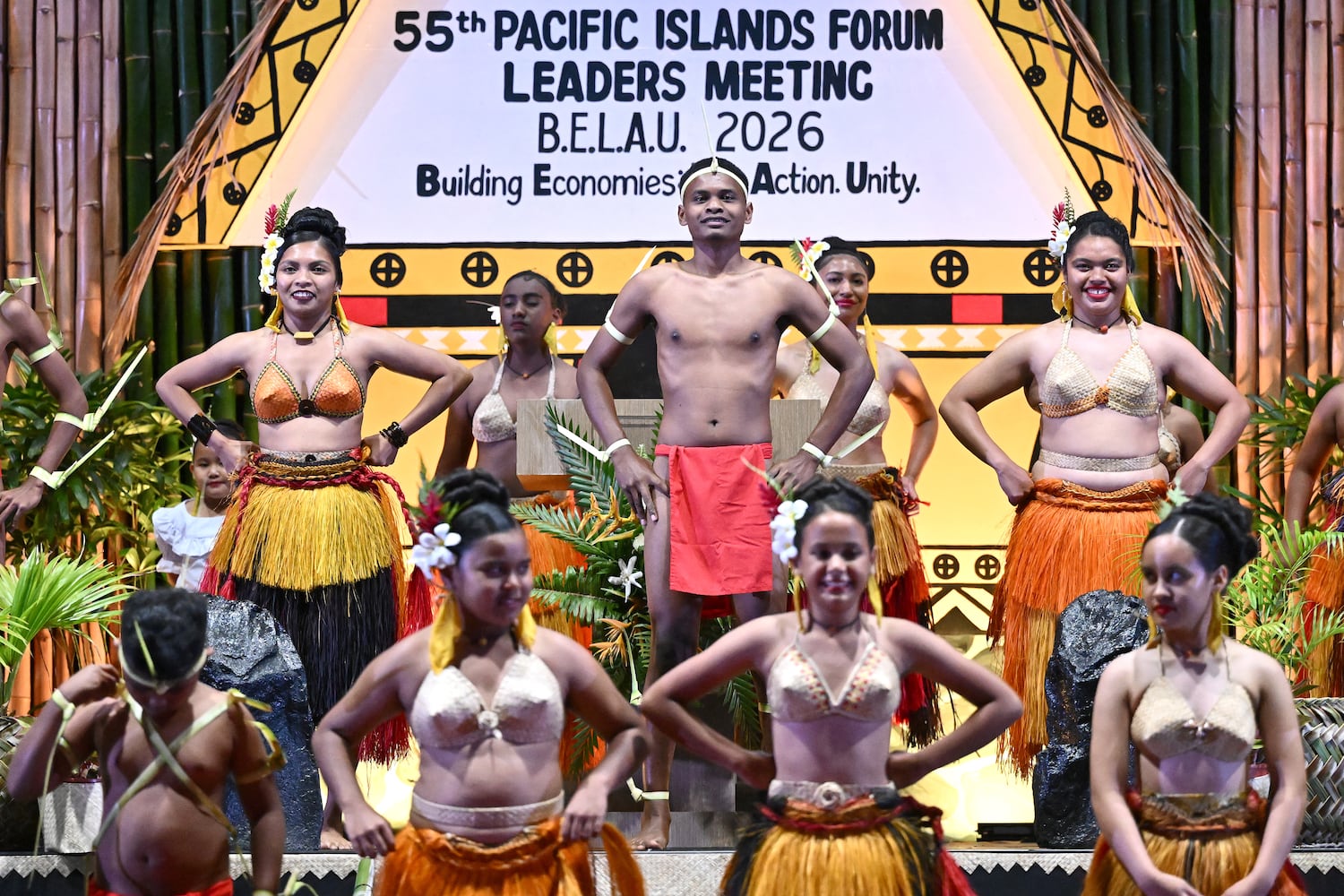
The 2026 Pacific Islands Forum meeting will be “less productive” than in previous years because one third of the regional grouping’s leaders are not present for the summit in Palau, where China-Taiwan tensions are front and center, experts told Radio Free Asia. Leaders from five of the 18 member nations — Fiji, Vanuatu, Samoa, Kiribati, and New Caledonia — sent deputy ministers or other senior officials in their stead. A sixth leader, Solomon Islands Prime Minister Matthew Wale, had arrived in Palau, but returned to Honiara to address a no-confidence filing against his leadership. “The meeting is already less productive because as a political meeting, without leaders, it cannot be viewed as being productive,” Alan Tidwell, director of the Center for Australian, New Zealand and Pacific Studies at Georgetown University in Washington, told RFA. “Being productive means having leaders in the room.” The theme of this year’s forum meeting uses the Palauan word for Palau as an acronym – B.E.L.A.U., Building Economies: Life. Action. Unity. But the invitation of Taiwan as a development partner, and China as a dialogue partner, has left the countries of the Pacific Islands Forum, or PIF, anything but unified. Palau President Surangel S. Whipps Jr. and Taiwan's Foreign Minister Lin Chia-lung during the inauguration of Taiwan-funded solar energy and electric bus projects in Koror, Aug. 30, 2026, ahead of the Pacific Islands Forum Leaders Meeting. (Saeed Khan/AFP) China-Taiwan rivalry Palau is one of three Pacific countries and one of 12 globally that maintain official diplomatic relations with Taiwan. As host nation, Palau took the traditional role of inviting the non-member countries to the forum meeting alongside the PIF Secretariat, which determined that Taipei was eligible to participate as a development partner under the 1992 PIF framework. Palau’s President Surangel Whipps Jr.’s decision to include democratic Taiwan, which mainland communist China considers to be a rogue province, angered Beijing. After Taiwan’s Minister of Foreign Affairs Lin Chia-lung attended the PIF meeting’s opening ceremony on Monday, Qian Bo, China’s Pacific envoy, warned that there would be consequences, without specifying what the consequences were. China's special envoy for Pacific Affairs Qian Bo leaves after attending the Pacific Islands Forum Leaders Meeting in Koror, Sept. 1, 2026. (Saeed Khan/AFP) Though Qian said this was not a threat, Gregory Brown, Director of The Alliance Futures Initiative, a Washington-based think tank, said it was “a precisely calibrated threat in Pacific diplomacy.” “It likely means tourism bans, frozen loans, and delayed projects for anyone who sat in the same room as Taiwan’s foreign minister,” he said, adding that Palau was the most likely target for retaliation. He said China could put economic pressures on Palau, noting that Beijing devastated Palau’s tourism industry in 2017 by declaring it unsafe for Chinese tourists. Prior to then, around 40% of Palau’s tourism income came from China. China warned its citizens not to travel to Palau in an advisory on Aug. 19, about 10 days before the forum, a move that was criticized by the United States Embassy in Koror as weaponization of tourism. Qian defended Beijing’s advisory to reporters on Monday. “That weapon is still loaded,” Brown said, referring to the advisory. “We may already be seeing the first consequence play out.” Taiwan's Foreign Minister Lin Chia-lung speaks on the sidelines of the Pacific Islands Forum Leaders Meeting in Koror, Palau, Sept. 1, 2026. (Saeed Khan/AFP) AFP reported that Chinese officials warned the delegations of the PIF countries that they should not attend any side events at the meeting that include Taiwan, citing a Pacific source at the meeting on condition of anonymity. Lin defended Taiwan’s participation Tuesday, telling reporters that Taipei has been a significant donor to the Pacific, and has been involved with the meeting for decades. “We should not make compromises just because of China’s recent bullying,” Lin said. “Wherever there is Taiwan’s presence, China will have a difficult time having full control over the area.” But Beijing on Tuesday doubled down on its assertion that Taiwan does not belong. Taiwan “is not qualified to participate in the forum’s activities in any capacity,” Guo Jiakun, a spokesperson for the Chinese foreign ministry told reporters in Beijing. “Authorities in Taiwan have sent independence separatists such as Lin Chia-lung to make sneaky visits and curry favour everywhere in a futile attempt to attract attention.” Tuvalu's Prime Minister Feleti Teo arrives for a meeting during the Pacific Islands Forum Leaders Meeting in Koror, Sept. 1, 2026. (Saeed Khan/AFP) One-third of leaders absent While four of the five leaders who did not fly to Palau cited pressing domestic issues as the reason they could not attend, the fifth, President Taneiti Maamau of Kiribati said he was unable to attend because the country’s parliament was in session and a lack of available commercial flights. In his stead, David Teaabo, the country’s former ambassador to China, was sent to lead the delegation. The move was widely interpreted as a snub aimed at both Palau and Taiwan. New Zealand’s Foreign Minister Winston Peters told reporters that denying that foreign influence had a role in the absences would “defy gravity and logic,” telling Australia’s ABC News that the absences were “highly suspicious.” New Zealand's Foreign Minister Winston Peters, right, at the Pacific Islands Forum Leaders Meeting in Koror, Palau, Aug. 31, 2026. (Saeed Khan/AFP) Tidwell called the Kiribati flights excuse “absurd,” and said that the absence of so many of the forum member countries’ leaders undermines the PIF meeting. “It will be remembered as the meeting at which almost a third of the leadership didn’t attend,” he said. “From Washington’s perspective the deputy secretary of state is attending. This has been touted in Washington as a strong signal of how important the Pacific is for Washington.” Tidwell explained that in previous years it would have been the Secretary of Interior that attends and that Deputy Secretary of State Christopher Landau’s participation was supposed to be “a success.” “But who is he meeting with?” said Tidwell. “The real test will be to see how he’s met when he visits Tarawa.” Kiribati is a scheduled stop on Landau’s three-country itinerary in the Pacific after the PIF meeting concludes Friday. According to the U.S. State Department, he will attend the Kiribati Development Partners Forum there, as well as having meetings with government representatives. In last year’s forum held in the Solomon Islands, then Prime Minister Jeremiah Manele, widely considered to be a pro-Chinese politician, decided not to involve any outside nations, and this was seen as a way to prevent Taiwan from attending. Brown praised Palau for its strategy of inclusivity. “Last year, the Solomons solved the Taiwan problem by locking the door on everybody,” he said. “This year, Palau solved it by opening the door to everybody and telling China to behave like a guest instead of a landlord.” He said President Whipps’ approach was better than Manele’s. “In my opinion, Whipps’ approach is the right one,” he said. “It considers Pacific sovereignty as something Pacific states exercise by making their own decisions about who sits at the table.” Edited by Charlie Dharapak.

Download metadata bundle
31 Aug 2026, 20:38 GMT By Taejun Kang for RFA

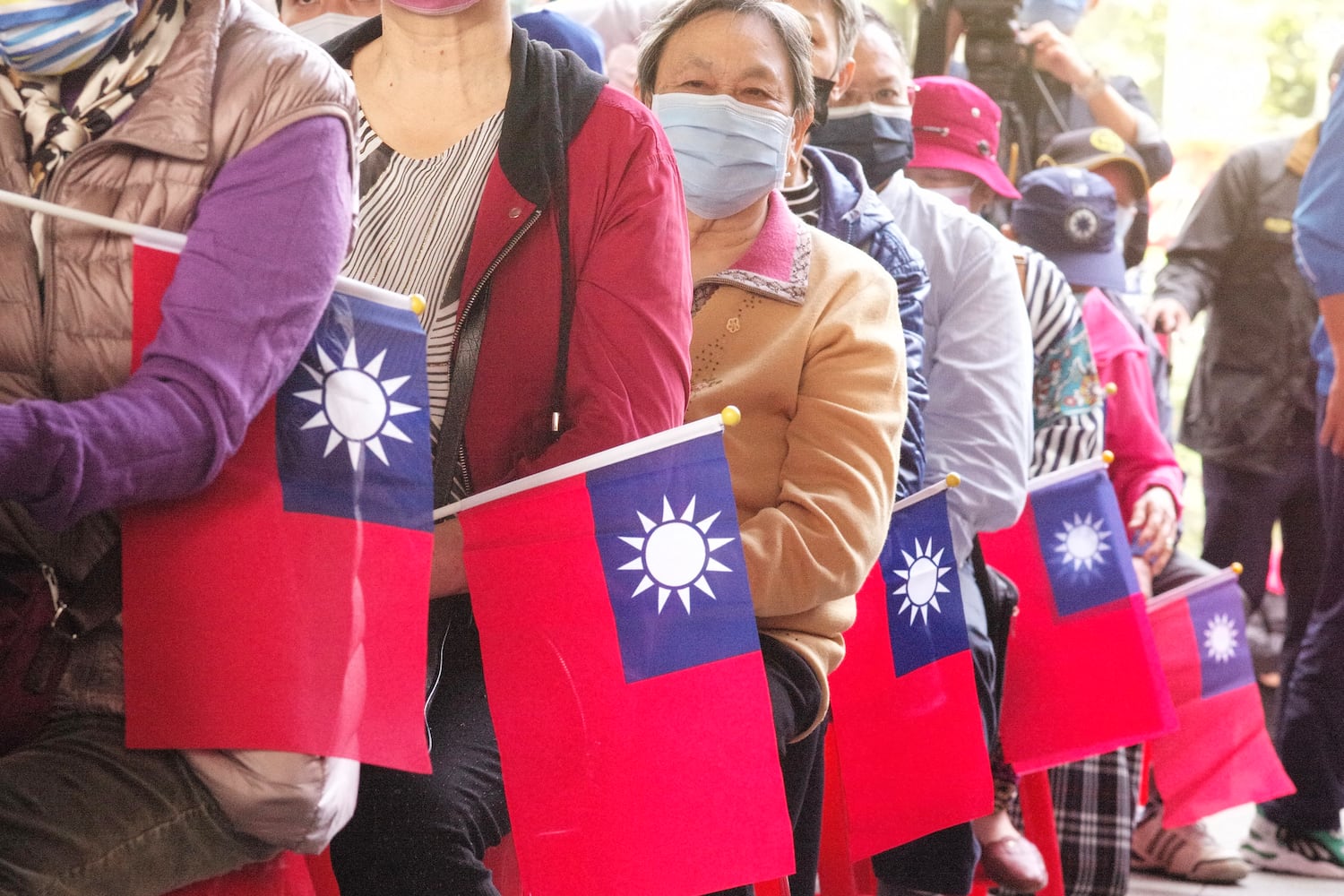
China is likely to use artificial intelligence to influence Taiwan’s Nov. 28 local elections, analysts told Radio Free Asia. Taiwan’s ruling Democratic Progressive Party, or DPP, warned this month that Beijing could use AI to target groups of voters, impersonate Taiwanese social media users and circulate fabricated recordings or scandals shortly before election day. The warning comes as Taipei steps up its defenses against AI interference in the election regardless of whether it originates inside or outside of the democratic island, which China considers to be its territory. Taiwan’s government rejects Beijing’s sovereignty claim and says the island’s future can be decided only by its people. Researchers say influence operators can use AI to produce content more quickly, manage networks of fake accounts and tailor messages to individual voters. “I do think that AI will be more involved in the November local elections,” Sze-Fung Lee, an independent researcher specializing in Chinese hybrid warfare, told RFA. “The use of AI has been observed repeatedly in previous elections, and I believe we will continue to see it in the form of deepfakes for defamation campaigns, coordinated inauthentic behavior, and more sophisticated microtargeting.” People ride past campaign ads for presidential and parliamentary candidates ahead of the general election in Taipei, Jan. 12, 2024. (Ann Wang/Reuters) China has a long history of interfering in Taiwan’s elections, and it will likely use AI as it continues its efforts, William Yang, a Northeast Asia analyst at the Belgium-based International Crisis Group, told RFA. “I do think Taiwan has legitimate reason to worry about Chinese election interference assisted by advanced AI technology,” Yang said. “Now with the assistance of advanced AI technology, these efforts will certainly be on the rise, especially when it coincides with key election cycles.” Beijing has repeatedly denied interfering in Taiwan’s elections. It accuses the DPP of promoting separatism and using tensions with China for political purposes. Electoral context The DPP’s warning comes as the party faces a difficult local election. The opposition Kuomintang, or KMT, won 14 mayoral and county chief posts in 2022, compared with five for the DPP, and has secured a majority of those positions in the past two local election cycles. Yang said the KMT was currently projected to win more counties, although the DPP could seriously challenge it in several races. “The DPP will certainly be closely monitoring and tracking signs of disinformation that is trying to undermine its electoral prospects and find clues that might suggest its connection to China,” he said. The KMT supports greater engagement with Beijing but rejects descriptions of itself as pro-China. The DPP, meanwhile, supports closer relationships with countries like the United States and Japan. Newly elected opposition Kuomintang leader Cheng Li-wun delivers her speech during the party's National Congress in Taipei, Nov. 1, 2025. (I-hwa Cheng/AFP) In a statement issued in February about reports of Chinese preparations to influence the local elections, the KMT said it opposed interference by external actors. Despite the major differences the two parties have in cross-straits relations, Taiwan’s local elections are generally driven more by domestic issues. In 2022, the DPP emphasized national security and resistance to Beijing but suffered its worst local election result in years, prompting then-President Tsai Ing-wen to resign as party chair. 2024 influence? In its warning, the DPP said AI-generated material that circulated around Taiwan’s 2024 presidential election included videos promoting “The Secret History of Tsai Ing-wen,” – an electronic book containing allegations about the former president – and a suspected fake recording of Terry Gou, a businessman and former presidential hopeful. Research by Taiwan-based civil society group Doublethink Lab found that generative AI was used during the 2024 election to conduct large-scale spam campaigns and help inauthentic accounts vary their posts and schedules. In previous elections, manipulation campaigns relied more on direct amplification of Chinese state media and prominent Weibo users, but in 2024, most of the interference came from unofficial social media accounts, Doublethink Lab found. However, attributing such activity to China can be difficult, the report said. The presence of AI-generated material does not establish who created it, and researchers must examine account networks, posting behavior and connections with state-backed media or other known actors. Voters cast their ballot for the presidential election at a polling station in Taipei on Jan. 13, 2024. (I-hwa Cheng/AFP) AI could make attribution harder by allowing operators to imitate Taiwanese expressions, discuss local issues and vary their online behavior. A February report by the Netherlands-based Leiden Asia Centre said AI could make disinformation cheaper and easier to produce at scale. It found, however, that manipulation in Taiwan drew much of its power from existing political polarization, social grievances and social media platforms that reward emotionally charged content. The report indicated that AI could amplify existing political divisions rather than create new ones. Shoring up defenses Taiwan’s Central Election Commission is establishing a specialized task force and an online platform through which candidates can report suspected deepfakes. The commission plans to assess reported material and refer confirmed cases to online platforms for action. Such a system could help authorities respond to fabricated recordings attributed to identifiable candidates. Coordinated networks may be harder to address when individual accounts post political opinions or misleading claims that are not demonstrably false. Content circulating through closed online communities, including those found on the popular LINE messenger app, also presents a challenge because it is less visible to election officials, researchers and fact-checkers. The election preparations come amid broader concerns about Chinese cyber activity. Taiwan’s National Security Bureau said critical infrastructure faced an average of 2.63 million Chinese cyberattacks a day in 2025, an increase of 6% from 2024 and 113% from 2023. Some of the attacks coincided with Chinese military exercises or politically significant events in Taiwan, the bureau said. The cyberattack figures do not demonstrate AI-enabled election interference, but Lee said they supported the government’s broader assessment of sustained Chinese pressure. “I do not think the government is being overly sensitive,” she said. “There is hard data showing the frequency of cyberattacks and cognitive warfare targeting Taiwan every day, as well as evidence of Chinese electoral interference in Taiwan’s 2024 presidential election.” Edited by Eugene Whong.

Download metadata bundle
28 Aug 2026, 23:43 GMT By Bryan Manabat for RFA

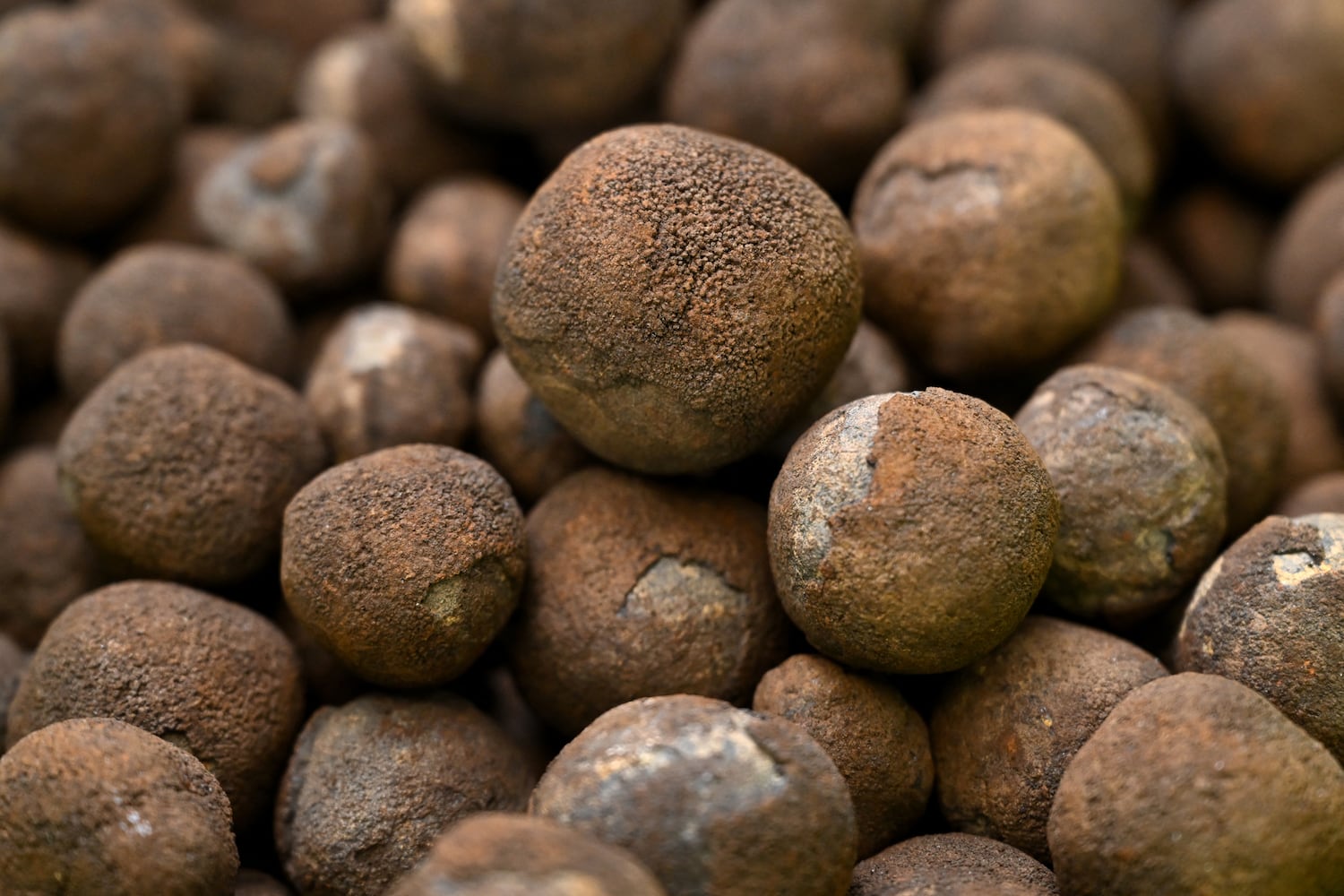
SAIPAN, Northern Mariana Islands — As the U.S. government moves forward with plans to open more than 65 million acres of federal waters around the Northern Mariana Islands to potential seabed mineral exploration, business leaders and Indigenous advocates told Radio Free Asia the U.S. territory must not be sidelined in decisions driven partly by national‑security priorities. The proposed leasing notice, released August 17 by the Marine Minerals Administration, or MMA, follows earlier steps identifying vast areas of ocean for possible mineral development around the territory, officially called the Commonwealth of the Northern Mariana Islands, or CNMI. The plan has triggered intense debate across the islands, where concerns span environmental risks, cultural impacts, fisheries, tourism, and democratic accountability. Though the plan could be economically beneficial, the business community in the CNMI is approaching it with caution, Joshua Wise, president of the Saipan Chamber of Commerce, told RFA. This map shows the mineral lease sale areas near CNMI as identified by the Bureau of Ocean Energy Management, or BOEM. In July, BOEM was reunified with the Bureau of Safety and Environmental Enforcement to form the Marine Minerals Administration. (MMA) “There are legitimate concerns, but there may also be significant economic opportunities that deserve to be fully understood,” Wise said, adding that critical minerals have become central to U.S. national security, manufacturing, technology, and supply‑chain resilience — meaning the CNMI could become part of a broader federal strategy. “If resources located near the CNMI ultimately become part of that national strategy, then we should be asking what role the Commonwealth will have and what economic opportunities could be created here,” he said. Resource rivalry The push for offshore critical minerals comes as the United States and China compete for control of the materials that power modern technology — including batteries, semiconductors, electric vehicles, renewable‑energy systems, and advanced defense platforms. China currently dominates global processing of rare earth elements, cobalt, nickel, graphite, and battery components, giving it significant leverage over global supply chains. U.S. officials have warned that this dependence poses strategic vulnerabilities for national security and manufacturing. “Critical minerals are essential to America’s national security, economic strength and resource sovereignty,” Matt Giacona, acting director of the MMA, said in the Aug. 17 announcement. “The United States cannot afford to depend on foreign nations for the resources that power our economy and support our defense industrial base. The Marine Minerals Administration is working to unlock the critical mineral potential of the U.S. Outer Continental Shelf responsibly, transparently and with the rigorous environmental review the American people expect.” Washington is exploring new sources of critical minerals, including the deep ocean, where polymetallic nodules and crusts contain metals essential for clean‑energy and defense technologies. MMA’s interest in CNMI waters is the potential future node in U.S. supply‑chain resilience efforts. History has shown what can happen when national‑security priorities override local interests, Gregorie Michael Towai (Eipéráng), a researcher of and advocate for indigenous people in the territory, told RFA. He cited the 67 U.S. nuclear tests in the Marshall Islands between 1946 and 1958 and the long‑term contamination there, as well as the continuing discovery of unexploded ordnance across the Marianas as lessons from history. The abandoned Pacific Barrier Radar III in Saipan, Northern Mariana Islands, June 27, 2024. (Yuichi Yamazaki/AFP) “Decisions justified by national security can create consequences for Pacific communities that endure long after the strategic circumstances that originally justified them have changed.” Towai stressed that deep‑sea mining is not equivalent to nuclear testing — but the imbalance of power is similar. He said the CNMI must insist on credible independent science, meaningful public participation, and enforceable guarantees before any commitments are made. Consultation, he said, must be capable of changing the decision, not merely documenting that communities were heard. “National security matters, but the security of Pacific communities matters too. That includes clean water, healthy fisheries, cultural continuity, food security, and the ability of future generations to inherit an environment that has not been irreversibly altered,” Towai added. Red flags Even if the plan provides contracts for CNMI companies and jobs for its people, there are unanswered questions surrounding how exploration or mineral development could affect industries that already sustain the CNMI, Wise said. “Our marine environment directly supports industries that already exist today, particularly tourism and fisheries,” he said. “So we need a much clearer understanding of what future exploration or mineral development could mean for those industries.” People walk past a beach during sunset in Saipan, Northern Mariana Islands on June 27, 2024. (Yuichi Yamazaki/AFP) Wise said the CNMI needs baseline environmental data, protections for fisheries, and much greater clarity about both risks and benefits. “The question should be: if this moves forward, can it be done responsibly, can our existing industries be protected, and will the people and businesses of the CNMI have a meaningful seat at the table and a meaningful share in the opportunities that may result?” he said. Government officials said that they need other assurances prior to the plan being enacted. In public statements, CNMI Governor David M. Apatang said the federal notice triggers a 60‑day review period during which the CNMI will insist on strict environmental and cultural safeguards, while U.S. Delegate Kimberlyn King‑Hinds said that she is advancing legislation to secure revenue sharing, mandatory mitigation studies, and formal consultation with CNMI leaders. But the CNMI’s legal authority over offshore waters remains limited. It can demand safeguards and challenge inadequate environmental review, but it cannot block the MMA from advancing leasing in federal waters. Under the Covenant and federal court rulings, submerged lands beyond the 12‑mile territorial sea fall under exclusive federal jurisdiction. But the Pacific Ocean is more than just a boundary for people native to the Pacific, Towai said. “For Indigenous peoples of Oceania, the ocean is part of our homeland,” he said. “Decisions about the seabed cannot be evaluated exclusively through mineral values, lease blocks, and federal jurisdiction.” Edited by Eugene Whong.

Download metadata bundle
27 Aug 2026, 20:44 GMT By Noh Jung Min for RFA, Dolkar, Dickey Kundol, and Tawang for RFA Tibetan

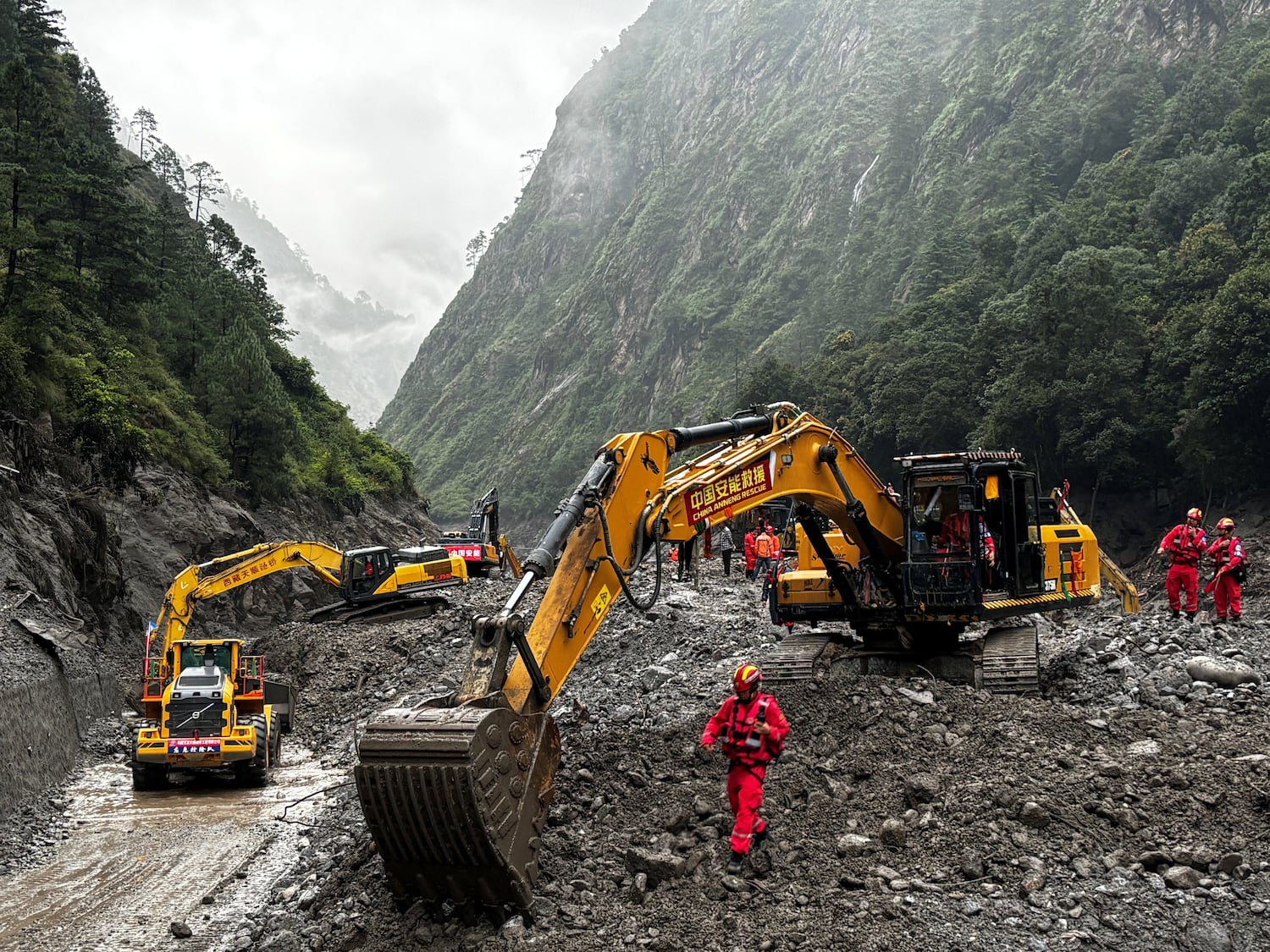
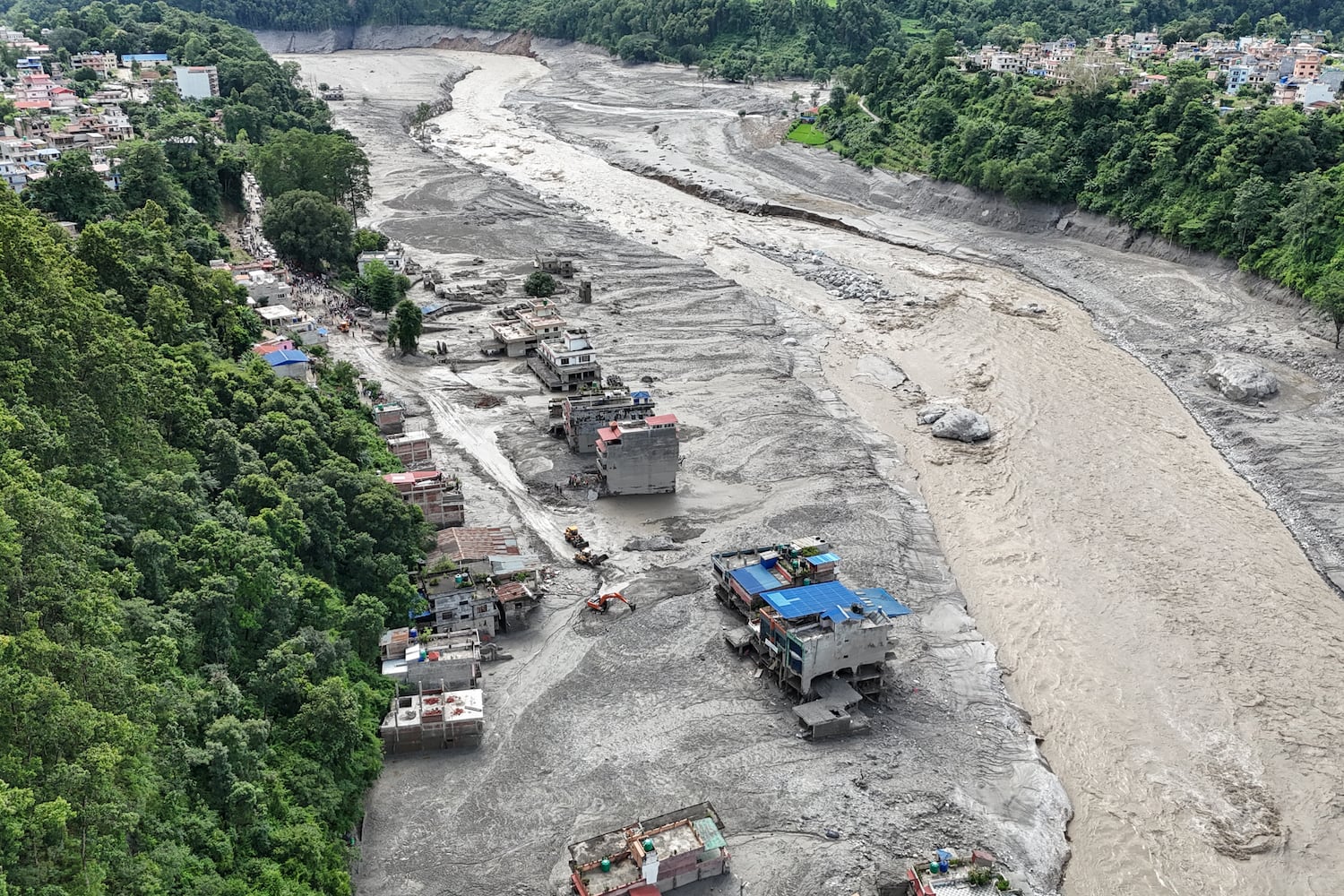
Satellite imagery taken at the Nepal-Tibet border shows extensive destruction from flooding and landslides that inundated the area Wednesday leaving hundreds of people dead or missing, but information from the Chinese-controlled side of the border is severely lacking, Tibetan rights activists told Radio Free Asia. Satellite imagery shows extensive damage from Nepal-Tibet border floods A comparison of imagery taken Aug. 23 and Aug. 27 of Tibet’s Kyirong County (Gyirong in Chinese), and Nepal’s Rasuwa district, shows that customs buildings, a bridge and other infrastructure on the border appear to have been swept away in the carnage. Restaurants, hotels, homes, and other buildings downstream on the Nepal side also appear to have been destroyed or washed away. Further downstream, much of Timure village appears to have disappeared in the latest imagery, underscoring the scale of the disaster and raising concerns about casualties and property loss. China’s state-run Xinhua news agency reported that the disaster also caused extensive infrastructure damage — about 3 kilometers (2.8 miles) of the G216 highway leading to Kyirong Port were damaged, and five telecommunications base stations initially stopped operating. The Chinese government is severely restricting detailed information about the situation inside Tibet, Ryan Fioresi, executive director at Washington-based International Campaign for Tibet, or ICT, told RFA citing sources on the ground. “Chinese authorities have relocated local residents, barred journalists, independent observers, and others from entering the affected area, and prevented reliable firsthand information from emerging,” he said. “As a result, the international community remains largely dependent on Chinese state media, whose coverage has focused primarily on Xi Jinping’s directives and official accounts of rescue and relief efforts, rather than the actual conditions on the ground, survivors’ experiences, or the full extent of the casualties and destruction.” Lobsang Yangtso, a senior environmental researcher at the International Tibet Network, said she was concerned that the Chinese government has been engaged in large-scale construction projects in Tibet, a region that is geographically vulnerable to disasters such as earthquakes and flooding. She called on Chinese authorities to publicly and transparently release information about casualties and missing people. In total, at least 1,468 people were missing and 392 were confirmed dead according to AFP at the time of writing. On the Nepalese side, the disaster has also devastated Tibetan communities in Rasuwa district. As of August 27, Chinese authorities said three people had died and 558 were missing in Kyirong County. At the time of the disaster, hundreds of people were believed to be in the vicinity of the Kyirong border crossing including villagers, border staff, freight and construction workers, merchants, and non-Chinese citizen tourists. Tibetan casualties in Nepal Sources within the Tibetan diaspora told RFA that many Tibetans living in Nepal were affected by the disaster. The homes and property of five Tibetan households in the town of Timure were swept away by floodwaters, according to a statement from the Tibetan Refugee Welfare Office in Nepal. Members of two Tibetan families remained out of contact, while members of three other families escaped to higher ground and survived. Damaged road leading to Kyirong Port following a mudslide, in Shigatse, Tibet Autonomous Region, Aug. 27, 2026. (China Daily via Reuters) In the Gegyeling Tibetan settlement in Rasuwa district, 11 houses and the surrounding area were swept away. The whereabouts and condition of some of the residents remain unclear. Sources familiar with the situation also told RFA that floodwaters swept away a Tibetan in the Shabrubesi market area, also in Rasuwa. Sikyong Penpa Tsering, president of the Central Tibetan Administration, the exile government in Dharamshala, India, later reported the same statistics, adding that in Gegyeling, two elderly residents were still missing. He also provided an update on the situation in Shabrubesi, which he said was largely swept away, one Tibetan was killed and three others remained missing. In Timure, he said, six people from two Tibetan families were reported missing. Nepalese authorities had rescued six Tibetans as of the morning of August 27, Tsering said. Three other Tibetan settlements in Nepal — Thangpoche, Khangjim and Biritim, also known as Briddim — were not affected because their homes are located at higher elevations. The Dalai Lama, Tibet’s exiled spiritual leader, expressed his condolences Thursday, acknowledging that the disaster had caused heavy damage and loss of life. “I hope that appropriate follow-up measures will be taken, wherever possible, to help ensure that such disasters do not recur,” he said. The exact cause and sequence of the disaster remains under investigation and experts cautioned against prematurely describing the disaster as simply a glacial collapse, as many international media outlets had been reporting. The evidence points to a very large slope failure involving both rock and glacier ice on the northern side of the Langtang Lirung massif, Tenzing Chogyal Sherpa, a physical geographer at Utrecht University in the Netherlands, told RFA. “What is clear is that this was not simply a conventional river flood,” Sherpa said. “A very large volume of rock and ice moved rapidly downslope and entered the river system, producing an extraordinary amount of debris and sediment.” He said he preferred the more cautious term “large rock-ice avalanche” until further evidence is available. Tibetan blackout The Chinese government deployed hundreds of emergency responders, firefighters, engineers and military personnel to the area, China’s state-run Xinhua news agency reported. Authorities are also monitoring a landslide-dammed lake upstream from the border crossing. Xinhua reported that the water level had risen compared with the previous evening, raising concerns about a possible secondary disaster. Experts and advocates told RFA that they are calling for better monitoring of high-altitude source areas, stronger river-level early warning systems, rapid communication between upstream and downstream communities, and, particularly in transboundary river basins, much stronger sharing of information across borders. Nepal’s rescue efforts on its side of the border are more transparent than the Chinese government’s response on the Tibetan side, Tencho Gyatso, president of ICT, told RFA. “While Nepal is providing timely information and avenues for international humanitarian assistance, we hope that, in Tibet, disaster relief efforts will be accompanied by timely and transparent information and unhindered access for humanitarian support,” she said. Edited by Eugene Whong.

Download metadata bundle
25 Aug 2026, 19:50 GMT By Meng Ou for RFA Mandarin

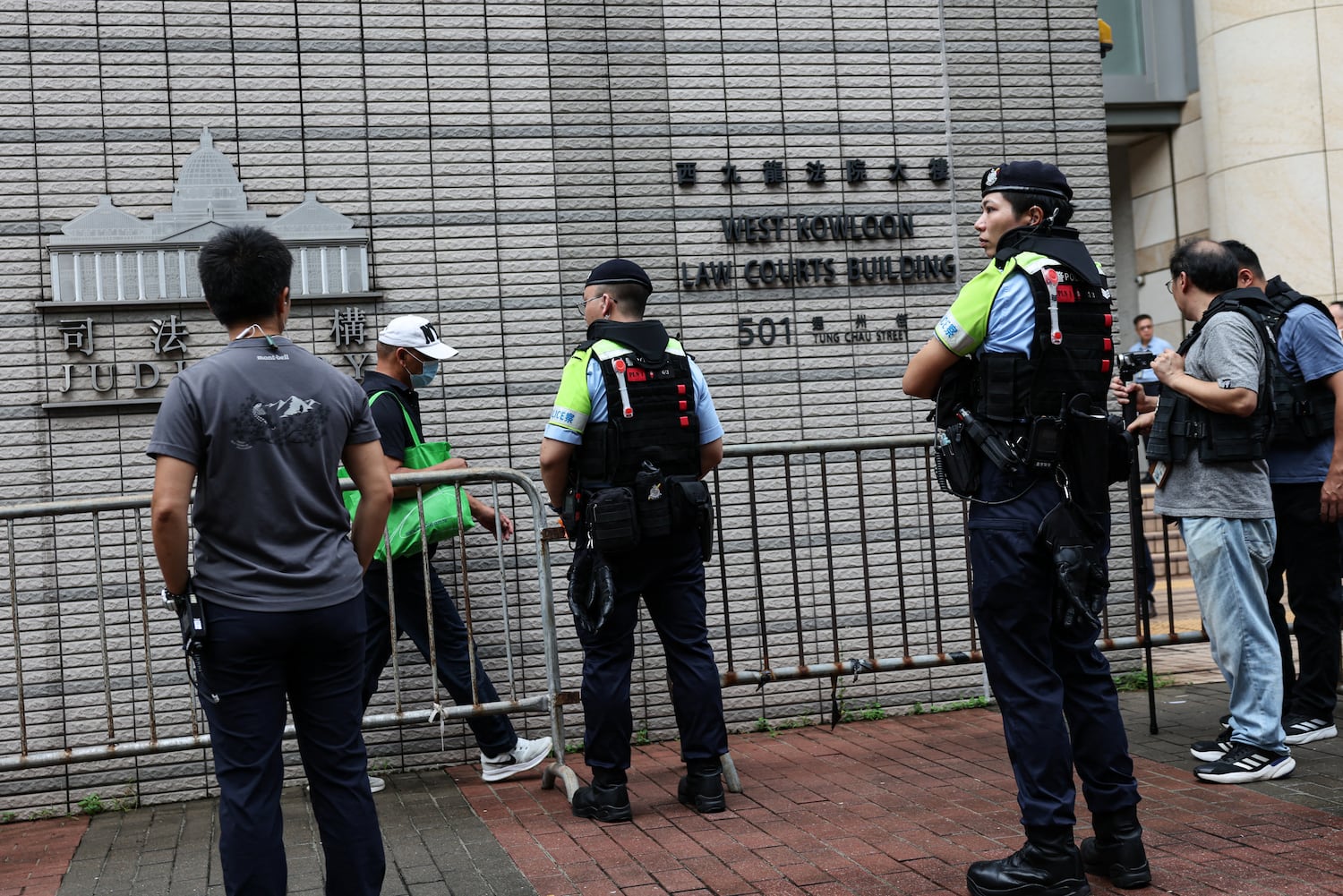
Read a version of this story at RFA Mandarin A Hong Kong court this month convicted two leaders of a dissolved pro-democracy group to erase the memory of the Tiananmen Square Massacre, a pro-democracy activist who was a student leader during the 1989 event told Radio Free Asia. The Hong Kong High Court ruled Aug. 21 that the Hong Kong Alliance in Support of Patriotic Democratic Movements of China, its former chairman Lee Cheuk-yan and its former vice-chairwoman Chow Hang-tung, were guilty of “inciting subversion of state power.” The Alliance is best known for organizing yearly candlelight vigils in Hong Kong’s Victoria Park each year in remembrance of the Tiananmen incident, a practice that continued until 2019. In 2020 authorities stopped the vigil citing health concerns during the pandemic, then from 2021 onward they were able to use Hong Kong’s draconian National Security Law to end it permanently. Erasing the past The verdict is intended to discourage commemorations of the Tiananmen Square Massacre, Wang Dan, who was a student leader of the protests in 1989, told RFA. “The authorities clearly hope to use this verdict to erase every trace of history and prevent Hong Kong people from remembering June 4th,” he said, referring to the massacre by the date which it occurred, as is customary in Chinese. Hong Kong pro-democracy activists Lee Cheuk-yan, left, and Chow Hang-tung posing during photo sessions in Hong Kong on March 21, 2021. (Peter Parks/AFP) Wang said that he does not believe authorities can succeed in erasing the event from the public consciousness. “Such a verdict will only lead more people to commemorate it in silence,” he said. “Silent remembrance is still remembrance. The memories people carry in their hearts cannot be completely destroyed by such brutal acts.” In September 2021, authorities arrested Lee, Chow, and another former chairman of the Alliance, Albert Ho, with “inciting subversion of state power.” The Alliance voted to dissolve on Sept. 25 of that year. Lee and Chow were held in custody until the trial, which began in January of this year. Ho was initially held in custody but was briefly let out on bail for medical grounds in 2022, then returned into custody in 2023. Ho pleaded guilty while Lee and Chow both pleaded innocent. The court on Aug. 21 found Lee, Chow, and the disbanded organization guilty. Legal argument A core point of contention in this case is the Hong Kong Alliance’s long-standing call to “end one-party rule.” The court held that after the implementation of the National Security Law in 2020, the Hong Kong Alliance and its leaders continued to promote this goal and incited others to carry out acts of subversion of state power by illegal means. A 2014 photo shows people attending a candlelight vigil in Victoria Park to commemorate the 25th anniversary of the June 4th Tiananmen crackdown. (RFA) During the trial, Lee and Chow argued that “ending one-party rule” was about promoting democratic transition and did not equate to demanding an end to the leadership of the Chinese Communist Party, while also believing that related political expressions were protected by freedom of speech in Hong Kong. However, the court did not accept this argument. The Hong Kong Police National Security Department stated that the court’s ruling was in line with their view of the case. The police also noted that the Alliance continued to hold rallies, exhibitions, street campaigns, and online memorial activities after the law went into effect. Sentences are yet to be determined, but the two could face up to 10 years in prison. Edited by Eugene Whong.

Download metadata bundle
25 Aug 2026, 01:22 GMT By Taejun Kang for RFA

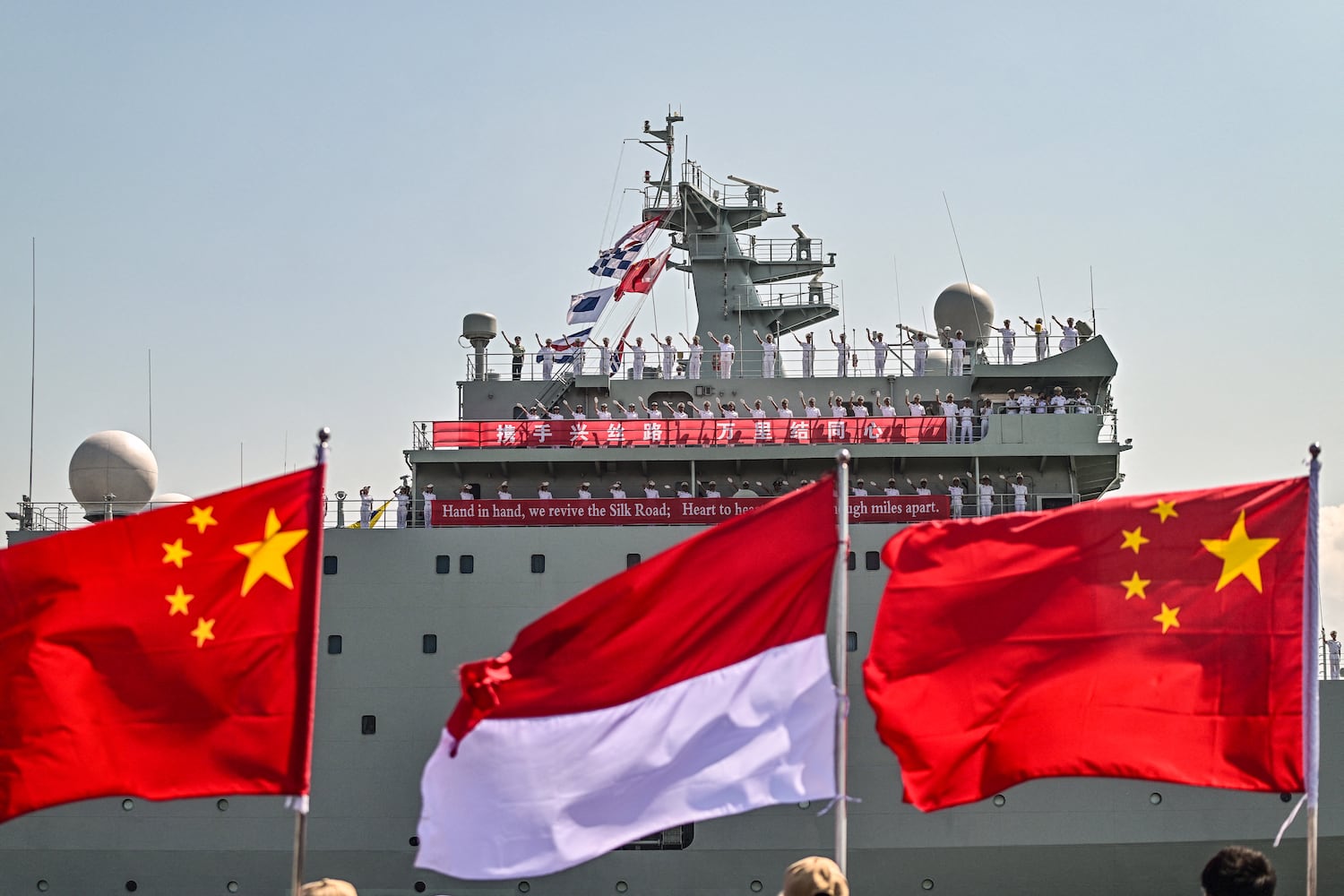
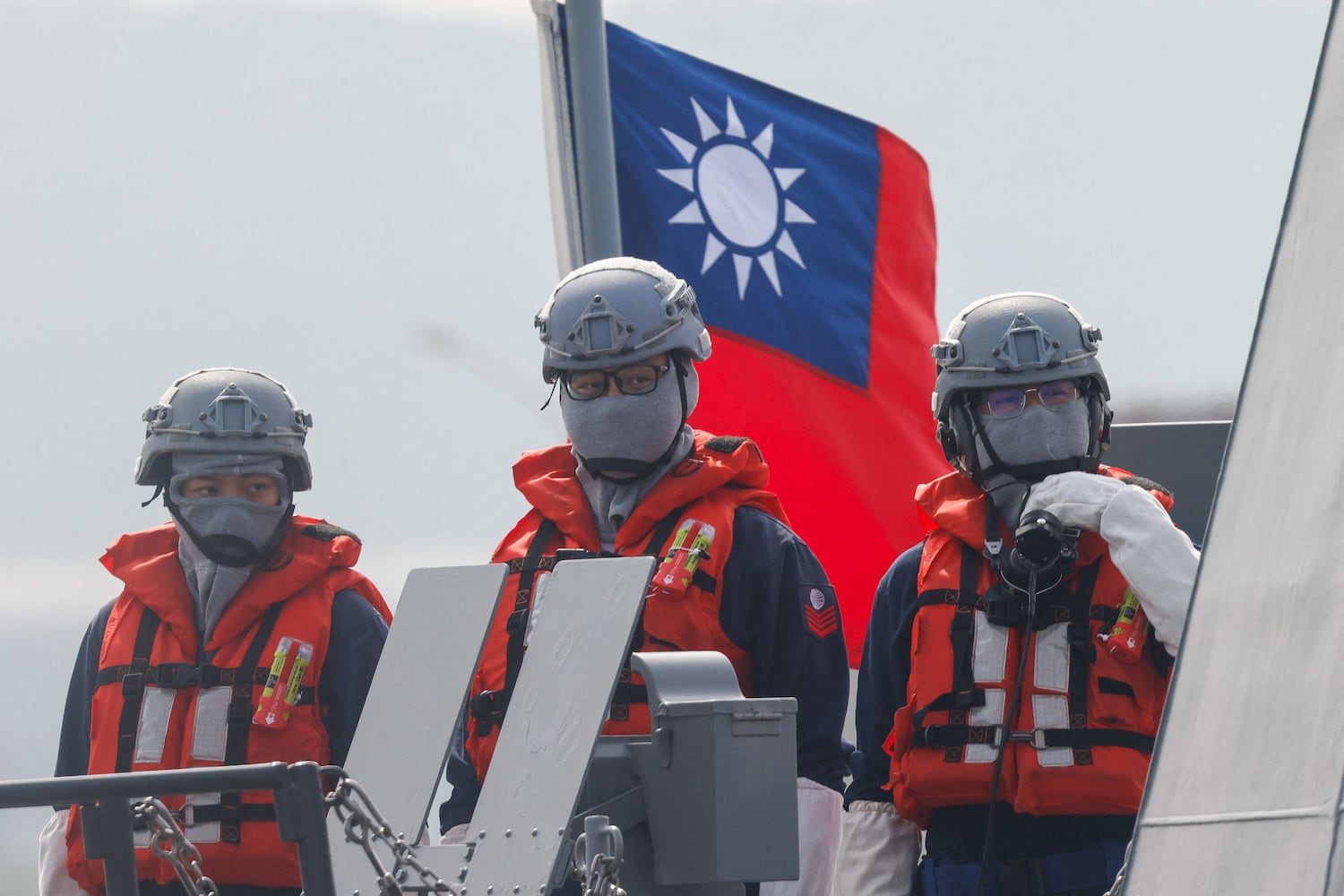
Though China’s first-ever naval exercise with another country’s military in waters east of Taiwan this month was a relatively small operation, it could go a long way toward normalizing Beijing’s presence around the democratic island. The Chinese frigate Honghe and Indonesia’s KRI I Gusti Ngurah Rai-332 conducted a passing exercise east of Taiwan on Aug. 12, involving maritime communications, formation maneuvers and replenishment of fuel and supplies at sea. Reuters described it as China’s first joint operation with a foreign military in those waters. China, which considers Taiwan to be part of its own territory, described it as a “navigation exercise.” Taiwan, however, accused Beijing of using the drill to create the impression that China exercises jurisdiction over waters east of the island. Though the exercise itself was a brief three-hour meeting of ships which then went their separate ways, the exercise gave Beijing a record of a foreign navy conducting an activity with China in waters that Taipei says Beijing has no authority to police, Aniello Iannone, a lecturer in Indonesian and Southeast Asian politics at Diponegoro University in Indonesia, told RFA. Chinese and Indonesian ships in a joint exercise east of Taiwan, Aug. 12, 2026. (Ministry of National Defense of the People's Republic of China) “Once the Indonesian navy sailed, Beijing acquired something it could not manufacture alone, corroboration, from a state with no stake in the Taiwan question, that the water east of the island is a place where cooperation with China happens normally,” he said. Taiwan’s military said the exercise did not change much from a security perspective. Wu Tien-jen, assistant deputy chief of the general staff for intelligence, told lawmakers that the Indonesian vessel was already traveling through the area, and that the activity had no direct military impact on Taiwan, though he said it carried geopolitical significance. Jakarta played down the significance of the exercise, saying its warship was returning from exercises in Vladivostok and that such passing exercises were routine acts of maritime diplomacy. Normalizing China’s presence Indonesia has diplomatically transitioned to a Taiwan stance that aligns with China’s position more closely than many other governments—including by issuing a joint statement affirming Beijing’s one-China principle in November 2024. But its participation in exercises with China east of Taiwan does not mean that it intended to legitimize Beijing’s presence in the area, Joseph Kristanto, a research analyst at Singapore’s S. Rajaratnam School of International Studies, told RFA. “For Jakarta, it’s just routine defense diplomacy activities. But for Taipei, the concern is the precedent that such an activity could create,” he said. “Jakarta may not intend to lend legitimacy or normalize China’s military presence around Taiwan, but Beijing can still use the participation of a foreign navy to reinforce the impression that its military activities in these waters are increasingly normal.” The location gives the episode greater significance for Taiwan, according to analysts. Unlike Taiwan’s western coast, which faces mainland China across the Taiwan Strait, its eastern approaches open onto the Pacific and are regarded as crucial maritime lifelines in the event of a Chinese blockade or conflict, and Taipei has become increasingly concerned about Chinese activity there. China’s coast guard began patrols east of Taiwan in June, later drawing expressions of concern from the United States, Britain, France and Germany. Taiwan subsequently reported a sharp rise in Chinese government-vessel activity around the island and warned that Beijing could be testing ways to disrupt Pacific supply routes. This photograph released by Taiwan's Military News Agency shows soldiers driving a personnel vehicle into a warship near Taiwan during the annual Han Kuang drill on Aug. 22, 2016. (Taiwan Military News Agency via AFP) During its annual nationwide Han Kuang military exercises this month, Taiwan’s navy and coast guard also held their first joint anti-blockade drill, including a scenario in which a merchant vessel carrying essential supplies was escorted toward ports in eastern Taiwan. “The eastern approaches are the only side of Taiwan not overlooked by the Chinese mainland,” Iannone said. “That’s where resupply would come from in a blockade, and where American forces would arrive.” He argued that Chinese survey ships, coast guard patrols and now the Indonesia exercise could be understood as part of a broader attempt to make Beijing’s presence east of Taiwan appear administrative and routine rather than exceptional. The more important test will be whether the Indonesia exercise remains an isolated event, Kristanto said. A single passing exercise, or PASSEX, “is unlikely to change the status quo,” he said. “It would become more strategically meaningful if this develops into a pattern whereby similar exercises occur repeatedly, involve more foreign navies, become operationally more complex, or take place closer to Taiwan.” Altering geopolitical narratives The key threshold could come if other countries begin to regard cooperation with China in those waters as politically unremarkable, Kristanto said. “In that scenario, Beijing would not necessarily need countries like Indonesia to directly endorse its sovereignty claims,” he said, adding that the cumulative effect could still help normalise the PLA’s presence around the island. Repetition of this exercise with the navies of other countries would shift the burden of the argument, Iannone said. “Against an event, Taipei can object,” he said. “Against a routine, Taipei has to ask the international system to un-normalize something already normalized, which is a far harder thing to organize.” Iannone said more complex exercises, participation by additional navies or operations moving closer to Taiwan would strengthen Beijing’s case, but he also pointed to a less visible, but possibly more valuable indicator: whether records of such cooperation are cited as evidence of established practice. “The one I’d watch hardest is documents,” Iannone said. If records of joint activities east of Taiwan began to appear in notifications from the International Civil Aviation Organization, the International Maritime Organization, or in arguments that attempt to declare the territory part of China’s exclusive economic zone, “that’s the transition from imagery to legal material.” But there are also limits to how much Beijing can gain from such exercises. Indonesian navy personnel pull the mooring line of Chinese People's Liberation Army navy ship Kunlun Shan at Tanjung Perak Port in Surabaya on Aug 2, 2026. (Juni Kriswanto/AFP) Kristanto said Indonesia retains control over how it describes its military cooperation and has been careful to characterize the Aug. 12 drill as limited and routine. Jakarta also conducts military exercises with a wide range of countries, meaning the China drill alone does not demonstrate a strategic realignment. Beijing could even undermine its own objective if it attaches too much political meaning to foreign participation, he said. “If China attaches too much political significance to those interactions, it could make partners who do not want to be entangled in the geopolitical competition between China and the U.S. and its allies more cautious about participating in similar activities in the future,” Kristanto said. Indonesia and China nevertheless signaled this week that broader defense cooperation is continuing. During high-level “2+2” talks in Jakarta on Aug. 20, their foreign and defense ministers agreed to deepen security ties, including military exercises and defense industry cooperation. For Taiwan, however, the concern is less whether Indonesia itself moves closer to Beijing than whether similar interactions begin accumulating without attracting much resistance. “Effective jurisdiction doesn’t arrive through recognition, but it accumulates,” Iannone said. “No sovereignty changes hands at any point, what it shifts is the threshold at which something registers as worth noticing, and that threshold is where the political work happens.” Edited by Eugene Whong.

Download metadata bundle
20 Aug 2026, 22:45 GMT By Eugene Whong for RFA

China “very likely” coordinated a targeted campaign across the Pacific to demonstrate that local development strategies should align with Beijing’s latest five-year-plan, a recent report by The Alliance Futures Initiative says. In the report, titled “China’s Model on the Offensive: Why China’s Five-Year Plan Promotion in the Pacific Matters ,” the Washington-based think tank documented how in eight of the nine Pacific island countries where Beijing has an embassy, the heads of mission published op-eds in the local media touting the merits of China’s latest sweeping national policy framework proposed late last year and formally adopted in March. “To international audiences, the PRC deliberately reframes the FYP from a domestic planning document into a predictable, scientific blueprint for global growth and cooperation,” the report said. The campaign was not limited to media placement. Chinese diplomats also engaged in direct bilateral governance outreach, hosted diplomatic briefings – either open to the media or closed – with influential figures in business and government. The ultimate goal was to make the case that local development strategies were in line with the five-year plan, or that China was a more stable and reliable partner than its main rival with interests in the region, the United States. The Alliance Futures Initiative, or TAFI, tracked the activities of Chinese Embassies since October 2025, finding more than 30 cases where ambassadors promoted the five-year plan. “The frequency, similarity, and timing of output strongly imply MFA guidance,” the report said, referring to China’s Ministry of Foreign Affairs. “Variance in message intensity, ideological depth, and host-country alignment claims tracks local conditions and individual ambassador style.” The power of persuasion A key aspect of the campaign is how China is using persuasion rather than coercion to influence the Pacific countries to fall in line, Jonah Bock, TAFI’s assistant director for research, who authored the report, told Radio Free Asia. Bock highlighted key examples where China attempted to directly persuade key government officials. In Vanuatu, Ambassador Li Minggang extolled the virtues of China’s civil service oversight in a meeting with Ombudsman Hamilson Bulu and in Naoero, formerly Nauru, Ambassador Lyu Jin discussed judicial cooperation with Chief Justice Jay Udit. Chinese ambassador to Vanuatu Li Minggang in a meeting in Port Vila with Vanuatu's ombudsman Hamlison Bulu, March 3, 2026. (Chinese embassy in Vanuatu) “An ombudsman audits the government and a judiciary constrains it,” he said. “So these are really helping shape how Pacific governments actually function in China’s own model. And the importance of this is really normalization.” Successfully persuading these countries to peacefully adopt a Chinese model is the goal of the campaign, he said. “Coercion is expensive and it generates resistance. But persuasion does not. It’s relatively cheap for China to do,” Bock said. “If they can get these countries already using China’s development strategies, its models, then these officials will start to think like China and be more willing of their own ideas to cooperate with China.” Selling alignment The TAFI report said that throughout the campaign, ambassadors focused on three topics when explaining why aligning with the five-year plan would benefit their host countries: green development, economic openness, and shared prosperity. In Fiji, the Federated States of Micronesia, or FSM, and Tonga, the embassies pushed out messaging that touted China’s concern for the environment, saying Beijing had “contributed one-quarter of the world’s new green area” and built the “world’s largest clean power generation system.” “Beijing tailored this message for climate-conscious Pacific audiences, with the FSM embassy noting that ‘green development has become a defining feature of contemporary China, where skies are bluer, waters are clearer, and lands are cleaner,’” the report said. Solar panels and wind turbines at a renewable energy farm in Lingwu, in China's northern Ningxia region, Dec. 22, 2025 (AFP) In Fiji and Papua New Guinea, or PNG, messaging also “championed” anti-protectionism, the report said. “The Fiji embassy noted that China has ‘lifted all foreign investment restrictions in the manufacturing sector,’ and the PNG embassy opined that ‘while unilateralism and protectionism are on the rise… China remains firmly committed to opening up.’” Messaging also focused on poverty alleviation and personal income increasing as a result of rapid economic growth, according to the report. In FSM, Ambassador Wu Wei’s op-ed said that due to China’s robust education and security systems, the “people’s sense of gain, happiness, and security have been significantly enhanced.” “The themes Chinese ambassadors chose to emphasize … are not incidental,” the report said. “Each topic serves one or more of Beijing’s broader strategic objectives in the region, functioning simultaneously as a pitch for deeper cooperation, a contrast with Western alternatives, and a legitimization of the CCP’s political model.” Solidifying counter strategies If China were to achieve all its objectives in the Pacific, the region would be hostile to the United States and the interests of Washington and its allies, especially Taiwan, Bock told RFA. “We would have no more countries that recognize Taiwan. At the end of the day, that really is China’s first objective,” he said. “We would also start to see more economic dependencies, countries whose economic lifelines rely on China, which helps China again deepen their own influence.” Jonah Bock, TAFI's assistant director for research, interviewed by Eugene Whong at Radio Free Asia's offices in Washington, Aug. 13, 2026 (RFA Video) He said adoption of China’s governance models would sow the seeds of authoritarianism in the region. But the report outlined recommendations for the United States to counter the campaign. It identified FSM, the Marshall Islands, Palau and PNG as a “strategic core” due to their “defense access and second-island-chain positioning” and suggested that efforts to shore up relationships with this core should take priority over symmetrical levels of engagement with the whole region. It also suggested that Washington contest the same institutional grounds through judicial exchanges, legal-sector training, and civil service partnerships, noting that they “cost a fraction of infrastructure competition and defend exactly the ground now under cultivation.” TAFI also recommended helping Pacific governments in areas that they are already requesting, and to use private capital in circumstances where government aid moves too slowly. “These are things that are … already happening,” Bock told RFA. “For instance, for the Solomon Islands … five staff in their parliament just went to D.C. for a program, with the U.S. Congress on legislative processes.” He said this was the type of exchange that the report recommends and that he would like to see more of these. Additionally the report said that Washington could simply highlight Chinese actions in the Pacific to discredit Beijing’s claims of non-interference in the internal matters of other countries, a key part of China’s foreign policy that it often often invokes when deflecting criticism of its domestic policies. “Beijing’s non-interference claim is falsifiable, and PRC embassies have falsified it in their own published material,” the report said. “The United States does not need to argue this case. It needs to document it and let Pacific audiences draw conclusions.” Edited by Charlie Dharapak.

Download metadata bundle
19 Aug 2026, 21:08 GMT By Taejun Kang for RFA

A bill that would integrate the Philippines’ South China Sea territorial claims into school curricula could further integrate the issue into national identity and strengthen public support, experts told Radio Free Asia. Philippine lawmakers this month filed a measure seeking to institutionalize education about what Manila calls the West Philippine Sea – the parts of the South China Sea that fall within its exclusive economic zone. The sea is a major flashpoint in regional geopolitics. China uses a nine-dash line drawn on the map to delineate the entirety of the sea as its own territory, but parts of it are also claimed by the Philippines, Vietnam, Brunei and Malaysia. The proposed West Philippine Sea Education Act would establish an education and awareness program covering basic and higher education. Lessons would use examples from international law to support Manila’s claims, including a section on the 2016 ruling by the Permanent Court of Arbitration in the Hague, which said that China’s nine-dash line had no legal basis. Popular support is critical for Manila to pursue its claims, Jason Ng Sze Chieh, a lecturer at INTI International College Subang in Malaysia, told RFA. The claims “must be grounded in tangible, convincing, and easily digestible arguments formed around reasonings … that excite the public imagination,” he said. “Once it catches the public’s imagination, it is very difficult to redirect or scrub it from the collective mind.” The overlapping claims of China and the Philippines in the South China Sea. (AFP) The proposal comes as Philippine authorities increasingly describe their confrontation with Beijing not only as a contest over ships and maritime access, but also over information and public perceptions. Lawmakers behind the House measure said students should be equipped against misinformation and propaganda about the country’s maritime rights. From public awareness to strategy If signed into law, the bill would formalize a campaign that has already been moving into Philippine schools and other youth-oriented spaces. The Department of Education’s regional offices have begun integrating West Philippine Sea topics into social studies curricula, while government agencies have held engagements with teachers and students. Earlier this year, Manila also expanded efforts to produce child-focused material about the disputed waters. In January 2025, Philippine agencies launched a 40-page comic book explaining maritime zones and international law. National Security Adviser Eduardo Año said it complemented government efforts to counter what Manila called distorted Chinese narratives, while the Chinese Embassy accused the Philippines of “political manipulation.” National Security Adviser Eduardo Año and Philippine Coast Guard Spokesperson for the South China Sea Jay Tarriela stand next to a giant copy of the book "The Stories of Teacher Jun" during its launch at the National Library of the Philippines in Manila, Jan. 24, 2025. (Lisa Marie David/Reuters) Ng said using education as soft power could reinforce the Philippines’ claim without resorting to confrontation with China. “It is the right move for the Philippines, which wishes to resolve this issue without resorting to violence,” he said. “Soft power, through education, can reinforce its claim and strengthen the government’s resolve to push back against China’s claim.” The approach also reflects how governments across the region have used historical narratives to sustain their respective South China Sea positions. In Vietnam, authorities have directed schools to include material asserting Vietnamese sovereignty over Hoàng Sa, the Paracel Islands, and Trường Sa, the Spratly Islands, island groups that are also claimed entirely by China and Taiwan and partly by the other South China Sea claimants. Chinese educational material has also presented disputed features through Beijing’s sovereignty narrative. A 2017 New Yorker report examined a primary-school Mandarin lesson about the Xisha Islands, China’s name for the Paracels, that described the islands as part of China without discussing Vietnam’s competing claim. Taiwan offers a different lesson Taiwan on paper continues to claim all territory previously claimed during the era when the Republic of China controlled the mainland, but Taipei’s post-1990s shift toward a more Taiwan-centered educational framework gradually weakened the domestic prominence of its older South China Sea claims. This offers a contrast to Manila’s current direction, Jozef Huljak, a Ph.D candidate in political science at Constantine the Philosopher University in Slovakia, whose research examines Taiwan’s cultural and public diplomacy, told RFA. Taiwanese fishermen display flags and placards before departing to Taiping island, part of the disputed Spratly Islands chain in the South China Sea, at a fishing harbour in southern Pingtung on July 20, 2016. (The office of Kuomintang lawmaker Johnny Chiang/AFP) “The lesson is not that education determines territorial attitudes on its own,” he said. “It is that education helps turn a legal claim into something the public understands as its own. Without that process, a claim can remain legally alive while becoming politically inert.” Taiwan continues to control Taiping Island, the largest naturally formed feature in the Spratlys, but the South China Sea has comparatively little prominence in contemporary Taiwanese politics, Huljak said. That experience also points to a potential cost for Manila. “Once a claim is taught to children as a matter of national dignity, future governments may find it harder to negotiate fishing arrangements, provisional agreements or other compromises without appearing to retreat from something the state itself taught as national territory,” Huljak said. For the Philippines, that may be precisely part of the appeal in the short term: ensuring that its South China Sea position survives changes of government and remains backed by voters long after the current confrontations at sea have passed. Teaching the dispute in classrooms may therefore do more than explain where the Philippines says its maritime rights begin and end, Ng said. It could help determine how politically negotiable those rights become for governments years from now. “Before a shot is fired, if one side wins the war of public perception, then the struggle is half won,” he said. Edited by Eugene Whong.

Download metadata bundle
19 Aug 2026, 03:01 GMT By Noh Jung Min for RFA, and Dickey Kundol, Tawang, and RFA Staff for RFA Tibetan

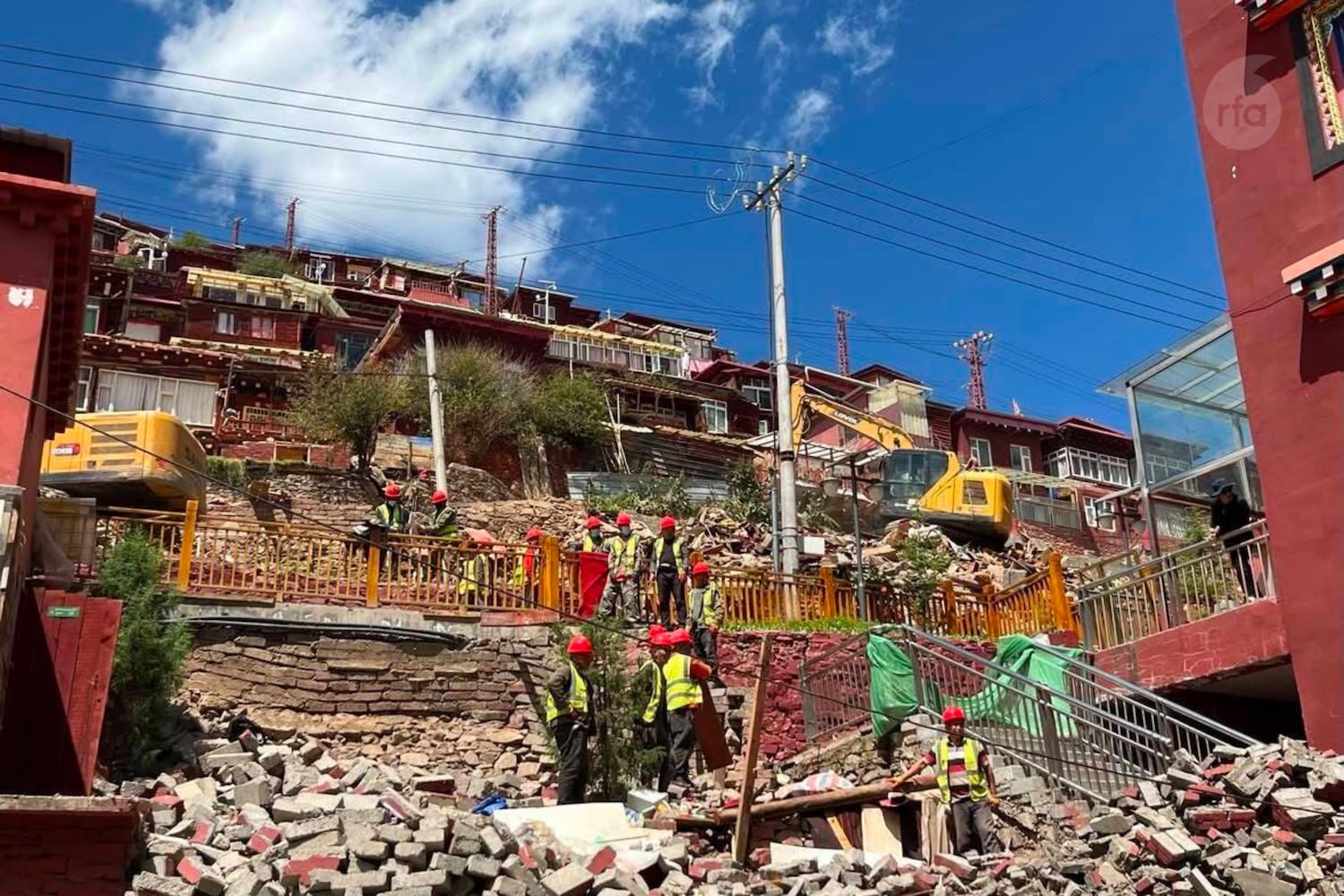
Chinese authorities in Tibet have over the past month continued and expanded demolition of the Larung Gar Buddhist Academy , satellite imagery analyzed by Radio Free Asia shows. It is the latest in a series of moves by Beijing to downsize the major center of Tibetan Buddhist learning which at its peak in the early 2000s was home to 40,000 Buddhist monastics. Last year, Chinese authorities expelled thousands of Tibetan monks and nuns from Larung Gar, which is in Serthar county (Seda in Chinese) within the Kardze (Ganzi) Tibetan Autonomous Prefecture of Sichuan province. Sources at the time said that thousands of homes had been marked for demolition. The demolitions have been carried out in separate phases since 2001, according to the Central Tibetan Administration, or CTA, the official government-in-exile located in Dharamsala, India. This time, at least 1,060 residences belonging to monks and nuns are targeted for demolition, which appears to have begun around July 13, Tenzin Pema, director of strategic communication at the Washington-based International Campaign for Tibet, or ICT, and formerly RFA Tibetan director, told RFA. “RFA’s August 14 imagery appears to show clearance spreading around the academy’s central area, supporting our July 17 report that a new demolition campaign began around July 13,” Pema said. “The current campaign raises fears of another major assault on Tibetan Buddhist religious, cultural, and educational life.” ICT is concerned that this latest round of demolitions at one of the largest Tibetan Buddhist centers in the world represents a further tightening of restrictions on religious practice, Pema said. Cultural nexus Established in 1980 to revive Buddhist scholarship, Larung Gar has grown into one of the world’s largest centers for Tibetan Buddhist learning. Over the decades, it became one of the most influential centers for the study of Tibetan language, culture, and religion, attracting thousands of Chinese Buddhist practitioners, in addition to Tibetans. The current phase of demolition follows an earlier one about a decade ago, where Chinese authorities destroyed half the compound and sent away thousands of monks and nuns, over what authorities said were overcrowding and fire-safety concerns. Rights groups , however, have said that the demolitions are part of Beijing’s attempt to exert control over religious and educational institutions. Comparing satellite imagery from July 24 and August 14 shows that the demolition area has expanded and that some areas have been cleared of debris. Dump trucks and excavators can still be seen operating at the approximately 2.5-acre (1 hectare) demolition site. (RFA) Satellite imagery captured Aug. 14 confirms that approximately 2.5 acres (1 hectare) has been cleared from a residential area of the academy since demolition started. Dump trucks and excavators remain visible at the site, and demolition is scheduled to be completed by Aug. 20, according to RFA sources familiar with the situation on the ground in Serthar. According to ICT, Larung Gar has been reduced to about half its size through the demolition of dwellings over the years. In 2016 and 2017, about 5,000 monks and nuns were evicted from the academy and nearly 5,000 dwellings were demolished, Pema said. Sources told RFA that last year, after some monks and nuns were expelled from Larung Gar, a number of residences were left vacant. This year, however, some of the residences are reportedly being demolished without public notice. There are also reportedly plans to continue demolishing additional residences next year. A photo received by RFA Tibetan on Aug. 11, 2026, shows demolition work at night at Larung Gar. (Citizen Photo via RFA) Prior to the current round of demolitions, Chinese authorities intensified restrictions at Larung Gar, limiting the number of monks and nuns at the religious institute and expelling some of them, RFA Tibetan reported. The number expelled has not been confirmed, but demolition began in residences that had been vacated under these restrictions. In apparent protest of the demolitions, a monk reportedly displayed a large portrait of the 10th Panchen Lama, from a window of one of the residences. The Panchen Lama is the second most important figure in Tibetan Buddhism after the Dalai Lama. After the 1989 death of the 10th Panchen Lama, the Dalai Lama and the Chinese government spent the next six years looking for his successor, with each appointing a different person . The 10th Panchen Lama is therefore the last person to hold the position to have been recognized by both the Chinese government and Tibetans. Some sources familiar with the situation in Larung Gar told RFA that it remains unclear whether the monk who hung the portrait has been detained by Chinese authorities. Other sources said that the monk has disappeared and his whereabouts are unknown. Tight restrictions on communication between the area and the outside world have prevented confirmation of details, including the monk’s name. A map shows the location of Larung Gar. (ICT) The Chinese government’s demolition of monks’ residences at Larung Gar is a “serious situation” that demands global attention, Tenzin Lekshay, spokesperson for the CTA, told RFA. “Despite China’s widespread claims and propaganda that religious freedom exists in Tibet, the actual situation on the ground clearly demonstrates a lack of religious freedom,” Lekshay said. “The international community must directly protest against the Chinese government.” Increased Surveillance Concurrent with the demolitions, local level authorities have placed restrictions on the number of tourists allowed to visit Larung Gar and limited movement within the academy’s grounds. In a notice issued July 11, Serthar County tourism authorities said road maintenance work leading to Larung Gar would begin on July 13, and that the operating hours of public buses traveling to the site would be temporarily changed. The Serthar County Public Security Bureau also reminded tourists that they must only travel to Larung Gar via official arrangements and are prohibited from entering on their own. Authorities also warned visitors not to trust information provided by people with no connection to the local area and prohibited individuals from bypassing restricted areas or crossing mountains to enter the site independently, according to information obtained by RFA Tibetan. Visitors are reportedly allowed to remain for no more than 90 minutes and must travel on designated shuttle buses. They are also required to rent a small electronic tracking device for 200 yuan ($29). According to sources, the device is used to monitor visitors’ movements, enforce time limits and restrict access to certain areas. People with contacts inside Tibet told RFA that telephone conversations with individuals in and around Larung Gar are believed to be closely monitored by Chinese security authorities, making residents reluctant to speak openly. Sources also said local people are increasingly afraid to answer questions directly about conditions at Larung Gar, adding that this level of surveillance is no longer unique to the area but has become common across many parts of Tibet. Forced unity ICT emphasized that these developments must be viewed against the backdrop of Larung Gar’s recent history and in the context of China’s new Ethnic Unity and Progress Law . The latest demolitions come after China implemented the law, which focuses on reshaping ethnic identity, changing the legal framework around language, expanding state oversight of religion, and extending the law’s reach beyond China’s border. “It is especially concerning that the demolitions began just weeks after the new law came into effect on July 1,” Pema said. “The law codifies broader coercive assimilation policies aimed at erasing Tibetan identity and threatens the future of key centers of Buddhist learning and practice such as Larung Gar.” Edited by Eugene Whong.

Download metadata bundle
18 Aug 2026, 01:40 GMT By Jason Gutierrez for RFA

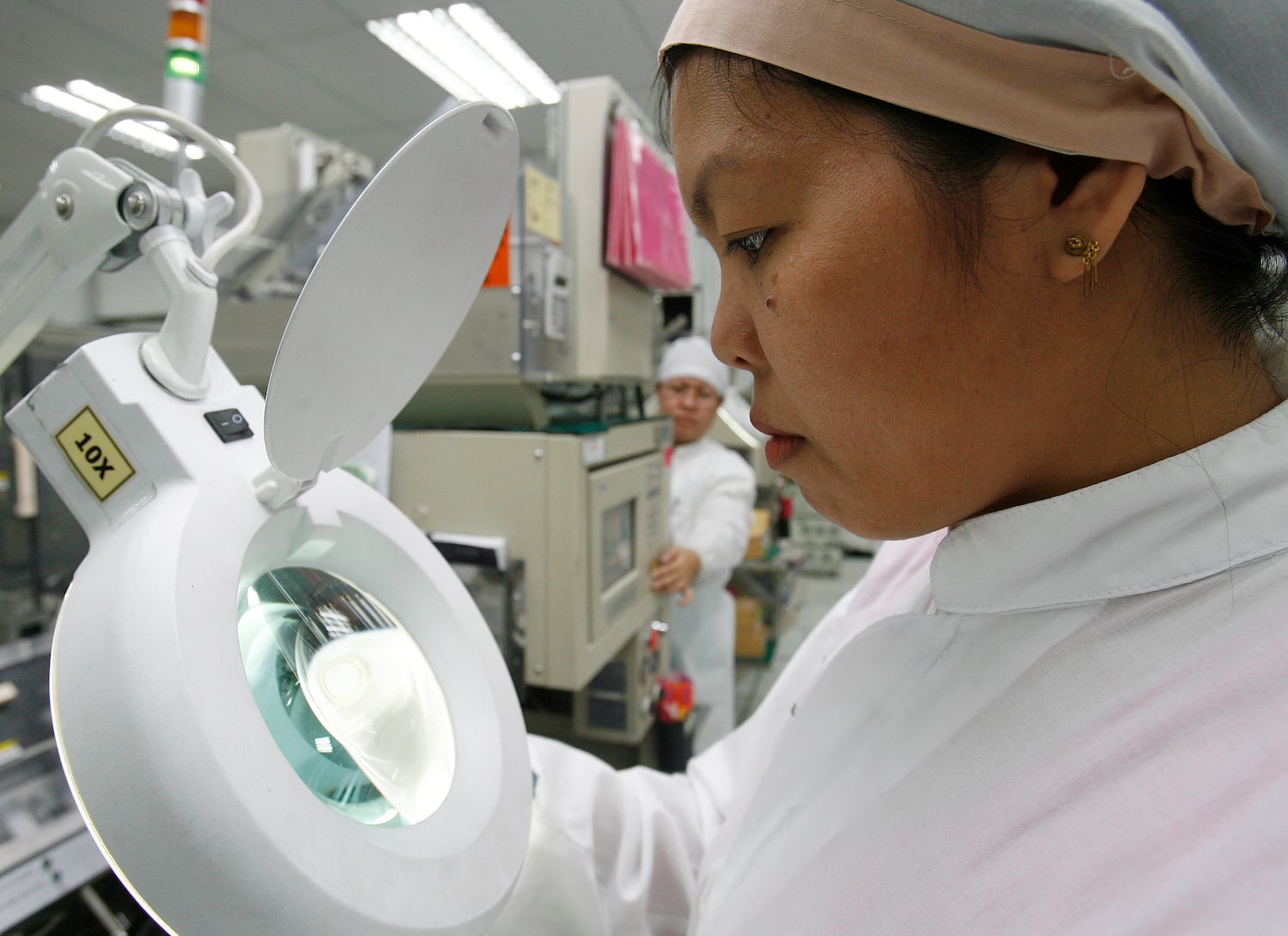
Updated on Aug. 18, 2026 at 11:49 a.m. ET MANILA, Philippines – A U.S. plan to build a critical technology hub in the Philippines is a symbolic return to the site of one of its largest overseas former bases, experts in the country told Radio Free Asia. The hub will be part of the U.S.-led Pax Silica initiative, aimed at shoring up supply chains for semiconductors, AI and rare earth elements. It will be built in New Clark City, north of Manila, on land that was part of a U.S. military reservation complex that included Clark Air Base, until the Philippines voted to take control of it in 1991. Supporters of the plan tout its potential economic benefits – the project will create around 200,000 jobs and up to US$70 billion in investment – but critics say that the plan is cedes too much control to Washington, and could be potentially harmful to the environment. Either way, the historical significance of a major U.S. project on the grounds of the former base is not lost on observers. “I see the symbolic value of the U.S. returning to Clark,” Chester Cabalza, founder of the Manila-based think tank International Development and Security Cooperation, told RFA. “It centers on an historic reversal of geopolitical fortunes, transforming a symbol of post-Cold War retreat into a modern monument of the ironclad U.S.-Philippine alliance.” Passengers queue to enter the Diosdado Macapagal International airport, formerly Clark Air Base in Pampanga province north of Manila, March 26, 2008. Other parts of the former U.S. Air Base and the associated military reserve are today part of New Clark City, a planned community that will feature a new technology hub. (Romeo Ranoco/Reuters) The battlefield has evolved since the Cold War era, but just as Clark Air Base was a key cog in the U.S.’ Asian containment strategy of that era, the Pax Silica hub is intended to secure technology supply chains for Washington and its allies, even as China has launched its own global AI framework. Chinese President Xi Jinping in July launched the Shanghai-based World Artificial Intelligence Cooperation Organization, or WAICO, promoting a Beijing-led AI ecosystem and analysts say that Washington may soon ask countries to choose Pax Silica over Xi’s group. ‘Purely Practical’ Though analysts see a global tug of war between Beijing and Washington spilling over into the technology arena, Philippine President Ferdinand Marcos Jr., while addressing a forum of the Foreign Correspondents Association of the Philippines Friday said that the Philippines’ involvement in the plan is economic in nature and is “purely practical” rather than political. The Philippines has territorial disputes with China in the South China Sea, which Beijing claims in its entirety, but which Manila claims in part. Marcos acknowledged the dispute, but said the Philippines’ Pax Silica plans were more about fostering an economic partnership. “All of these…conflicting claims in the West Philippine Sea simply did not enter into that discussion,” he said, referring to the part of the sea that lies within Manila’s exclusive economic zone. “And so, the idea that we are somehow distancing ourselves from China is quite the contrary.” Philippines President Ferdinand Marcos Jr. addresses the Foreign Correspondents Association of the Philippines in Manila, Aug. 14, 2026. (Jason Gutierrez/RFA) Manila, he said, was open to investment opportunities from anyone interested “as long as it is to the mutual benefit of all parties involved” and will grab the opportunity “no matter where it comes from.” “As long as we are able to move the economy forward and to better the lives of our people, then that is something that we will certainly examine,” Marcos stressed. “And if it turns out that this is a beneficial agreement or arrangement, then certainly we will become part of it.” Though the tech hub will create jobs, it will facilitate the entry into the Philippines of U.S. military personnel and compromise its sovereignty, Teddy Casino, leader of the nationalist Bayan group that has been protesting Pax Silica, told RFA. “The promise of economic development under U.S. patronage is the same deception that U.S. imperialism has been peddling in the past 128 years of its colonial and neocolonial rule in the Philippines,” he said. “Under Pax Silica, Filipinos are once again being told the lie that surrendering greater economic and strategic space to the US is synonymous with development.” People march as they protest against Pax Silica, a U.S.-led initiative, in Manila on August 13, 2026. (Jam Sta Rosa/AFP) Raffy Tulfo of the Philippines Senate, who heads the committee on the environment has filed a resolution seeking to investigate the project to determine its economic, environmental, social, technological, and national security implications. Tulfo said there were many legitimate concerns about the project, despite its touted benefits. “While such investments may contribute significantly to economic growth, technology transfer, innovation, and job creation, they have likewise generated public concerns and policy questions,” he said in his resolution. Among the concerns raised in the resolution are land use and urban planning, water consumption, resource allocation, and environmental sustainability, as well as the project’s potential impact on the rights, welfare, cultural integrity, and ancestral domains of indigenous peoples and local communities. But the benefits outweigh the risks, Cabalza said. “This strategic investment, when wisely planned, will bring an influx of financing infrastructure and economic defense in the digital supply chain,” he said, But he acknowledged that the Philippines’ participation in Pax Silica could provoke China to retaliate with economic pressure. “For China, with the advent of the US-led AI investment through the Pax Silica, the more they will tighten their economic and security grip in the Philippines,” he said, pointing out that one of the measures Beijing may employ is restricting Philippine agricultural and raw materials exports. Defense vs. malign influence More than anything, the Washington-designed Pax Silica is seen as a defense against malign Chinese influence, Vincent Kyle Parada, a defense analyst at the De La Salle-College of Saint Benilde in Manila, told RFA. “Dealing with Chinese firms is simply too big of a risk for Manila. Beijing’s reach extends far,” he said. “That’s really why the US introduced Pax Silica to begin with. The distinction between economics and security is fast disintegrating, and Washington needs to secure its supply chains from any form of malign interference.” A Filipino manufacturing operator is reflected on an Automatic Mould machine at a Philippine-based semiconductor manufacturing plant in Manila Sept. 20, 2005. (Cheryl Ravelo/Reuters) The proposed Philippines Pax Silica hub is part of Washington’s “friend-shoring” strategy – transferring production to “friendly” countries in order to mitigate risks, he said. “Manila is Washington’s only treaty ally in Southeast Asia. It is not a part of the China-led WAICO and is, therefore, not as deeply embedded into China’s AI and semiconductor supply chain compared to its neighbors,” Parada said. “That makes it the perfect candidate for Pax Silica, while at the same time, benefitting Manila by providing Washington more skin in the game in its continued commitment to the US-Philippine alliance.” The Philippines participation is an expression of its own strategic autonomy, Arnaud Leveau, president of the Paris-based Asia Center, told RFA. He said that while the Philippines needed to diversify some of its dependencies, including in areas such as semiconductors, “it should not mean exchanging dependence on China for excessive dependence on another external partner.” “The central issue, in my view, is whether the Philippines can use this initiative to strengthen its own technological and industrial sovereignty rather than simply becoming a geographical platform within somebody else’s supply chain,” said Leveau, who also teaches at the Paris Dauphine University. But he warned that a complete technological or economic disengagement from China would be extremely difficult and probably undesirable. “China is not simply a geopolitical competitor. It is also one of the world’s major industrial and technological ecosystems,” Leveau stressed. “Chinese companies are increasingly important in AI, batteries, electric vehicles, telecommunications, renewable energy and advanced manufacturing.” Edited by Eugene Whong. Update adds comments from Casino and details about Senate resolution.

Download metadata bundle
12 Aug 2026, 21:48 GMT By RFA Staff

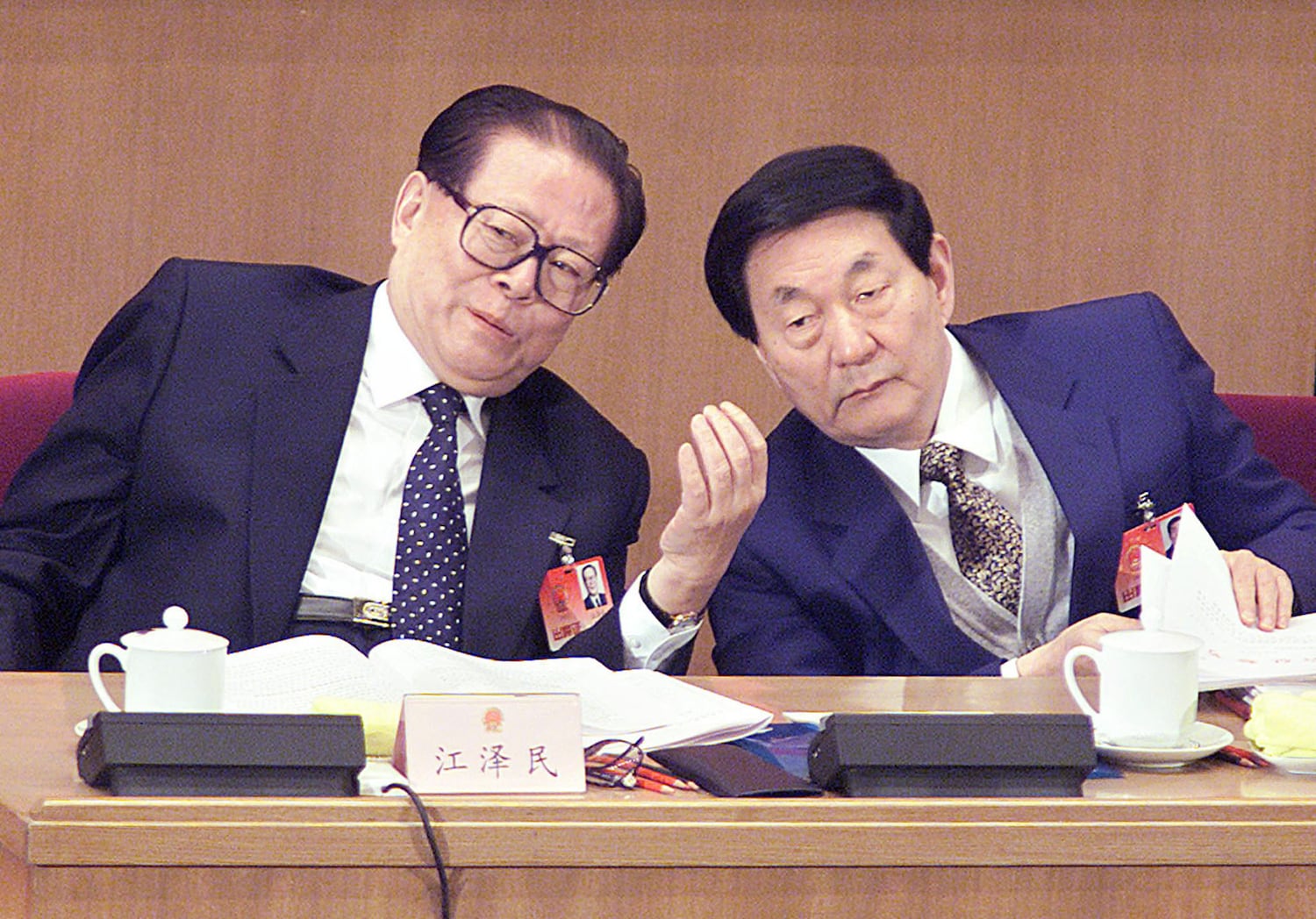
The late former premier of China Zhu Rongji wielded the economic hammer during China’s rapid economic rise in the 1990s and 2000s to increase Beijing’s influence over Tibet, an expert told Radio Free Asia shortly after Zhu’s death on Wednesday. Zhu, 98, died at 11:06 a.m. in Beijing of an unspecified illness, the state-run Xinhua News Agency reported. As premier alongside President Jiang Zemin from 1998 to 2003, Zhu had spearheaded China’s accession to the World Trade Organization and ushered in an era of rapid economic growth and full integration into the global market through a series of bold but not fully completed reforms. The pair are credited with orchestrating China’s gradual escape from international isolation following the 1989 Tiananmen Square crackdown and its path to becoming the world’s second-largest economy. But for Tibetans, Zhu’s legacy as an architect of China’s economic rise is one of increasing Beijing’s political control over the region, Buchung Tsering, research director at the Washington-based International Campaign for Tibet, told RFA. “ As part of the Western Development Strategy, Zhu promoted greater economic development in Tibetan areas, seeking to use economic means to maintain ‘stability’ in Tibet and bring Tibetans in line with the Chinese government’s policies,” Tsering said. “Zhu Rongji can therefore be seen as a key figure in strengthening Beijing’s political control over Tibet through economic means.” A Chinese student supporting Chinese Premier Zhu Rongji is knocked to the ground by protesters supporting Tibetan and Taiwanese independence, April 14, 1999 at MIT in Cambridge, Massachusetts. (Jim Bourg/Reuters) The Western Development Strategy was a state-run economic development program that included large scale infrastructure projects intended to integrate China’s western frontier, including Tibet and the Uyghur region, with its booming coastal cities. Critics have said that this policy accelerated the westward migration of the Han population, objectively altering the local population structure and triggering discontent among local ethnic minorities regarding the marginalization of their native culture and the unfair distribution of economic benefits. Overseas Tibetans and Uyghurs have protested this issue on numerous occasions. A Tibetan demonstrator displays a Tibetan flag as they protest Chinese Premier Zhu Rongji near the Chinese embassy in New Delhi, Jan. 15, 2002. (Prakash Singh/AFP) The Western Development Strategy is widely considered to be the blueprint for the Belt and Road Initiative, which is similarly criticized as a means for China to increase its influence, though on a global, rather than national scale. Progress and setbacks Zhu Rongji’s forceful reforms of the overall Chinese economy were accompanied by social pain, including the layoffs of tens of millions of state workers, and the subsequent increased financial pressure on local governments following the 1994 tax-sharing reform. Because the social security system was not yet fully developed at the time, workers suddenly lost their medical, housing, and pension guarantees, triggering massive layoffs and local labor protests, all of which were subsequently suppressed by the government. In addition, during his tenure, the Chinese government launched a severe crackdown on the Falun Gong religious group in 1999, and arrested and sentenced political dissidents and NGOs who attempted to form the “China Democracy Party.” A screen shows a portrait of former Chinese Premier Zhu Rongji who passed away on Wednesday, in Beijing, China, Aug. 12, 2026. (Maxim Shemetov/Reuters) After stepping down in 2003, Zhu Rongji rarely made public appearances, but continued to maintain ties with his alma mater, Tsinghua University. He served as the first dean of Tsinghua University’s School of Economics and Management from 1984 to 2001, a term that lasted 17 years. Since the Xi Jinping era began, many reforms implemented in the 1990s under Zhu’s tenure have been reversed. The Xi Jinping government has vigorously supported state-owned enterprises while suppressing private enterprises and technology companies. Life and career Zhu Rongji was born in Changsha, Hunan Province, in 1928. He graduated from Tsinghua University in Beijing with a degree in electronic engineering. He joined the Communist Party of China in 1949, the same year that Mao Zedong, another native of Changsha, announced the founding of the People’s Republic of China. Zhu Rongji holds a tea leaf during his visit to the Maramba Tea Estate in Limuru, west of Nairobi, Kenya, April 26, 2002. (Pedro Ugarte/AFP) During the political movements of the Mao Zedong era, Zhu Rongji was purged twice. During the Anti-Rightist Campaign in 1958, he was labeled a “Rightist” and expelled from the Party. During the Cultural Revolution, he was again persecuted, and from 1970 to 1975, he was sent to a “May Seventh Cadre School” for labor “re-education.” During the tenure of Jiang Zemin and Zhu Rongji, the Chinese government was recognized for maintaining economic and RMB exchange rate stability during the 1997 Asian financial crisis. Compared to the period under Xi Jinping, the Jiang-Zhu era is also seen by some reformists and observers as a relatively open and optimistic time. Jiang Zemin passed away in November 2022 at the age of 96. However, China’s economic marketization at that time did not bring about corresponding political liberalization. Edited by Eugene Whong from a report by RFA Mandarin . Additional reporting by Tsetan Dolkar and editing by Tawang for RFA Tibetan.

Download metadata bundle
11 Aug 2026, 02:45 GMT By Taejun Kang for RFA

Taiwan is trapped between sea rocks and a hard place: As the Philippines has filed documentation to strengthen its claims in the South China Sea, Taipei must balance asserting its own conflicting claims with building closer ties with Manila, especially as a potential ally against Chinese aggression, experts told Radio Free Asia. The Philippines on July 29 submitted its official nautical chart of Scarborough Shoal, a disputed feature in what Manila calls the West Philippine Sea – the section of the South China Sea that is within its exclusive economic zone – to the United Nations, to bolster its claim on the area, which is also claimed by China and Taiwan. Beijing immediately protested the filing, accusing Manila of infringing on Chinese sovereignty. Taiwan also opposed the move, but in a way that did not outright condemn the Philippines. It also repeated its call for Taiwan to be included in negotiations over South China Sea disputes. “The filing adds specificity to a Philippine position that was already well established,” Sylwia M. Gorska, a doctoral candidate in international relations at the University of Central Lancashire in the United Kingdom, told RFA. “For Taiwan, the consequence is not the loss of its claim, but a further deterioration in its relative ability to make that claim consequential.” The overlapping claims of China and the Philippines in the South China Sea. (AFP) The episode highlights an increasingly awkward tension for President Lai Ching-te’s government. That government considers itself to be the continuation of the Republic of China, or ROC, and thus continues to formally claim land it historically laid claim to, dating back to the era that it controlled the mainland, including Scarborough Shoal and other South China Sea features. Meanwhile, the Philippines has become an increasingly important security partner as both governments contend with pressure from Beijing. Official status Unlike Manila and Beijing, Taipei is excluded from the United Nations and has limited ability to advocate for its claims via the same international processes being used by other claimants. But Taiwan’s exclusion from the U.N. system does not invalidate its claim, Aadil Brar, a Taipei-based independent analyst and former visiting scholar at National Chengchi University, told RFA. “The real problem is procedural rather than substantive,” Brar told RFA. Taiwan can continue asserting sovereignty through Foreign Ministry statements and other diplomatic channels, he said, but cannot participate on equivalent terms in the international mechanisms through which Manila is formalizing its position. That disadvantage is compounded by Taiwan’s lack of a physical role around Scarborough. Gorska noted that China has exercised de facto control around the shoal since 2012 and sharply increased its Coast Guard presence there, while Philippine Coast Guard and fisheries vessels continue to challenge Chinese restrictions. An Oct. 12, 2025, photo distributed by the Philippine Coast Guard shows a China coast guard ship, right, deploying a water cannon at a Philippine Bureau of Fisheries vessel near Thitu Island in disputed waters of the South China Sea. (Philippine Coast Guard via AFP) “In practice, Scarborough is now contested primarily by China and the Philippines,” she said. “They are the states maintaining presence, generating the confrontations and forcing decisions about how far coercion can go before it carries wider diplomatic or alliance consequences.” “Taiwan remains a claimant, but it is largely absent from those day-to-day interactions and therefore has limited influence over the operational conditions around the shoal.” Strategic restraint Taiwan’s weak operational position gives Taipei little incentive to turn the Philippine filing into a serious bilateral dispute, analysts said. The Philippines’ northern islands sit close to Taiwan and the Luzon Strait, a key maritime passage that could become strategically important in any cross-Strait conflict. The Philippines is also a U.S. treaty ally and has expanded military cooperation with Washington. Gorska pointed to the deployment of the U.S. NMESIS anti-ship missile system in Batanes during this year’s Balikatan exercises as an example of the growing military relevance of the northern Philippines to Taiwan’s security environment. “A more forceful Taiwanese response would signal continued commitment to the ROC claim, but it would do little to improve Taipei’s position at Scarborough and could impose costs on a relationship that may matter far more in a cross-Strait crisis,” she said. It is for this reason that disputes between Manila and Taipei will likely be handled quietly, Enrico Cau, a Taipei-based independent security researcher, told RFA. “Under the current situation it is likely that most differences on disputes in the South China Sea between Taiwan and the Philippines will be ironed out through diplomatic channels and a carefully dosed media exposure, where disagreements are manifested with moderation,” Cau said. Philippine military servicemen take part in a counter-landing live fire exercise during the annual US-Philippines joint military "Balikatan" exercise in Rizal, Palawan, Philippines, April 28, 2025. (Jam Sta Rosa/AFP) He said actions by the Philippines and other regional governments were primarily aimed at countering China rather than challenging Taiwan, giving Taipei an additional reason to exercise restraint. Brar similarly said Taiwan’s response to Manila had been notably softer than the language it typically uses when responding to Chinese moves in disputed waters. “Taiwan is almost certainly going to downplay this dispute, and its actual response already shows that,” he said. Domestic politics In Taiwan, the restrained approach has become a hotly debated issue in the political arena. Chen I-hsin, Culture and Communications Committee Chair of the main opposition Kuomintang (KMT), accused the government of applying double standards, contrasting its muted reaction to the Philippine filing with its criticism last year of China’s establishment of a nature reserve at Scarborough Shoal. Chen urged the Foreign Ministry to negotiate with Manila to defend Taiwan’s sovereignty. The ruling Democratic Progressive Party (DPP) lawmaker Wu Szu-yao pushed back, saying Taiwan and the Philippines were both victims of Chinese aggression and arguing that the KMT should instead direct its criticism at Chinese leader Xi Jinping. The dispute reflects a broader divergence over how much political weight Taiwan should give to historic South China Sea claims from the era that the ROC controlled the mainland. Foreign Minister Lin Chia-lung acknowledged in July that Taiwan was not actively pressing its South China Sea claims, while maintaining that its formal sovereignty position had not changed. Gorska said that distinction was important. “The Lai administration appears to be reducing the political salience of the ROC’s traditional South China Sea claims rather than abandoning them,” she said. “The claims remain formally intact, but Taipei is no longer treating their public assertion as an objective in itself.” A rally opposing a scaled-down defense budget passed by the legislature in Taipei on May 23, 2026. (I-hwa Cheng/AFP) Taiwan continues to administer Taiping Island, the largest naturally occurring feature in the Spratly Islands, and has reaffirmed its South China Sea claims when challenged. But analysts said Taipei appears increasingly selective about which claims warrant sustained political attention. Cau said there were signs within the DPP of a more pragmatic approach that placed greater emphasis on international law and on territory Taiwan could realistically control and defend. It remained unclear, he said, whether Lai’s softer approach represented a genuine move away from traditional ROC claims or simply an attempt to navigate an increasingly complex regional security environment. For Taipei, that ambiguity may itself be useful, according to analysts. Taiwan can preserve its formal sovereignty position without allowing a remote shoal it does not control to disrupt a relationship with Manila that is becoming more consequential to its security. But the Philippine filing also points to a longer-term risk for Taiwan – if regional governments increasingly formalize maritime claims through U.N. filings or eventually reach agreements governing behavior in the South China Sea, Taiwan could find rules affecting its interests being shaped without its participation, Cau said. Edited by Eugene Whong.

Download metadata bundle
6 Aug 2026, 12:59 GMT By Noh Jung Min for RFA

Construction is underway on Laos’ latest large-scale Mekong River dam, satellite imagery analyzed by Radio Free Asia shows. Experts told RFA that the Pak Beng hydropower project will be like the other mainstream Mekong River dams, with Vientiane hopeful that sacrificing riparian ecosystems and relocating nearby villages will be worth the expected benefits to the economy. With dozens of hydropower dams either built or under construction on the Mekong River and its tributaries, Laos has gone all-in on its controversial economic strategy to become the “Battery of Southeast Asia” in hopes of selling electricity to neighboring countries. Pak Beng, when complete, will be the most upstream dam on the Mekong in Laos. It is a joint venture between a Chinese investment company and a Thai energy firm, it will have a generating capacity of 912 megawatts and is expected to produce an average of 4,775 gigawatt-hours annually—enough to power a mid-sized U.S. city for a year. “The construction has quietly begun,” Brian Eyler, director of the Southeast Asia program at the Washington-based Stimson Center, told RFA. “On paper, hydropower dams provide income for Laos by selling power to Thailand, Vietnam and Cambodia,” he said. “This brings foreign currency into the country, which is more resilient than the kip, Laos’ currency.” Satellite imagery taken on July 29 shows a large earthen and rock embankment built across a bend in the river, creating a dry work area shielded from the river’s flow. Within the diverted section, workers appear to be excavating and laying the foundation for the dam’s main structure. Numerous dump trucks and excavators are visible cutting into bedrock and sediment on the riverbed and leveling the surface to prepare a foundation base for the dam, Bruce Songhak Chung, a senior researcher at the Seoul-based Korea Institute for Security Strategy, told RFA. The Pak Beng hydropower project began construction in late 2025 with a large earthen and rock embankment. Workers appear to be excavating and laying the foundation for the dam's main structure. (RFA) “Satellite imagery shows what appear to be the early stages of a powerhouse building, a spillway, and foundational work for a ship lock and fish passage intended to allow vessel and aquatic movement past the dam once completed,” Chung said. So far, only preparatory work has started and the main construction on the dam will begin in October 2026 after the wet season, Chandaly Mao, a communications officer with the Mekong River Commission, told RFA. According to the Mekong River Commission, preparatory works are under way, with the main construction scheduled to begin in October 2026, following the wet season. (RFA) The commission is an intergovernmental organization that works with the governments of the four Mekong basin countries to jointly manage the shared water resources and the sustainable development of the Mekong. “Work will start with the construction of the first-stage cofferdam,” Mao said, adding that the developer expects commercial operations to begin in 2033. One of many Meanwhile, further downstream, the Luang Prabang large-scale dam is more than 70% complete and will begin commercial operation in 2030 according to the commission. There are currently two operational dams and 9 others in various stages of completion according to the Stimson Center. Eyler said there are more than 100 dams in Laos on Mekong tributaries, including the Xayaburi dam, the largest currently in operation. Additionally, Myanmar and Laos signed a joint agreement to develop a new 2,790-megawatt Mekong mainstream dam on July 5. Little information has been released, but it is expected to sit in a canyon section of the Mekong along the Laos–Myanmar border and it would be one of the largest dams planned on the Mekong, he added. “All these dams are built by foreign construction companies,” Eyler said. “Laos has the capability to build small dams but not large dams.” Map of the hydropower plants along the Mekong, operational, planned, and postponed. (Stimson Center) Under this arrangement, the foreign construction company owns the dam for a set period — typically 20 to 30 years — collecting the income it generates, while the Lao government receives taxes and royalties, Eyler said. Once the contract ends, ownership transfers back to the Lao government. Many of the foreign players involved are Chinese firms or have Chinese backing, and critics are concerned that the arrangement ensnares Laos in a debt trap , making Vientiane increasingly malleable to Chinese creditors. “This is a sovereign decision of the Government of Lao PDR,” Mao told RFA. “A further consideration is that operating patterns are shaped by concession and power purchase agreements. It is therefore important that these agreements allow operating rules to be adapted for environmental purposes.” Local economics Experts also warn the dams affect the livelihoods of the local communities and carry significant environmental and social impact downstream with effects that accumulate as more dams are built along the river. The dams generate electricity that is mostly sold to Thailand, which is beneficial to the country’s bottom line, but local communities near the dams see little benefit. The Mekong River Commission has raised four concerns: sediment trapping, fish passage, changes to the flow regime, and socioeconomic impacts on communities that depend on fisheries. Fish passage is a particular concern, both for adults migrating upstream and for eggs and larvae drifting downstream through slow moving impoundments, Mao told RFA. Dozens of fish leap out of the water during feeding time at a fish farm on Son Island in Vietnam's Mekong Delta. (RFA) “Even though some of these dams have fish ladders built into them, the fish ladders don’t work very well,” Eyler said. “So the fisheries are in a dire situation, and people rely on those fisheries for their food and for income as well.” According to the Stimson Center’s Mekong Dam Monitor project, fisheries are depleting and declining for local people along the entire run of the Mekong in Laos. In a section of the river where the borders of Laos, Myanmar and Thailand meet, entire villages have become ghost towns as fish stocks have collapsed. Chung said dams also trap sediment and nutrients that would otherwise flow downstream, potentially accelerating erosion in Vietnam’s Mekong Delta and contributing to farmland loss and declining agricultural productivity. An artist’s rendering of the Pak Beng Dam (www.pakbengpower.com) “Dams can also release large amounts of water suddenly, causing flooding downstream,” Chung said, “Residents of villages affected by flooding and construction could be forced to relocate, losing their homes and livelihoods.” “It’s very rare that people that live around dams benefit from those dams,” Eyler said. “Typically they bear the costs and then people far away get the benefits.” Edited by Eugene Whong.

Download metadata bundle
6 Aug 2026, 03:14 GMT By Jamin Anderson for RFA Korean

Read a version of this story in Korean. A knockoff version of the popular smartphone game Clash of Clans is seemingly a hit with North Korean players, Radio Free Asia has learned. The game, given a name that could be translated as “Fortress Defense,” closely resembles earlier builds of the 2012 smash hit by Finland’s Supercell, which has been downloaded more than 500 million times worldwide. In Clash of Clans, users mine resources, build up their defenses and raid other users’ fortresses. The bootleg version is the latest confirmed example of a North Korean smartphone game that allows online play via the country’s intranet, which is isolated from the rest of the world as a means to prevent residents from accessing information from outside the country. Footage of a North Korean smartphone obtained near the Sino-Korean border in China’s Liaoning province was shared to an account associated with the username Xiao Yang on the Chinese social media platform Xiaohongshu, also known as RedNote, which is said to be similar to the U.S. platforms Instagram or Pinterest. Screen footage leaked When powered on, the phone displayed a logo reading “Hwawon,” a North Korean smartphone manufacturer, meaning that the device cannot connect to the global internet even if taken out of the country. It is restricted to only the North Korean intranet. In the footage, the user opens the Fortress Defense app on the phone and a loading screen appears that closely resembles a former intro screen of Clash of Clans. The logo uses the exact same wood-grain lettering, just with the knockoff title, with the same arrow-ridden shield, but the resemblance does not end there. An old loading screen of Supercell's Clash of Clans, above, compared with the North Korean knockoff, "Fortress Defense," below. (RFA edit/Supercell/小羊朝鲜之旅小小号 via Xiaohongshu) Cartoonish characters – a female archer shooting a bow in the foreground, flanked by her allies, and a male warrior charging at her with an extended sword, with his allies close behind – are posed in the exact same way as the actual Clash of Clans intro screen, though the opposing armies’ clothing, hairstyles and equipment are different. At the bottom of the loading screen, a notice clearly reads: “This product is protected by the software protection law.” The screen soon displays the message “Please check your data connection status,” followed by an error window reading, “Cannot connect to the server. Please check your network status,” before the app shuts down. The notices used North Korean word spellings, which indicate that the bootleg was localized for North Korean users rather than a wholesale ripoff of a version of the game meant for the South Korean market. Chat disabled How the game actually runs inside North Korea was confirmed through footage on another Chinese video platform, Bilibili. Footage filmed by a Chinese content creator who visited North Korea last year shows a woman, believed to be a North Korean resident, playing “Fortress Defense” on a smartphone. At the top of the screen, a counter indicates that there are currently 42,329 players online. This suggests tens of thousands of North Korean players were active when the footage was taken and that there are likely even more users offline. Footage of North Korea's bootleg game "Fortress Defense," showing more than 40,000 users are currently online. (十七岁歌手想打中单 via Bilibili) However, this version of the game does not allow users to type messages to each other. Instead, players are limited to sending each other preset phrases like “Be careful” or “Surrender.” Fortress Defense’s seemingly blatant ripoff of Clash of Clans’ designs and gameplay has sparked considerable interest among users both in South Korea and elsewhere. Clash of Clans fans on the South Korean internet forum DCinside commented that Fortress Defense appeared to be a “recycled older version of the original,” and that it “looks like an earlier build” of the game. Meanwhile, users on the U.S. platform Reddit noted that Fortress Defense “is clearly a private-server game modified from an older system.” They explained that several newer features available in Clash of Clans were not present in the knockoff. RFA attempted to contact Supercell to inquire whether the company was aware of the unauthorized use of its intellectual property inside North Korea, but as of Aug. 5, there was no response. Edited by Eugene Whong.

Download metadata bundle
5 Aug 2026, 02:52 GMT By Harlyne Joku for RFA

PORT MORESBY, Papua New Guinea – Papua New Guinea’s decision to close Taiwan’s trade office in Port Moresby is puzzling from a diplomatic standpoint, but it signals a coming expansion of its economic relationship with China, experts told Radio Free Asia. Last month, PNG’s Foreign Affairs Minister Justin Tkatchenko announced in an official statement the immediate cessation of operations and the formal closure of the physical presence of the Chinese Taipei Economics Office, citing Port Moresby’s “unwavering commitment to honoring, respecting and upholding Papua New Guinea’s foundational One-China Policy,” which aligns with Beijing’s view, the “One-China Principle,” which states that Taiwan is an inalienable part of its territory. The decision was confusing, Paul Barker, executive director of the PNG Institute of National Affairs, a Port Moresby-based think tank, told RFA. “One really wonders why one would take this action at this point,” he said. “PNG has always stated its position of friends to all and enemies to none and choosing to chart its own path in the region, together with its Pacific partners and its ASEAN colleagues.” Staff from the Taipei Economic and Cultural Office in Papua New Guinea donating rice to the Catholic Archdiocese of Port Moresby, Dec. 20, 2021. (Taipei Economic Office in Papua New Guinea) Barker noted that PNG last year signed a mutual defense treaty with Australia, and has defense arrangements with other regional parties including China, Indonesia and the U.S. “PNG recognized the One China Policy almost immediately after independence, but has also maintained ongoing trade, investment and cultural and related engagement with Taiwan throughout, which seems entirely reasonable, after all so does China with Taiwan, with many aspects of their economies quite connected,” Barker said. One China? PNG’s One-China Policy differs from a policy by the same name held by the United States government. While Port Moresby’s policy recognizes Beijing’s view, the U.S. policy merely acknowledges it and takes no official stance on Taiwan’s sovereignty. Both policies recognize the PRC government as the sole and legal government of China and in practice this has still left room for unofficial relations with Taiwan, and similar arrangements exist in many countries around the world. But unofficial relations with Taipei and Papua New Guinea will soon cease, according to Tkatchenko’s statement. Taiwan’s Ministry of Foreign Affairs strongly protested the closure of its office, vowing to continue to operate it “as normal.” It was not immediately clear to RFA what it would mean to operate the office as normal when it is not recognized by the host government. In the wake of the decision, Taiwan initiated a review of liquefied natural gas imports from PNG and decided to halt spot purchases, which prompted Beijing to announce it would increase its purchases of the commodity from the Pacific Island country. A visitor walks on a beach with the background of Guan-Tang LNG Receiving Terminal, a major liquefied natural gas import facility in Taiwan, March 25, 2026. (I-Hwa Cheng/AFP) Taiwan’s response follows a pattern of cutting ties with governments that downgrade its status, Jonah Bock, assistant director for research at the Alliance Futures Initiative, a Washington-based think tank, told RFA. “It is important for Taiwan to maintain even informal ties with states that do not recognize it,” Bock said. “But it is necessary to send a signal that these actions taken will not go unpunished. The audience is not just Port Moresby but every other country with ties to Taiwan.” Bock said that the closure of Taiwan’s office in PNG was part of a larger campaign to further isolate Taiwan. “In the Pacific Islands only three countries—Palau, the Marshall Islands, and Tuvalu—still recognize Taiwan and none appear poised to flip recognition in the short term,” Bock said. “But recognition is only part of Beijing’s objectives; it also seeks to eliminate Taiwan’s remaining international space. That means going after Taiwan’s continuing relationships—e.g. the closing of the Taipei Trade Office in PNG.” Bock noted how similar measures have been occurring in various areas of the Pacific, with Fiji having closed its office in Taipei in 2017 and having revoked diplomatic privileges to Taiwan’s office in Suva in 2018. Bock further noted that PNG itself closed its trade office in Taipei in 2023, and Nauru directed all government officials to uphold the One-China Principle in all activities last year. “Chinese diplomats in the region are already working to push other countries to end their own ties to Taiwan,” he said. “Short of unification, none of this stops. China will continue to aggressively pursue any action that reduces Taiwan’s international space—its ethos of national rejuvenation relies on unification. It is not an option for China to stop the contest.” Beyond geopolitics and trade Barker explained that the decision would affect more than gas exports and trade. “Educational and cultural links are also strong with scholarships and exchanges, with some useful ongoing development programs in agriculture, and valued investment in PNG,” he said. “The cultural associations between Taiwan and its indigenous population and PNG and the Pacific, of course, go far back, with the dispersion of people from Taiwan and the origins of the Austronesian language stemming from Taiwan going back some 6,000 years.” He said the cultural links to the indigenous people of Taiwan meant that PNG should try to maintain some sort of engagement with Taipei and that this should not undermine any relationship it has with Beijing. In this image released by the Chinese government, PNG Prime Minister James Marape visits Guangdong, China, April 28, 2026. (Chinese government media) But Bock said that money talks, and although the office’s closure does not appear to be in PNG’s economic interest in the short term due to cancelled Taiwanese contracts, the timing suggests that arrangements for expanding the economic relationship with China must be in place. “The move is to curry favor with the PRC and the goal is vast sums of Chinese money,” Bock said. He explained how Prime Minister James Marape visited China in April to explore increasing trade and investment, then in May, the two countries signed an economic framework agreement, and in July the two sides held high-level discussions about the coming PNG-China Business Forum & Trade Expo in Guangzhou. “In the months prior to the closure, China and PNG laid the groundwork for a much larger economic relationship. Closing the office is PNG’s payment to ensure China delivers.” Editing and additional reporting by Eugene Whong in Washington.

Download metadata bundle
1 Aug 2026, 02:41 GMT By Charley Piringi for RFA

HONIARA – The Solomon Islands’ decision this week to enter into a security pact with the United States while already locked into a security agreement with China is in line with its strict “friend to all and enemy to none” foreign policy, experts told Radio Free Asia. Prime Minister Matthew Wale and U.S. Chargé d’Affaires P. Daniel O’Hara signed the finalized agreement Tuesday aboard the U.S. Coast Guard Cutter Harriet Lane, which had visited Honiara for the occasion. Commonly known as a shiprider agreement, the Agreement Concerning Counter Illicit Transnational Maritime Activity establishes a legal framework allowing Solomon Islands law enforcement officers to be embedded on U.S. Coast Guard vessels. The initiative forms part of Washington’s broader deployment designed to enhance regional stability and counter illegal, unreported, and unregulated fishing across the Pacific. Solomon Islands Prime Minister Matthew Wale (front right) and Chargé d'Affaires P. Daniel O'Hara of the U.S. Embassy sign a shiprider agreement aboard the visiting U.S. Coast Guard Cutter Harriet Lane off the coast of Honiara, July 28, 2026. (Solomon Islands government) The move has drawn sharp criticism from opposition leader and former Prime Minister Manasseh Sogavare, who previously aligned the Pacific nation closer with Beijing by signing a controversial and secretive security agreement with China in 2022. Though it may seem like Honiara is hedging its bets by entering into security deals with both Washington and Beijing, engaging with both geopolitical rivals is standard practice, Alexander L. Vuving of the Hawaii-based Daniel K. Inouye Asia-Pacific Center for Security Studies, told RFA. “This mirrors the actions of many other small countries in Southeast Asia, South Asia, and Oceania, signaling that the Solomon Islands cares about its autonomy and wishes to avoid taking sides,” he said. He also dispelled concerns regarding tensions with Beijing over Taiwan, stating, “The shiprider agreement focuses purely on maritime security within the Solomon Islands’ Exclusive Economic Zone, which does not conflict with or affect the One China Policy.” Maintaining neutrality The signing occurred a day after the prime minister concluded diplomatic visits to the United States and Japan. Upon his arrival at Honiara International Airport on Monday, Wale emphasized to reporters that the Solomon Islands has no desire to become a proxy battleground for larger powers. “We are not in a geopolitical game. We are not interested! Let the big boys sort out the big stuff,” he said. He stated that the country’s foreign policy is meaningless unless backed by reliable development partners, asserting that the nation intends to cooperate with all major powers while letting larger global players manage their own geopolitical rivalries. He acknowledged China as a critical trading and development ally, affirming that his administration would continue to work closely with Beijing to protect national interests and improve local livelihoods. Youth walk past an under-construction medical center financed by the Chinese government, in Honiara, Solomon Islands, April 21, 2024. (Saeed Khan/AFP) On a previous diplomatic visit last month to Canberra, Wale and Australian Prime Minister Anthony Albanese signed a memorandum of understanding concerning security and police cooperation, and agreed to begin negotiations on a treaty that would redefine the bilateral relationship. “Regional powers have largely viewed the recent security agreements with Australia and the US as a positive pivot or rebalance of the country’s foreign policy,” Dr. Vuving said. But he warned that ultimately the ability to maintain more or less neutral stance depends on the domestic political situation. “The long-term sustainability of this delicate approach requires a parallel balance in domestic politics,” he said. “Any lack of commitment to autonomy could result in increased pressure from rivaling great powers to pick a side.” That’s politics Though Wale’s government believes the shiprider agreement to be beneficial, the opposition has strongly criticized the deal. Manasseh Sogavare, a former four-term Prime Minister who critics have said is very pro-China and who most recently led the country between 2019 and 2024, warned that welcoming the U.S. military could compromise the nation’s sovereignty. During Sogavare’s most recent term, he orchestrated a dramatic geopolitical shift in the South Pacific by aligning the Solomon Islands with China and severing diplomatic ties with Taiwan. U.S. officials quickly rejected Sogavare’s criticisms emphasizing that the arrangement is built entirely on mutual respect for local sovereignty. O’Hara clarified that the agreement actively reinforces local authority by providing American operational capability while keeping all law enforcement decisions under domestic control. “This agreement is about mutual benefit,” O’Hara stated after the signing. “Your officers will enforce your own laws in your own waters. You decide which vessels to investigate. You determine the violations. You set the penalties.” Entering into international agreements with a mostly executive approach based on the political leanings of whomever holds the office of the prime minister has left some everyday citizens frustrated by a lack of transparency. “Did Wale consider Solomon Islanders before signing any foreign agreements?” Brian Wanealafa, a Solomon Islands resident, told RFA. “He should make consultations first, or even bring that before parliament.” Wanealafa said the criticism extended beyond just Wale. “The same is with Sogavare, when he signed the security pact with China,” he said, referring to the 2022 agreement. “They should think of the citizens and do nationwide consultations, or bring to Parliament and dissect the agreements openly for people to understand.” Legal and Sovereign Realities Criticism that the agreement compromises the Solomon Islands’ sovereignty is invalid because it conflates political concerns with legal principles, Joseph Foukona, a history professor at the University of Hawaii at Manoa, who hails from the Solomon Islands, told RFA. Foukona described the sovereignty argument as “twisted,” saying it centers more on “political concerns than legal ones.” “Signing the Shiprider Agreement without parliamentary scrutiny is a non-issue, as it falls well within the executive government’s powers,” he said. “Previous administrations have similarly bypassed parliamentary oversight for memorandums of understanding and treaties.” He emphasized that the US partnership perfectly aligns with international environmental and maritime treaties the Solomon Islands has already signed. “These international treaties require a maritime enforcement mechanism to be effective,” Foukona said. “The Shiprider Agreement simply provides the platforms – U.S. Coast Guard vessels – for Solomon Islands law enforcement officers to enforce their own maritime laws and treaty provisions.” Ultimately, under the pact, local officers will enforce their own laws in their own territorial waters, retaining final and absolute authority over all maritime policing decisions, he said. Edited by Eugene Whong.

Download metadata bundle
29 Jul 2026, 02:33 GMT By Taejun Kang for RFA

Taiwan has halted spot purchases of natural gas from Papua New Guinea as a response to Port Moresby ordering the closure of Taipei’s trade office in the South Pacific country. The decision followed Taipei’s review on imports originating from PNG of liquefied natural gas, or LNG, and the move amounts to a warning that countries with ties to Taiwan could face consequences rather than full-scale economic coercion, experts told Radio Free Asia. “It functions as immediate diplomatic signaling, but also sits within an emerging, if still constrained, strategic adjustment,”Jozef Huljak, a PhD candidate in political science at Constantine the Philosopher University in Slovakia whose research examines Taiwan’s cultural and public diplomacy, told RFA when the decision was in its review stage. Huljak explained the immediate message was that Papua New Guinea’s decision would not be “cost-free,” while also signaling to other governments that downgrading unofficial ties with Taiwan could carry consequences. “The LNG review is primarily a signal, but one embedded in a gradual shift toward more calibrated responses as Taiwan’s informal diplomacy comes under sustained pressure,” he said. Downgrading ties Papua New Guinea on July 15 announced that it would close Taiwan’s representative office in Port Moresby, saying that the move was meant to align with its “One-China policy” and to deepen trust and economic ties with Beijing. Port Moresby has never recognized Taiwan since gaining independence in 1975 and establishing relations with China the following year. The Taiwan trade office, which opened in 1990, served as Taipei’s de facto diplomatic mission while facilitating trade and investment. Taipei blamed the decision on Chinese political and economic pressure, while the United States expressed concern. Beijing, meanwhile, praised the move. Two days after the announcement, Taiwan’s Foreign Minister Lin Chia-lung said the country was reviewing its broader economic exchanges with Papua New Guinea, including LNG imports of about 1.2 million metric tons a year – roughly one-third of Papua New Guinea’s LNG exports – while stressing that Taipei’s agricultural and fisheries cooperation had also supported local development. On Tuesday, Lin said that the country would stop spot purchases of LNG from PNG, AFP reported. Spot purchases are one-off arrangements to cover immediate needs rather than long term agreements for periodic deliveries. The ExxonMobil PNG Limited operated Liquefied Natural Gas (LNG) plant at Caution Bay, located on the outskirts of Port Moresby, Papua New Guinea, Nov 19, 2018. (David Gray/Reuters) Liquefied natural gas, or LNG, is Papua New Guinea’s largest export commodity, accounting for roughly half of its overall exports. While Taiwan is the destination for about a third of PNG’s LNG exports, that only accounts for about 8% of Taiwan’s imports of LNG. Stopping the spot purchases is somewhat of a departure from Taipei’s previous course. Taiwan has traditionally sought to distinguish itself from China by presenting itself as a reliable partner that does not use trade or investment as political leverage. Beijing, meanwhile, has repeatedly been accused by Western governments and observers of employing economic coercion against countries that challenge its interests. The stoppage of LNG spot purchases, however, is not the first such move by Taiwan – it also recently removed Cambodia from visa facilitation programs after Phnom Penh publicly backed Beijing’s position on Taiwan. Together, these moves suggest Taipei is becoming more willing to attach consequences to governments that reduce cooperation with Taiwan, even if the measures stop short of outright retaliation, Huljak said. Tit for tat? Still, analysts cautioned that Taiwan’s options remain constrained. “I think ... comments made by Foreign Minister Lin still should be primarily viewed as first and foremost diplomatic signaling,” William Yang, a Northeast Asia analyst at the Belgium-based International Crisis Group, told RFA, also while the decision was still in the review stage. “It’s a warning or it’s a reminder, rather than Taiwan already embracing the idea about weaponizing its existing trade link and relationship with other countries to counter their willingness to ... give in to Chinese pressure,” he said. Yang said Taiwan was also likely examining its energy relationship with Papua New Guinea not just as a form of leverage, but also as a legitimate precaution due to its heavy reliance on LNG. Taiwan imports about 95% of its energy, and if Beijing is able to influence countries supplying critical resources, “Taiwan will have to also take a precautionary look and examination of its existing trade relationship with a particular country that has shown the willingness to actually bow to China’s pressure,” he said. Newly constructed worker's accommodation can be seen in front of the ExxonMobil PNG Limited operated Liquefied Natural Gas (LNG) plant at Caution Bay, located on the outskirts of Port Moresby, Papua New Guinea, Nov. 19, 2018. (David Gray/Reuters) Despite PNG accounting for less than one-tenth of Taiwan’s LNG imports, it provides an important source of supply diversification at a time when natural gas generates nearly half of Taiwan’s electricity following the shutdown of its last nuclear reactor in 2025, according to Huljak. “A full break would therefore carry higher costs for Taiwan’s energy security than for PNG’s export revenues,” Huljak said. “The review is real, but escalation is structurally constrained.” Message to other partners The episode nevertheless carries broader implications beyond Papua New Guinea, analysts told RFA. The impending trade office closure suggests Beijing is increasingly targeting Taiwan’s informal international presence rather than focusing only on the island’s dwindling group of formal diplomatic allies, Huljak said. “If left unanswered, Papua New Guinea risks becoming a template,” he said. “Governments could align with Beijing, accept economic incentives, and assume that Taiwan lacks the capacity to respond.” Taiwan’s objective, he said, is to challenge that assumption by demonstrating that even unofficial relationships have value and that ending them may carry opportunity costs. Meanwhile, Yang believes any decision by Taiwan to reduce LNG imports from Papua New Guinea would resonate beyond the immediate dispute. “If Taipei does follow through on ... reducing or ending its LNG trade with PNG, it obviously will be sending a signal to the rest of the Pacific countries,” he said. “It would not simply just sit idly and allow these countries’ decisions to further shrink Taiwan’s international diplomatic space,” Yang added, describing it as a demonstration of Taipei’s resolve to protect its interests and sovereignty. Edited by Eugene Whong.

Download metadata bundle
24 Jul 2026, 20:33 GMT By Tenzin Dickyi and Nordhey Dolma for RFA Tibetan

Updated July 27, 2026 at 12:45 ET It’s called the Law on Promoting Ethnic Unity and Progress—China’s newest law under President Xi Jinping, passed on March 12, 2026, and in effect since July 1, 2026. The law contains 65 articles, many of which have raised concerns among Tibetans and rights groups. In this explainer, we focus on four key areas of the law that have drawn the most attention: identity, language, religion, and its reach beyond China’s borders. First, it seeks to reshape how ethnic identity is understood in China . The law calls on Tibetans, Uyghurs, Mongolians, and other ethnic groups to build what it describes as “a strong sense of community for the Chinese nation,” placing a shared national identity at the center of ethnic policy. Second, it changes the legal framework around language . Under Article 15, Mandarin is given priority in education and government affairs. While the law says minority languages are “respected and protected,” it also states that when Mandarin and minority languages are used together, Mandarin should take priority in position and order. Third, it expands state oversight of religion . Article 46 requires religious groups, religious schools, and places of worship to promote a sense of community for the Chinese nation, follow the policy of “ Sinicization of religion ,” and guide religious activities to adapt to socialist society. Critics say this could further increase state control over religious practices, including Tibetan Buddhism. Fourth, and one of the most internationally scrutinized provisions, is Article 63, which extends the law’s reach beyond China’s borders . It states that anyone living outside China could face legal consequences if Beijing determines their actions undermine “ethnic unity” or create “ethnic division.” Beijing frames all of this as protection and development , equal rights for all ethnic groups, and continued investment in poorer regions. Officials point to new schools, infrastructure, and job programs in places like Tibet and Xinjiang as evidence of that commitment. But the law’s reach goes well beyond schools and language. It also links ethnic affairs directly to national security, calling for action against what it defines as separatism, extremism, and terrorism, both inside China and abroad. Critics say the law gives legal backing to policies that were already being implemented in minority regions. They argue that putting these policies into law could allow authorities to enforce them more broadly and with fewer limits. In Xinjiang, this builds on years of mass detention documented in Uyghur communities. In Inner Mongolia, a preview came in 2020, when new Mandarin-language mandates in schools triggered mass protests and a purge of local officials. In Tibet, it builds on existing restrictions around religious teaching and Mandarin-medium education. The concern isn’t limited to human rights groups. In June, the United Nations human rights chief, Volker Türk, called on China to repeal the law, warning it risks violating multiple international treaties China has ratified, and could deepen restrictions on language, religion, culture, and expression for ethnic minorities. Whatever this law is ultimately called—unity or assimilation—it’s now in effect. And its impact is likely to be felt for years to come, in Tibet, Xinjiang, Inner Mongolia, and beyond. RFA Tibetan spoke with regional experts, rights advocates, and a Chinese government spokesperson for their comments on the new law: Frank Lehberger, sinologist “This is however not a recent reversal of policies, but a concretization of legal, ideological and brutally repressive ethnic policy.” Brahma Chellaney, geostrategist “Tibet may see its demographic balance shift in such a way as to make the region indistinguishable from provinces in the Chinese heartland.” “The 2026 law provides the legal framework for breaking up minority-heavy areas by moving Han Chinese into them while relocating minorities into the Chinese interior for ‘labor programs.’” “The likely long-term impact will be the erosion of distinct ethnic identities in favor of a singular Chinese national identity, with Mandarin the sole language of education.” James Leibold, La Trobe University “The deeper impact may be slower and more bureaucratic: minority identity becomes something to be managed, curated and disciplined by the party-state. That is how assimilation often works, not with one grand announcement, but through schools, textbooks, cadres, museums, slogans and forms.” “Truly, the paperwork is where empires go to pretend they are being reasonable. Difference is tolerated rhetorically, but the political direction is toward sameness.” Bhuchung Tsering, International Campaign for Tibet “This law would be the codification of the change in the bilingual education system in the Tibetan areas ... Tibetan schools have at various times been implementing Model One, which means Tibetan language is the medium of instruction. Now, through the imposition of Chinese on the Tibetan people, and with Mandarin becoming the medium of instruction, China is changing the bilingual education system in the Tibetan area, and that will have an impact on the Tibetan people.” Tsemoling Penpa, former political prisoner “The intention behind China’s new Ethnic Unity Law... is the complete erasure of Tibet and Tibetan identity. It’s not only about religion or culture—it is about erasing Tibet as a whole.” Liu Chang, spokesperson, Chinese Embassy in Washington “China is a multi-ethnic country where various ethnic groups are all equal and united in a harmonious relationship of mutual assistance. Article 63 targets unlawful acts that undermine ethnic unity and incite separatism, with the fundamental aim of safeguarding ethnic harmony, social stability, and national security.” “We urge relevant parties to respect the basic facts, stop making unwarranted criticisms and irresponsible remarks on China’s ethnic policies and rule of law, and cease using so-called ethnic issues as a pretext to interfere in China’s internal affairs.” Edited for Tibetan by Tawang and for RFA English by Charlie Dharapak. Updated to condense responses for clarity.

Download metadata bundle
22 Jul 2026, 20:38 GMT By Taejun Kang for RFA

UPDATED on July 22, 2026 at 10:16 p.m. ET The video opens with an aerial shot of a lone China Coast Guard ship at sea on a calm day, as soft, whimsical music carries us into China’s latest propaganda song. “Azure sky, crystal sea, chasing gulls, blazing sun, patrolling the South China Sea, guarding endless loneliness, endless vastness, and guarding this sea, this peace and harmony.” The lyrics of the first verse introduce the setting – this is a song about an enlisted member of the coast guard stationed on the disputed sea, thinking longingly about someone he loves back home. In later verses, he asks her what color the clouds are where she is, what perfume she’s wearing, and if she’s drinking coffee or tea, because he’d like a taste too. The song, “I Miss You on the South China Sea,” is Beijing’s latest attempt to use popular culture to shape international perceptions of one of Asia’s most contentious maritime disputes, analysts told Radio Free Asia. Analysts say a new South China Sea pop song is propaganda (RFA Video) The English version of the music video was released this month by Chinese state media to coincide with the 10th anniversary of the 2016 international arbitral tribunal ruling that rejected the legal basis of Beijing’s sweeping claims over most of the disputed waters. A Mandarin version debuted about six months earlier during the Lantern Festival, a Chinese cultural event that marks the end of Lunar New Year celebrations and the coming of spring. Though the English version is seemingly intended to appeal to an international audience, the analysts questioned whether this campaign is likely to resonate beyond viewers and listeners already sympathetic to China. “China’s state media spends little time actually thinking about how the message will be received elsewhere,” Ed Moon, an independent cross-Strait analyst and founder of intelligence site Strait Signal, told RFA. “Its major focus is on ensuring that the overall message correctly aligns with the official narrative.” At one point, the singer uses a quantum physics term romantically, telling his beloved that he would cross time and space to prove with her “what quantum entanglement is.” But despite the apparent awkwardness of the English lyrics, the song attempts to portray China Coast Guard personnel as ordinary people with very real feelings of longing for home and those they love, while their duties have called them far away to the remoteness of the open sea. Controlling the narrative The video reflects a broader effort by Beijing to complement official statements with emotionally driven storytelling, as China increasingly seeks to communicate its positions through documentaries, influencers, short videos and other forms of popular media. “China wants to project its presence in the South China Sea as peaceful, benign and wholly normal. The focus on the human aspect of the coast guard crew members fits this pattern,” Moon said, adding that Beijing’s state media is primarily concerned with ensuring content aligns with the Communist Party’s official narrative rather than persuading foreign audiences. A China Coast Guard ship monitors a Philippine fisherman aboard his wooden boat in the disputed South China Sea, May 16, 2024. (Ted Aljibe/AFP) Within China’s political system, he said, Beijing’s sovereignty claims are treated as historically and factually self-evident, leaving little perceived need to explain them to overseas audiences. Instead, Moon said, China has increasingly outsourced the task of “explaining” the country to foreign employees working within its media system and to overseas influencers who produce favorable content about China. As a result, English-language state media has become less important than maintaining consistency with Beijing’s messaging. He also noted a growing emphasis on producing content in both Chinese and English, describing it as evidence of tighter coordination across state media outlets and a renewed focus on overseas Chinese communities, which Beijing increasingly sees as receptive audiences. An image from the "I Miss You on the South China Sea" music video produced by the Chinese government. (China Military Bugle via YouTube) The song represents an effort to use culture as a political tool while softening the image of the China Coast Guard, Jason Ng Sze Chieh, a lecturer at INTI International College Subang in Malaysia, told RFA. “An attempt to instrumentalize culture and popular media, asserting China’s authority to patrol and ‘protect’ the South China Sea,” Ng said. “The music video is the other track: a targeted production built specifically to sell a peaceful image of China.” Defending Beijing’s interests Ng said the song consciously rebrands the China Coast Guard as “a benign force rather than ‘Wolf Warrior,’” using themes of intimacy and personal sacrifice while leaving the underlying political message unchanged. “The message underneath doesn’t change – China is defending its interests, and nothing else,” he said. Ng contrasted the music video with what he described as another strand of Beijing’s influence strategy – embracing successful cultural works that were not originally created by the state but later align with its messaging. A Chinese Coast Guard ship fires a water cannon at Unaizah May 4, a Philippine Navy-chartered vessel, conducting a resupply mission to troops stationed at Second Thomas Shoal, on March 5, 2024 in the South China Sea. (Ezra Acayan/Getty Images) He said Beijing increasingly pursues “two tracks,” continuing to produce explicitly patriotic material while also co-opting independently produced content that promotes a favorable image of China, particularly among overseas Chinese communities. “The music video feels like artificial intelligence-generated slop, rendered in the soothing style of Chinese pop and designed to sell the world on China’s ‘peaceful’ intentions,” Ng said, adding that the production’s visuals and even the singer’s voice appeared artificial. China has increasingly sought to present its coast guard as a professional force maintaining order in what it considers its own waters, even as confrontations with Philippine and Vietnamese vessels have intensified in recent years. Beijing says its actions are lawful and necessary to safeguard its sovereignty, while rival claimants accuse it of intimidation and coercion. The 2016 ruling by an international tribunal in The Hague found that China’s expansive “nine-dash line” claims had no legal basis under international law. China rejected the ruling and continues to assert sovereignty over most of the South China Sea, where competing claims by the Philippines, Vietnam, Malaysia, Brunei and Taiwan have made the waterway one of the region’s most volatile flashpoints. Edited by Eugene Whong. Update specifies that the Mandarin version preceded the English version by roughly six months.

Download metadata bundle