
US Agency for Global Media

News and Information from Around the World

Clear all
19 Aug 2026, 21:08 GMT By Taejun Kang for RFA

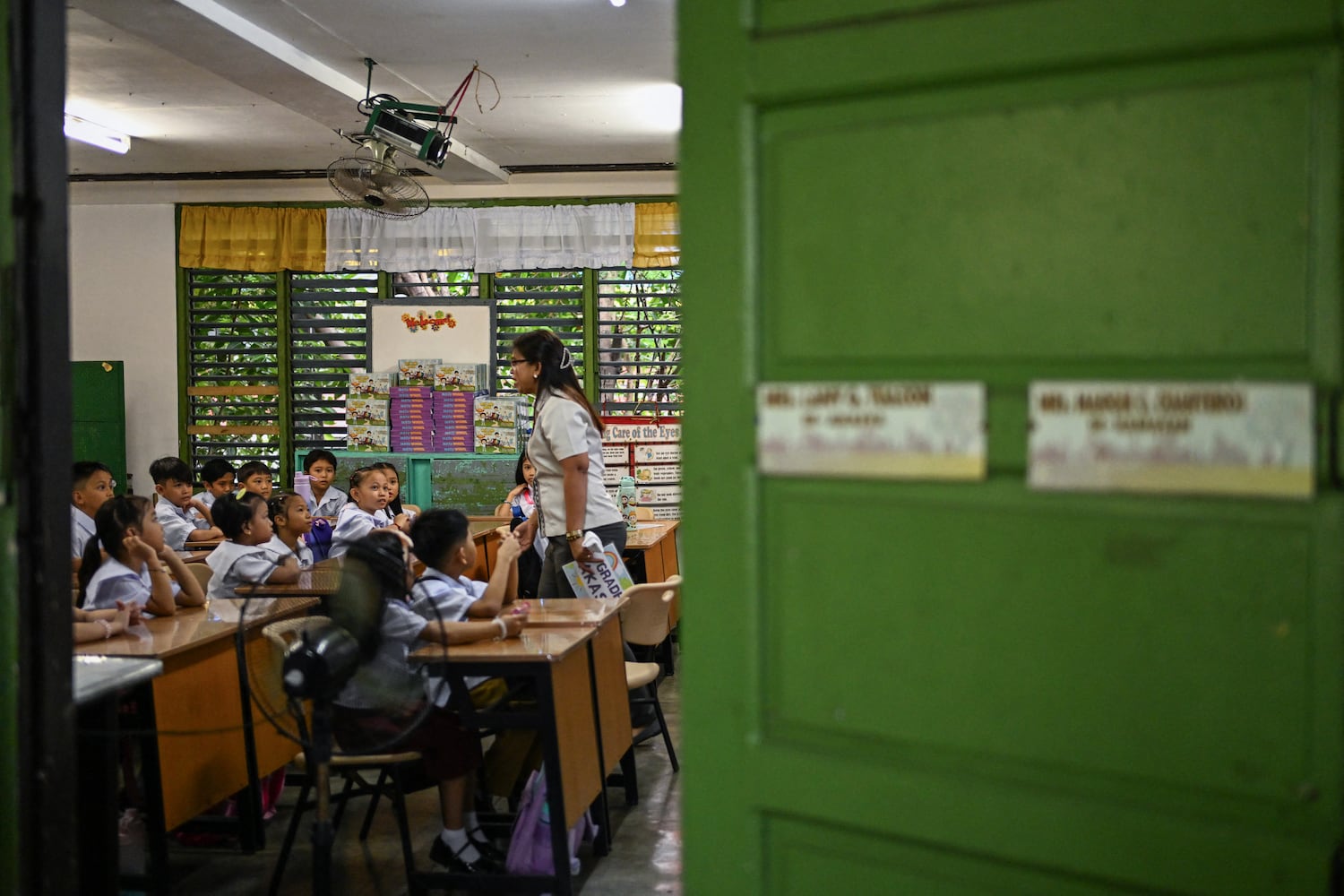
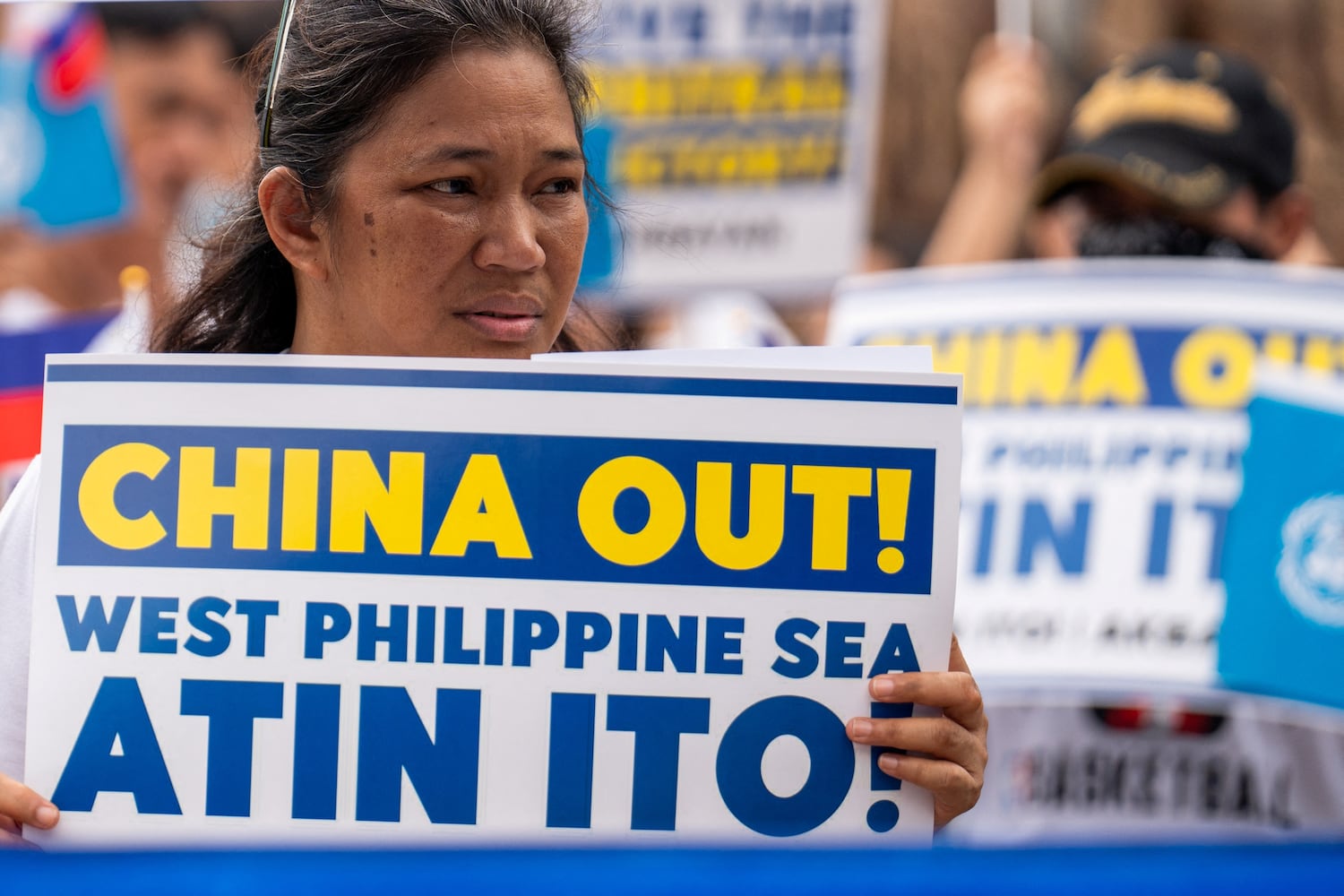
A bill that would integrate the Philippines’ South China Sea territorial claims into school curricula could further integrate the issue into national identity and strengthen public support, experts told Radio Free Asia. Philippine lawmakers this month filed a measure seeking to institutionalize education about what Manila calls the West Philippine Sea – the parts of the South China Sea that fall within its exclusive economic zone. The sea is a major flashpoint in regional geopolitics. China uses a nine-dash line drawn on the map to delineate the entirety of the sea as its own territory, but parts of it are also claimed by the Philippines, Vietnam, Brunei and Malaysia. The proposed West Philippine Sea Education Act would establish an education and awareness program covering basic and higher education. Lessons would use examples from international law to support Manila’s claims, including a section on the 2016 ruling by the Permanent Court of Arbitration in the Hague, which said that China’s nine-dash line had no legal basis. Popular support is critical for Manila to pursue its claims, Jason Ng Sze Chieh, a lecturer at INTI International College Subang in Malaysia, told RFA. The claims “must be grounded in tangible, convincing, and easily digestible arguments formed around reasonings … that excite the public imagination,” he said. “Once it catches the public’s imagination, it is very difficult to redirect or scrub it from the collective mind.” The overlapping claims of China and the Philippines in the South China Sea. (AFP) The proposal comes as Philippine authorities increasingly describe their confrontation with Beijing not only as a contest over ships and maritime access, but also over information and public perceptions. Lawmakers behind the House measure said students should be equipped against misinformation and propaganda about the country’s maritime rights. From public awareness to strategy If signed into law, the bill would formalize a campaign that has already been moving into Philippine schools and other youth-oriented spaces. The Department of Education’s regional offices have begun integrating West Philippine Sea topics into social studies curricula, while government agencies have held engagements with teachers and students. Earlier this year, Manila also expanded efforts to produce child-focused material about the disputed waters. In January 2025, Philippine agencies launched a 40-page comic book explaining maritime zones and international law. National Security Adviser Eduardo Año said it complemented government efforts to counter what Manila called distorted Chinese narratives, while the Chinese Embassy accused the Philippines of “political manipulation.” National Security Adviser Eduardo Año and Philippine Coast Guard Spokesperson for the South China Sea Jay Tarriela stand next to a giant copy of the book "The Stories of Teacher Jun" during its launch at the National Library of the Philippines in Manila, Jan. 24, 2025. (Lisa Marie David/Reuters) Ng said using education as soft power could reinforce the Philippines’ claim without resorting to confrontation with China. “It is the right move for the Philippines, which wishes to resolve this issue without resorting to violence,” he said. “Soft power, through education, can reinforce its claim and strengthen the government’s resolve to push back against China’s claim.” The approach also reflects how governments across the region have used historical narratives to sustain their respective South China Sea positions. In Vietnam, authorities have directed schools to include material asserting Vietnamese sovereignty over Hoàng Sa, the Paracel Islands, and Trường Sa, the Spratly Islands, island groups that are also claimed entirely by China and Taiwan and partly by the other South China Sea claimants. Chinese educational material has also presented disputed features through Beijing’s sovereignty narrative. A 2017 New Yorker report examined a primary-school Mandarin lesson about the Xisha Islands, China’s name for the Paracels, that described the islands as part of China without discussing Vietnam’s competing claim. Taiwan offers a different lesson Taiwan on paper continues to claim all territory previously claimed during the era when the Republic of China controlled the mainland, but Taipei’s post-1990s shift toward a more Taiwan-centered educational framework gradually weakened the domestic prominence of its older South China Sea claims. This offers a contrast to Manila’s current direction, Jozef Huljak, a Ph.D candidate in political science at Constantine the Philosopher University in Slovakia, whose research examines Taiwan’s cultural and public diplomacy, told RFA. Taiwanese fishermen display flags and placards before departing to Taiping island, part of the disputed Spratly Islands chain in the South China Sea, at a fishing harbour in southern Pingtung on July 20, 2016. (The office of Kuomintang lawmaker Johnny Chiang/AFP) “The lesson is not that education determines territorial attitudes on its own,” he said. “It is that education helps turn a legal claim into something the public understands as its own. Without that process, a claim can remain legally alive while becoming politically inert.” Taiwan continues to control Taiping Island, the largest naturally formed feature in the Spratlys, but the South China Sea has comparatively little prominence in contemporary Taiwanese politics, Huljak said. That experience also points to a potential cost for Manila. “Once a claim is taught to children as a matter of national dignity, future governments may find it harder to negotiate fishing arrangements, provisional agreements or other compromises without appearing to retreat from something the state itself taught as national territory,” Huljak said. For the Philippines, that may be precisely part of the appeal in the short term: ensuring that its South China Sea position survives changes of government and remains backed by voters long after the current confrontations at sea have passed. Teaching the dispute in classrooms may therefore do more than explain where the Philippines says its maritime rights begin and end, Ng said. It could help determine how politically negotiable those rights become for governments years from now. “Before a shot is fired, if one side wins the war of public perception, then the struggle is half won,” he said. Edited by Eugene Whong.

Download metadata bundle
18 Aug 2026, 01:40 GMT By Jason Gutierrez for RFA

Updated on Aug. 18, 2026 at 11:49 a.m. ET MANILA, Philippines – A U.S. plan to build a critical technology hub in the Philippines is a symbolic return to the site of one of its largest overseas former bases, experts in the country told Radio Free Asia. The hub will be part of the U.S.-led Pax Silica initiative, aimed at shoring up supply chains for semiconductors, AI and rare earth elements. It will be built in New Clark City, north of Manila, on land that was part of a U.S. military reservation complex that included Clark Air Base, until the Philippines voted to take control of it in 1991. Supporters of the plan tout its potential economic benefits – the project will create around 200,000 jobs and up to US$70 billion in investment – but critics say that the plan is cedes too much control to Washington, and could be potentially harmful to the environment. Either way, the historical significance of a major U.S. project on the grounds of the former base is not lost on observers. “I see the symbolic value of the U.S. returning to Clark,” Chester Cabalza, founder of the Manila-based think tank International Development and Security Cooperation, told RFA. “It centers on an historic reversal of geopolitical fortunes, transforming a symbol of post-Cold War retreat into a modern monument of the ironclad U.S.-Philippine alliance.” Passengers queue to enter the Diosdado Macapagal International airport, formerly Clark Air Base in Pampanga province north of Manila, March 26, 2008. Other parts of the former U.S. Air Base and the associated military reserve are today part of New Clark City, a planned community that will feature a new technology hub. (Romeo Ranoco/Reuters) The battlefield has evolved since the Cold War era, but just as Clark Air Base was a key cog in the U.S.’ Asian containment strategy of that era, the Pax Silica hub is intended to secure technology supply chains for Washington and its allies, even as China has launched its own global AI framework. Chinese President Xi Jinping in July launched the Shanghai-based World Artificial Intelligence Cooperation Organization, or WAICO, promoting a Beijing-led AI ecosystem and analysts say that Washington may soon ask countries to choose Pax Silica over Xi’s group. ‘Purely Practical’ Though analysts see a global tug of war between Beijing and Washington spilling over into the technology arena, Philippine President Ferdinand Marcos Jr., while addressing a forum of the Foreign Correspondents Association of the Philippines Friday said that the Philippines’ involvement in the plan is economic in nature and is “purely practical” rather than political. The Philippines has territorial disputes with China in the South China Sea, which Beijing claims in its entirety, but which Manila claims in part. Marcos acknowledged the dispute, but said the Philippines’ Pax Silica plans were more about fostering an economic partnership. “All of these…conflicting claims in the West Philippine Sea simply did not enter into that discussion,” he said, referring to the part of the sea that lies within Manila’s exclusive economic zone. “And so, the idea that we are somehow distancing ourselves from China is quite the contrary.” Philippines President Ferdinand Marcos Jr. addresses the Foreign Correspondents Association of the Philippines in Manila, Aug. 14, 2026. (Jason Gutierrez/RFA) Manila, he said, was open to investment opportunities from anyone interested “as long as it is to the mutual benefit of all parties involved” and will grab the opportunity “no matter where it comes from.” “As long as we are able to move the economy forward and to better the lives of our people, then that is something that we will certainly examine,” Marcos stressed. “And if it turns out that this is a beneficial agreement or arrangement, then certainly we will become part of it.” Though the tech hub will create jobs, it will facilitate the entry into the Philippines of U.S. military personnel and compromise its sovereignty, Teddy Casino, leader of the nationalist Bayan group that has been protesting Pax Silica, told RFA. “The promise of economic development under U.S. patronage is the same deception that U.S. imperialism has been peddling in the past 128 years of its colonial and neocolonial rule in the Philippines,” he said. “Under Pax Silica, Filipinos are once again being told the lie that surrendering greater economic and strategic space to the US is synonymous with development.” People march as they protest against Pax Silica, a U.S.-led initiative, in Manila on August 13, 2026. (Jam Sta Rosa/AFP) Raffy Tulfo of the Philippines Senate, who heads the committee on the environment has filed a resolution seeking to investigate the project to determine its economic, environmental, social, technological, and national security implications. Tulfo said there were many legitimate concerns about the project, despite its touted benefits. “While such investments may contribute significantly to economic growth, technology transfer, innovation, and job creation, they have likewise generated public concerns and policy questions,” he said in his resolution. Among the concerns raised in the resolution are land use and urban planning, water consumption, resource allocation, and environmental sustainability, as well as the project’s potential impact on the rights, welfare, cultural integrity, and ancestral domains of indigenous peoples and local communities. But the benefits outweigh the risks, Cabalza said. “This strategic investment, when wisely planned, will bring an influx of financing infrastructure and economic defense in the digital supply chain,” he said, But he acknowledged that the Philippines’ participation in Pax Silica could provoke China to retaliate with economic pressure. “For China, with the advent of the US-led AI investment through the Pax Silica, the more they will tighten their economic and security grip in the Philippines,” he said, pointing out that one of the measures Beijing may employ is restricting Philippine agricultural and raw materials exports. Defense vs. malign influence More than anything, the Washington-designed Pax Silica is seen as a defense against malign Chinese influence, Vincent Kyle Parada, a defense analyst at the De La Salle-College of Saint Benilde in Manila, told RFA. “Dealing with Chinese firms is simply too big of a risk for Manila. Beijing’s reach extends far,” he said. “That’s really why the US introduced Pax Silica to begin with. The distinction between economics and security is fast disintegrating, and Washington needs to secure its supply chains from any form of malign interference.” A Filipino manufacturing operator is reflected on an Automatic Mould machine at a Philippine-based semiconductor manufacturing plant in Manila Sept. 20, 2005. (Cheryl Ravelo/Reuters) The proposed Philippines Pax Silica hub is part of Washington’s “friend-shoring” strategy – transferring production to “friendly” countries in order to mitigate risks, he said. “Manila is Washington’s only treaty ally in Southeast Asia. It is not a part of the China-led WAICO and is, therefore, not as deeply embedded into China’s AI and semiconductor supply chain compared to its neighbors,” Parada said. “That makes it the perfect candidate for Pax Silica, while at the same time, benefitting Manila by providing Washington more skin in the game in its continued commitment to the US-Philippine alliance.” The Philippines participation is an expression of its own strategic autonomy, Arnaud Leveau, president of the Paris-based Asia Center, told RFA. He said that while the Philippines needed to diversify some of its dependencies, including in areas such as semiconductors, “it should not mean exchanging dependence on China for excessive dependence on another external partner.” “The central issue, in my view, is whether the Philippines can use this initiative to strengthen its own technological and industrial sovereignty rather than simply becoming a geographical platform within somebody else’s supply chain,” said Leveau, who also teaches at the Paris Dauphine University. But he warned that a complete technological or economic disengagement from China would be extremely difficult and probably undesirable. “China is not simply a geopolitical competitor. It is also one of the world’s major industrial and technological ecosystems,” Leveau stressed. “Chinese companies are increasingly important in AI, batteries, electric vehicles, telecommunications, renewable energy and advanced manufacturing.” Edited by Eugene Whong. Update adds comments from Casino and details about Senate resolution.

Download metadata bundle
11 Aug 2026, 02:45 GMT By Taejun Kang for RFA

Taiwan is trapped between sea rocks and a hard place: As the Philippines has filed documentation to strengthen its claims in the South China Sea, Taipei must balance asserting its own conflicting claims with building closer ties with Manila, especially as a potential ally against Chinese aggression, experts told Radio Free Asia. The Philippines on July 29 submitted its official nautical chart of Scarborough Shoal, a disputed feature in what Manila calls the West Philippine Sea – the section of the South China Sea that is within its exclusive economic zone – to the United Nations, to bolster its claim on the area, which is also claimed by China and Taiwan. Beijing immediately protested the filing, accusing Manila of infringing on Chinese sovereignty. Taiwan also opposed the move, but in a way that did not outright condemn the Philippines. It also repeated its call for Taiwan to be included in negotiations over South China Sea disputes. “The filing adds specificity to a Philippine position that was already well established,” Sylwia M. Gorska, a doctoral candidate in international relations at the University of Central Lancashire in the United Kingdom, told RFA. “For Taiwan, the consequence is not the loss of its claim, but a further deterioration in its relative ability to make that claim consequential.” The overlapping claims of China and the Philippines in the South China Sea. (AFP) The episode highlights an increasingly awkward tension for President Lai Ching-te’s government. That government considers itself to be the continuation of the Republic of China, or ROC, and thus continues to formally claim land it historically laid claim to, dating back to the era that it controlled the mainland, including Scarborough Shoal and other South China Sea features. Meanwhile, the Philippines has become an increasingly important security partner as both governments contend with pressure from Beijing. Official status Unlike Manila and Beijing, Taipei is excluded from the United Nations and has limited ability to advocate for its claims via the same international processes being used by other claimants. But Taiwan’s exclusion from the U.N. system does not invalidate its claim, Aadil Brar, a Taipei-based independent analyst and former visiting scholar at National Chengchi University, told RFA. “The real problem is procedural rather than substantive,” Brar told RFA. Taiwan can continue asserting sovereignty through Foreign Ministry statements and other diplomatic channels, he said, but cannot participate on equivalent terms in the international mechanisms through which Manila is formalizing its position. That disadvantage is compounded by Taiwan’s lack of a physical role around Scarborough. Gorska noted that China has exercised de facto control around the shoal since 2012 and sharply increased its Coast Guard presence there, while Philippine Coast Guard and fisheries vessels continue to challenge Chinese restrictions. An Oct. 12, 2025, photo distributed by the Philippine Coast Guard shows a China coast guard ship, right, deploying a water cannon at a Philippine Bureau of Fisheries vessel near Thitu Island in disputed waters of the South China Sea. (Philippine Coast Guard via AFP) “In practice, Scarborough is now contested primarily by China and the Philippines,” she said. “They are the states maintaining presence, generating the confrontations and forcing decisions about how far coercion can go before it carries wider diplomatic or alliance consequences.” “Taiwan remains a claimant, but it is largely absent from those day-to-day interactions and therefore has limited influence over the operational conditions around the shoal.” Strategic restraint Taiwan’s weak operational position gives Taipei little incentive to turn the Philippine filing into a serious bilateral dispute, analysts said. The Philippines’ northern islands sit close to Taiwan and the Luzon Strait, a key maritime passage that could become strategically important in any cross-Strait conflict. The Philippines is also a U.S. treaty ally and has expanded military cooperation with Washington. Gorska pointed to the deployment of the U.S. NMESIS anti-ship missile system in Batanes during this year’s Balikatan exercises as an example of the growing military relevance of the northern Philippines to Taiwan’s security environment. “A more forceful Taiwanese response would signal continued commitment to the ROC claim, but it would do little to improve Taipei’s position at Scarborough and could impose costs on a relationship that may matter far more in a cross-Strait crisis,” she said. It is for this reason that disputes between Manila and Taipei will likely be handled quietly, Enrico Cau, a Taipei-based independent security researcher, told RFA. “Under the current situation it is likely that most differences on disputes in the South China Sea between Taiwan and the Philippines will be ironed out through diplomatic channels and a carefully dosed media exposure, where disagreements are manifested with moderation,” Cau said. Philippine military servicemen take part in a counter-landing live fire exercise during the annual US-Philippines joint military "Balikatan" exercise in Rizal, Palawan, Philippines, April 28, 2025. (Jam Sta Rosa/AFP) He said actions by the Philippines and other regional governments were primarily aimed at countering China rather than challenging Taiwan, giving Taipei an additional reason to exercise restraint. Brar similarly said Taiwan’s response to Manila had been notably softer than the language it typically uses when responding to Chinese moves in disputed waters. “Taiwan is almost certainly going to downplay this dispute, and its actual response already shows that,” he said. Domestic politics In Taiwan, the restrained approach has become a hotly debated issue in the political arena. Chen I-hsin, Culture and Communications Committee Chair of the main opposition Kuomintang (KMT), accused the government of applying double standards, contrasting its muted reaction to the Philippine filing with its criticism last year of China’s establishment of a nature reserve at Scarborough Shoal. Chen urged the Foreign Ministry to negotiate with Manila to defend Taiwan’s sovereignty. The ruling Democratic Progressive Party (DPP) lawmaker Wu Szu-yao pushed back, saying Taiwan and the Philippines were both victims of Chinese aggression and arguing that the KMT should instead direct its criticism at Chinese leader Xi Jinping. The dispute reflects a broader divergence over how much political weight Taiwan should give to historic South China Sea claims from the era that the ROC controlled the mainland. Foreign Minister Lin Chia-lung acknowledged in July that Taiwan was not actively pressing its South China Sea claims, while maintaining that its formal sovereignty position had not changed. Gorska said that distinction was important. “The Lai administration appears to be reducing the political salience of the ROC’s traditional South China Sea claims rather than abandoning them,” she said. “The claims remain formally intact, but Taipei is no longer treating their public assertion as an objective in itself.” A rally opposing a scaled-down defense budget passed by the legislature in Taipei on May 23, 2026. (I-hwa Cheng/AFP) Taiwan continues to administer Taiping Island, the largest naturally occurring feature in the Spratly Islands, and has reaffirmed its South China Sea claims when challenged. But analysts said Taipei appears increasingly selective about which claims warrant sustained political attention. Cau said there were signs within the DPP of a more pragmatic approach that placed greater emphasis on international law and on territory Taiwan could realistically control and defend. It remained unclear, he said, whether Lai’s softer approach represented a genuine move away from traditional ROC claims or simply an attempt to navigate an increasingly complex regional security environment. For Taipei, that ambiguity may itself be useful, according to analysts. Taiwan can preserve its formal sovereignty position without allowing a remote shoal it does not control to disrupt a relationship with Manila that is becoming more consequential to its security. But the Philippine filing also points to a longer-term risk for Taiwan – if regional governments increasingly formalize maritime claims through U.N. filings or eventually reach agreements governing behavior in the South China Sea, Taiwan could find rules affecting its interests being shaped without its participation, Cau said. Edited by Eugene Whong.

Download metadata bundle
22 Jul 2026, 20:38 GMT By Taejun Kang for RFA

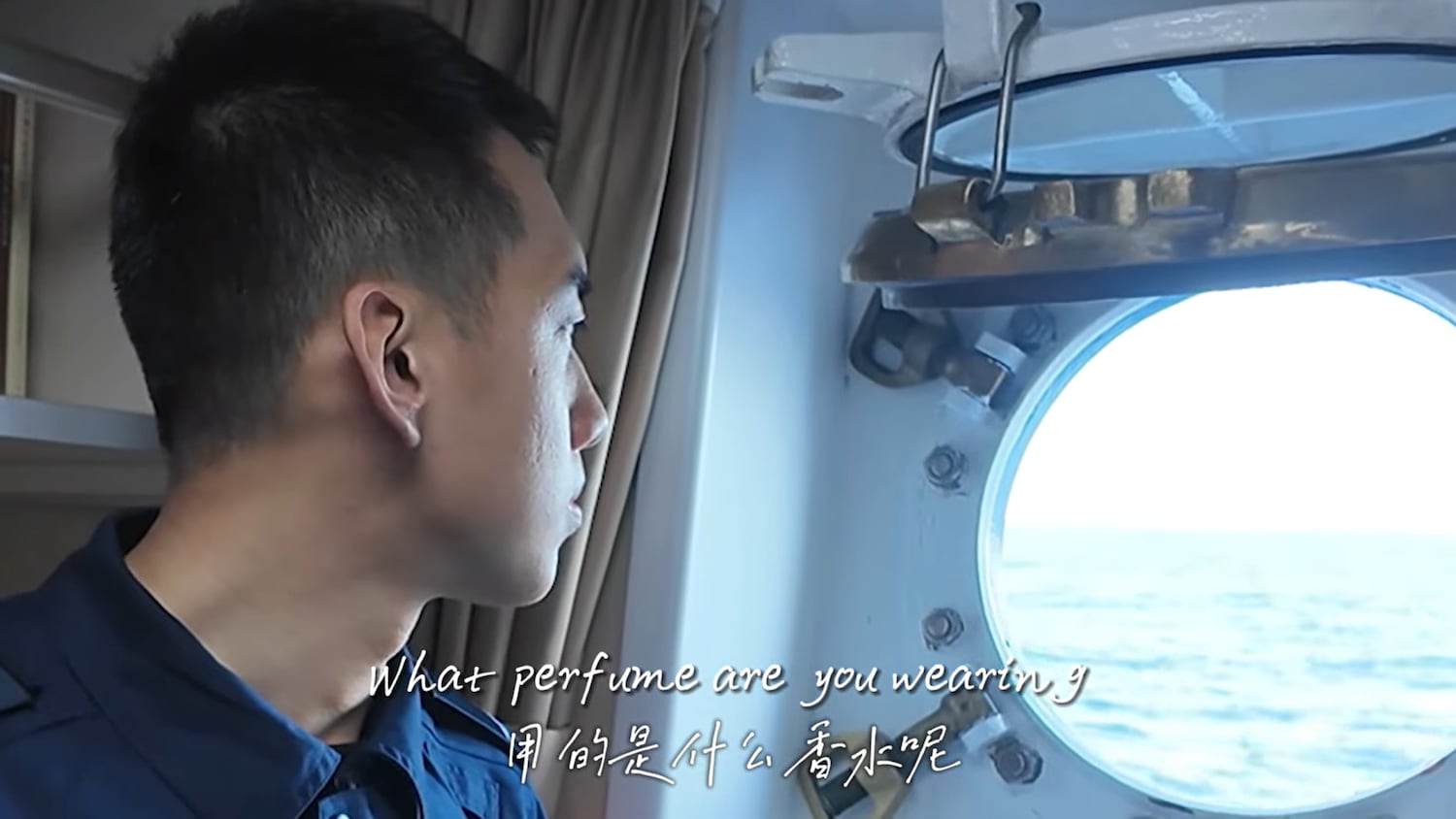
UPDATED on July 22, 2026 at 10:16 p.m. ET The video opens with an aerial shot of a lone China Coast Guard ship at sea on a calm day, as soft, whimsical music carries us into China’s latest propaganda song. “Azure sky, crystal sea, chasing gulls, blazing sun, patrolling the South China Sea, guarding endless loneliness, endless vastness, and guarding this sea, this peace and harmony.” The lyrics of the first verse introduce the setting – this is a song about an enlisted member of the coast guard stationed on the disputed sea, thinking longingly about someone he loves back home. In later verses, he asks her what color the clouds are where she is, what perfume she’s wearing, and if she’s drinking coffee or tea, because he’d like a taste too. The song, “I Miss You on the South China Sea,” is Beijing’s latest attempt to use popular culture to shape international perceptions of one of Asia’s most contentious maritime disputes, analysts told Radio Free Asia. Analysts say a new South China Sea pop song is propaganda (RFA Video) The English version of the music video was released this month by Chinese state media to coincide with the 10th anniversary of the 2016 international arbitral tribunal ruling that rejected the legal basis of Beijing’s sweeping claims over most of the disputed waters. A Mandarin version debuted about six months earlier during the Lantern Festival, a Chinese cultural event that marks the end of Lunar New Year celebrations and the coming of spring. Though the English version is seemingly intended to appeal to an international audience, the analysts questioned whether this campaign is likely to resonate beyond viewers and listeners already sympathetic to China. “China’s state media spends little time actually thinking about how the message will be received elsewhere,” Ed Moon, an independent cross-Strait analyst and founder of intelligence site Strait Signal, told RFA. “Its major focus is on ensuring that the overall message correctly aligns with the official narrative.” At one point, the singer uses a quantum physics term romantically, telling his beloved that he would cross time and space to prove with her “what quantum entanglement is.” But despite the apparent awkwardness of the English lyrics, the song attempts to portray China Coast Guard personnel as ordinary people with very real feelings of longing for home and those they love, while their duties have called them far away to the remoteness of the open sea. Controlling the narrative The video reflects a broader effort by Beijing to complement official statements with emotionally driven storytelling, as China increasingly seeks to communicate its positions through documentaries, influencers, short videos and other forms of popular media. “China wants to project its presence in the South China Sea as peaceful, benign and wholly normal. The focus on the human aspect of the coast guard crew members fits this pattern,” Moon said, adding that Beijing’s state media is primarily concerned with ensuring content aligns with the Communist Party’s official narrative rather than persuading foreign audiences. A China Coast Guard ship monitors a Philippine fisherman aboard his wooden boat in the disputed South China Sea, May 16, 2024. (Ted Aljibe/AFP) Within China’s political system, he said, Beijing’s sovereignty claims are treated as historically and factually self-evident, leaving little perceived need to explain them to overseas audiences. Instead, Moon said, China has increasingly outsourced the task of “explaining” the country to foreign employees working within its media system and to overseas influencers who produce favorable content about China. As a result, English-language state media has become less important than maintaining consistency with Beijing’s messaging. He also noted a growing emphasis on producing content in both Chinese and English, describing it as evidence of tighter coordination across state media outlets and a renewed focus on overseas Chinese communities, which Beijing increasingly sees as receptive audiences. An image from the "I Miss You on the South China Sea" music video produced by the Chinese government. (China Military Bugle via YouTube) The song represents an effort to use culture as a political tool while softening the image of the China Coast Guard, Jason Ng Sze Chieh, a lecturer at INTI International College Subang in Malaysia, told RFA. “An attempt to instrumentalize culture and popular media, asserting China’s authority to patrol and ‘protect’ the South China Sea,” Ng said. “The music video is the other track: a targeted production built specifically to sell a peaceful image of China.” Defending Beijing’s interests Ng said the song consciously rebrands the China Coast Guard as “a benign force rather than ‘Wolf Warrior,’” using themes of intimacy and personal sacrifice while leaving the underlying political message unchanged. “The message underneath doesn’t change – China is defending its interests, and nothing else,” he said. Ng contrasted the music video with what he described as another strand of Beijing’s influence strategy – embracing successful cultural works that were not originally created by the state but later align with its messaging. A Chinese Coast Guard ship fires a water cannon at Unaizah May 4, a Philippine Navy-chartered vessel, conducting a resupply mission to troops stationed at Second Thomas Shoal, on March 5, 2024 in the South China Sea. (Ezra Acayan/Getty Images) He said Beijing increasingly pursues “two tracks,” continuing to produce explicitly patriotic material while also co-opting independently produced content that promotes a favorable image of China, particularly among overseas Chinese communities. “The music video feels like artificial intelligence-generated slop, rendered in the soothing style of Chinese pop and designed to sell the world on China’s ‘peaceful’ intentions,” Ng said, adding that the production’s visuals and even the singer’s voice appeared artificial. China has increasingly sought to present its coast guard as a professional force maintaining order in what it considers its own waters, even as confrontations with Philippine and Vietnamese vessels have intensified in recent years. Beijing says its actions are lawful and necessary to safeguard its sovereignty, while rival claimants accuse it of intimidation and coercion. The 2016 ruling by an international tribunal in The Hague found that China’s expansive “nine-dash line” claims had no legal basis under international law. China rejected the ruling and continues to assert sovereignty over most of the South China Sea, where competing claims by the Philippines, Vietnam, Malaysia, Brunei and Taiwan have made the waterway one of the region’s most volatile flashpoints. Edited by Eugene Whong. Update specifies that the Mandarin version preceded the English version by roughly six months.

Download metadata bundle
14 Jul 2026, 18:23 GMT By Taejun Kang for RFA

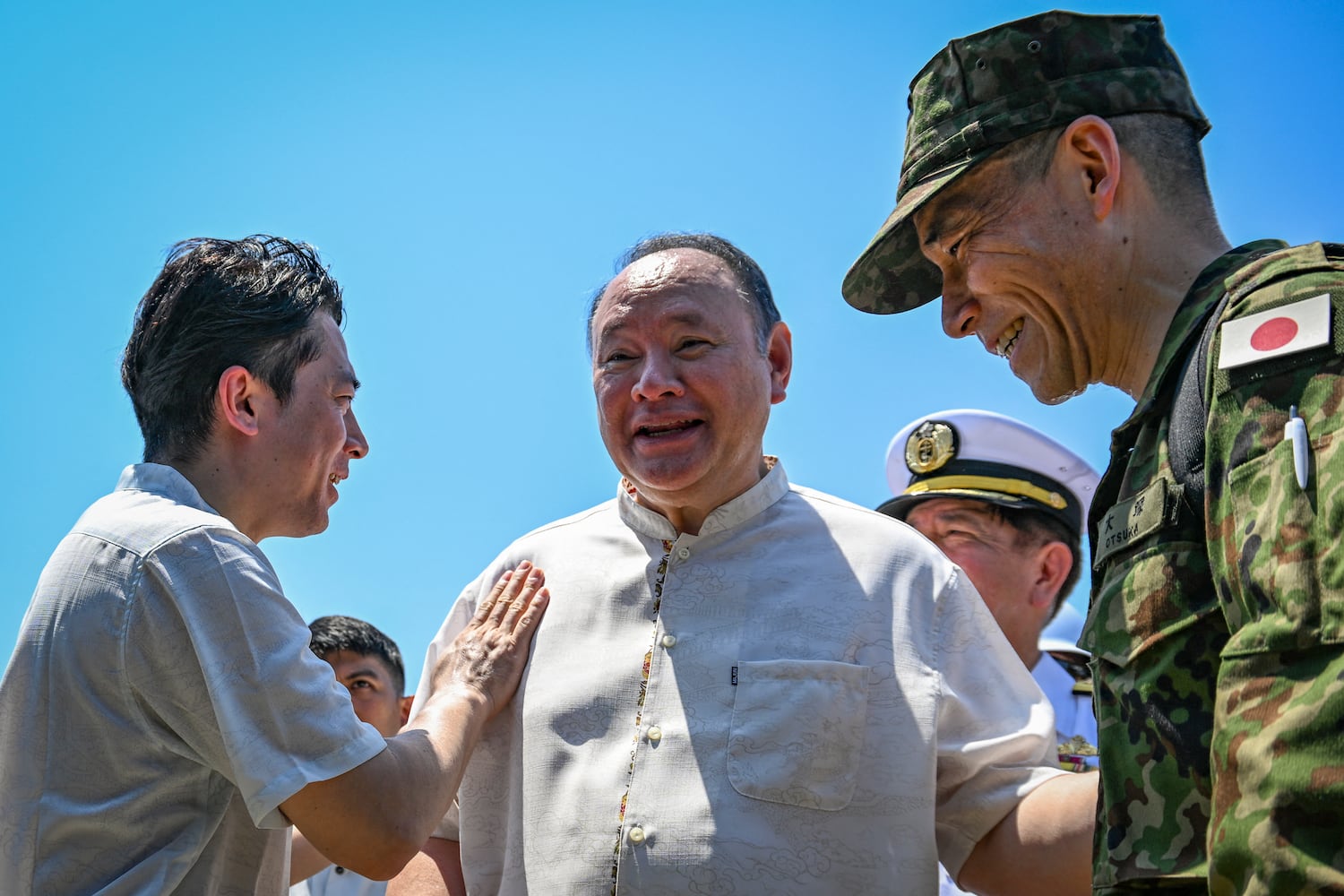
China’s sanctions on a senior Philippine official – and statements that classify him as an apologist for Japan’s wartime aggression – are attempts to drum up historical fears as Manila and Tokyo deepen security ties, analysts told Radio Free Asia. The sanctions on the Philippines’ Defense Secretary Gilberto Teodoro Jr. came last month, when China’s Foreign Ministry accused him of repeatedly making “irresponsible remarks” about China, damaging Chinese interests and undermining bilateral relations, all for comments critical of China’s claims in the sea and aggressive activity there. Japan's Defense Minister Shinjiro Koizumi, left, and the Philippines' Defense Secretary Gilberto Teodoro Jr., after their meeting in Manila, May 5, 2026. (Mark Cristino/AFP) The impact of the sanctions – which forbid Teodoro and his family from entering China and prevent any individuals or organizations from doing business with them – appears limited. Teodoro has indicated he has no intention of traveling to China, raising questions about what Beijing hopes to achieve. But the analysts say that Beijing’s campaign against Teodoro attempts to use the memory of World War II to cast Japan as an aggressor in the Pacific in the modern day – in order to distract from the illegality of Beijing’s claims over the entirety of the South China Sea. “A purely South China Sea argument is difficult terrain for China,” Aniello Iannone, a lecturer in Indonesian and Southeast Asian politics at Diponegoro University in Indonesia, told RFA. Iannone explained that Manila’s claim to its own exclusive economic zone has legal bases under the United Nations Convention on the Law of the Sea, or UNCLOS, a 2016 decision at the Permanent Court of Arbitration that said China’s claim to the whole sea was invalid, and several other legal mechanisms. “Bringing Japan into the picture changes the terms of the dispute,” he said. “It shifts attention away from Chinese conduct at sea and towards a broader political question: what kind of security order are Manila, Tokyo and Washington building in the region?” The case against Teodoro Zhang Junshe of the People’s Liberation Army Naval Military Academic Research Institute offered an unusually detailed case against Teodoro in comments to nationalist-leaning Chinese news and commentary site Guancha. Zhang accused Teodoro not only of “manipulating” and “internationalizing” the South China Sea dispute, but of hyping the “China threat” while “whitewashing Japan’s new militarism,” referring to recent policy shifts in Tokyo that have led to increases in military spending, more active roles in cooperating with allies to counter regional threats, and significant debates over potential changes to pacifist clauses in Japan’s constitution. Zhang juxtaposed these shifts against Japan’s occupation of the Philippines during World War II, going as far as describing Teodoro’s position as “recognizing a thief as one’s father.” Members of the Living History Society, acting as Japanese soldiers, re-enact a scene of the "Battle of the Pockets" between allied and Japanese forces during World War II, at Camp Aguinaldo in Manila on March 25, 2017. (Ted Aljibe/AFP) The Philippines endured a brutal Japanese occupation between 1942 and 1945, a history Beijing regularly invokes in its criticism of Tokyo’s expanding security role. Zhang said Japan was using the Philippines as a “springboard” and “stepping stone” to loosen the constraints of the constitution, expand overseas military deployments and increase its regional military influence. History as a weapon Iannone said China’s use of Japan’s history in the Teodoro case should be understood as political rather than simply commemorative. “Beijing is not just asking Filipinos to remember the Japanese occupation,” he said. “It is using that history to question the legitimacy of Japan’s return as a security actor in Southeast Asia.” Iannone said that China is alarmed by the Philippines’ willingness to work closely with Japan on security matters. “The underlying suggestion is that Japan’s military normalization is not historically neutral, and that Manila is helping rehabilitate a former aggressor by deepening security cooperation with Tokyo.” As part of their closer cooperation, Manila and Tokyo are not only agreeing to cooperate in strategic areas of the South China Sea, they are moving towards talks on the boundaries of their respective EEZs in waters where Taiwan has overlapping claims, Iannone said. The overlapping claims of China and the Philippines in the South China Sea. (AFP) China considers Taiwan as a rogue province, but an integral part of its own territory, so negotiations on boundaries between Japan and the Philippines in these waters without Chinese input would be seen as an affront to the legitimacy of Taiwan’s – and therefore China’s – claims. “From Beijing’s perspective, these are not isolated developments,” Iannone said. “They can be read as parts of a strategic network linking the Philippines, Japan and the United States along China’s maritime periphery.” That creates a complication for Manila, which has sought to defend its South China Sea claims through international law while maintaining its one-China policy and avoiding open involvement in a cross-strait confrontation. “China has an interest in weakening that distinction,” Iannone said. “Once Philippine cooperation with Japan is portrayed as part of a Taiwan-related security architecture, even ordinary maritime cooperation can be recast as participation in a wider containment strategy.” A symbolic target The Philippine government has strongly backed Teodoro in light of the sanctions on him – the Department of Foreign Affairs called the sanctions an “unfriendly act” that would further complicate bilateral relations, while the Philippine military described them as political intimidation and said Teodoro’s statements were grounded in international law. Teodoro said he would continue carrying out his duties and defending the Philippines against what he called China’s “wickedness,” including at sea. China has not specified which of Teodoro’s comments it considered irresponsible, Enrico Cau, a Taipei-based independent security researcher, told RFA. Teodoro’s position, however, has received “strong backing by the Philippines’ political and security establishment.” The support suggests “at least a substantial share of the country’s political and security stakeholders, as well as a vast share of the population likely support such a position,” he said. Philippines' Defense Secretary Gilberto Teodoro Jr., speaks during a bilateral meeting with Japan's Defense Minister Shinjiro Koizumi in Manila, May 5, 2026. (Mark Cristino/AFP) Iannone described the sanctions as “performative coercion” whose direct impact was limited but which sought to shape wider regional calculations. “Teodoro is the immediate target, but the message is aimed at several audiences,” he said. “For Teodoro and the Philippine political class, the message is that China is prepared to personalize diplomatic conflict and impose costs on officials who speak bluntly about Chinese coercion or advocate closer security cooperation with Japan and the United States.” Punishing Teodoro is therefore not the objective, Iannone said. “The aim may not be to make Teodoro change his position,” he said. “It may be to make others think twice before adopting the same tone.” Cau noted that China overusing sanctions to try to silence its critics – especially in ways that have limited effect – carries a risk of undermining the threat of future sanctions. Iannone, meanwhile, said that the sanctions on Teodoro may in fact have the opposite of their intended effect. “In the Philippines, where distrust of China is already substantial, the sanction can reinforce his image as someone prepared to defend Philippine sovereignty,” he said. Edited by Eugene Whong.

Download metadata bundle
11 Jul 2026, 14:57 GMT By Jason Gutierrez for RFA

Updated July 12, 2026 at 12:16 a.m. ET. MANILA, Philippines – As the Philippines marks the 10 th anniversary of an arbitration ruling it won against China in the disputed South China Sea this weekend, analysts told Radio Free Asia that Manila should counter Beijing’s continued aggression in the disputed area through diplomatic means, while Philippine military officials called for deterrence with the help of allies. The 2016 ruling at the Permanent Court of Arbitration in the Hague established that China’s Nine Dash Line – which encircles the South China Sea to claim it as Chinese territory – has no basis in international law. Manila celebrates the anniversary of the ruling on July 12 each year, calling it “West Philippine Sea Victory Day,” after what it calls the region of the sea that lies within its exclusive economic zone, or EEZ. “The Department of National Defense joins the Filipino community in celebrating the 10th Anniversary of the 2016 Arbitral Award, a landmark ruling that affirmed the Philippines’ rights and entitlements in its Exclusive Economic Zone,” Defense Secretary Gilberto Teodoro said in a statement Saturday. The overlapping claims of China and the Philippines in the South China Sea. (AFP) China continues to reject the outcome of the ruling, and has spent the last 10 years stepping up its island-building activities in the mineral-rich sea region. It actively controls areas within the Philippines’ EEZ including Scarborough Shoal. But it has no answer to the ruling, Rafaela David, co-convenor of the civilian-led Atin Ito Coalition, a group that advocates for Philippine sovereignty, told RFA. “Missiles cannot substitute for legal arguments, and military intimidation cannot rewrite international law,” she said, alluding to China’s test of a submarine-launched ballistic missile earlier this week. “No act of coercion can erase this historic victory. We will continue to stand firm, defend the West Philippine Sea, and safeguard the rights and future of generations of Filipinos.” Though the ongoing dispute has seen heated moments – such as China firing water cannons and pointing potentially blinding laser guns at Filipino forces – the Philippines should continue to employ peaceful methods to sway public opinion to its cause, Francis Rico Domingo, a political analyst at the state-run University of the Philippines, told RFA. “The Philippines needs to continue pushing back against China using diplomatic means,” he said. “This involves filing diplomatic protests as often as possible and exposing China’s illegal activities to the public and the United Nations.” Expanded deterrence The court’s ruling in 2016 cements the Philippines’ legal foundation in the perennially disputed sea, Military chief General Romeo Brawner Jr. said Friday at a forum that gathered security experts in Manila, but he argued that more collaboration with “like-minded forces” led by the U.S. in deterrence efforts. To that end, he called for improvement in Manila’s deterrence capabilities. He said that while advanced military equipment is needed there must be “national resolve to stand firm in defense of what is rightfully” Philippine territory. Philippine military chief Gen. Romeo Brawner speaks at military headquarters in Manila, Oct. 3, 2025. (Ted Aljibe/AFP) “Our objective has never been to provoke conflict,” he told the forum. “Our objective is to prevent conflict by making it clear that the Philippines has both the resolve and the capability to protect its sovereign rights in accordance with international law.” Brawner said the security environment in the disputed area continues to evolve. “We continue to face illegal, coercive, aggressive and deceptive tactics,” Brawner said, adding that these activities “seek to alter the status quo while remaining below the threshold of armed conflict.” A Su-30 fighter jet from China’s Southern Theater Command is seen flying over Scarborough Shoal in the South China Sea on Dec. 29, 2024. (Southern Theater Command) Brawner said that the Philippine military’s “assertive transparency” strategy – thoroughly documenting Chinese aggressive actions and provocations and revealing them to the world – must continue. “Through our policy of assertive transparency, we document unlawful incidents, verify the facts and make them known to the Filipino people and to the international community,” he said. “We do this not to escalate tensions. We do it because truth matters. Transparency strengthens accountability. It reinforces the rules based on international order and it denies those who employ coercive actions the ability to shape the narrative through deception.” Shift in Focus Though the military may be equipped for deterrence in the disputed sea, the public might not be used to it in this role, Domingo said. Two years ago the Philippine military shifted from its role as an internal force meant to quell insurgencies and keep the peace domestically to the Comprehensive Archipelagic Defense Concept, or CADC, focused on defense from external threats and protecting territorial sovereignty. The concept “has been frequently mentioned, but the public is not aware of what the strategy is and how it really works,” Domingo said. Because China rejects the arbitration ruling, Manila must “permanently engage other countries to strengthen its capacity to defend itself from external aggression.” But Domingo said that the Philippines also needed to engage Beijing diplomatically, and had to publicly acknowledge that every tension must be deescalated. For the CADC to be effective, the Philippines must review outdated military and defense concepts “to add the importance of protecting our sovereign rights, territorial integrity and sovereignty,” Teodoro said at the forum on Friday. A Dec. 4, 2024 photo shows a China Coast Guard ship, right, deploying a water cannon at the Philippine Bureau of Fisheries and Aquatic Resources vessel BRP Datu Pagbuaya near Scarborough Shoal in disputed waters of the South China Sea. (National Task Force for the West Philippine Sea via AFP) Teodoro said adjustments in the posture are under review because currently the Philippines’ is still focused on “land-based, post-invasion defense” that was still a product of post-World War II strategy. He called for a bump on the country’s defense budget, and noted that even Indonesia, which has a separate territorial dispute with China, looks to increase its defense spending to acquire new hardware. “I would like to see a visible economic dividend from the West Philippine Sea that we all worked for, if unilaterally or in convergence with those who have truly helped us,” he said. Popular support In Teodoro’s Saturday statement, he noted that 86% of Filipinos were in support of Manila working with other countries to defend its territorial sovereignty. “We will seek not only to increase public knowledge of the West Philippine Sea, but also to ensure that this knowledge strengthens our national resolve and resilience,” he said, vowing to “resist and combat” any attempts to deny the country its rights in its EEZ, “For these are not only ours to protect, but also those of future generations of Filipinos.” The 10th anniversary of the landmark 2016 court ruling comes weeks after scholars affiliated with the Chinese government said at an academic symposium that the Philippines does not have legal sovereignty over the Batanes, a group of islands that lie north of the Philippines’ largest island of Luzon which have been administered continuously by the Philippines or its predecessor states since the 18th century. The academics argued that the Batanes are “a natural geographical extension of Taiwan,” which China considers a renegade province. Edited by Eugene Whong. Update adds comments from Rafaela David.

Download metadata bundle
3 Jul 2026, 02:00 GMT By Taejun Kang for RFA

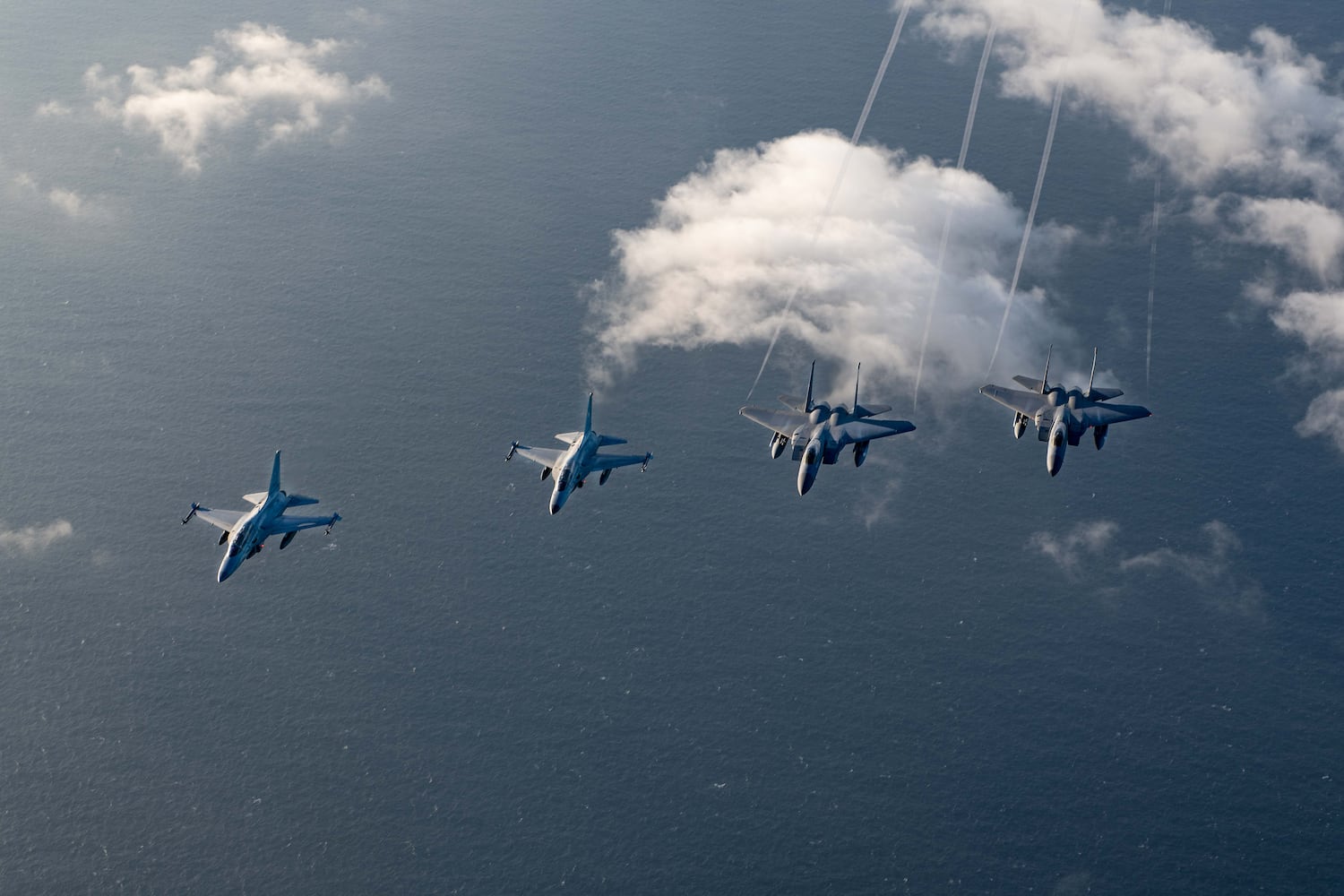
China remains focused on the United States as its chief geopolitical rival, even though a recent Chinese report on military activity in the South China Sea highlighted the growing role of Washington’s allies in the region, experts told Radio Free Asia. The report, published by the China-based South China Sea Strategic Situation Probing Initiative, or SCSPI, found that U.S. military activity in the South China Sea remained extensive in 2025, despite signs of operational strain due to Washington’s increased activity in the Middle East. Although the SCSPI is not government-led, it is widely viewed by analysts as broadly reflecting Beijing’s strategic outlook, and the report indicated increased Japanese and Philippine deployment to the South China Sea. “China increasingly views Japan and the Philippines’ efforts to deepen defense cooperation … as attempts by both countries to challenge China’s core interests and cross a red line,” William Yang, a Northeast Asia analyst at the Belgium-based International Crisis Group, told RFA. Japan participated in 71 U.S.-led exercises in and around the South China Sea last year – the highest number among U.S. partners – followed by the Philippines with 32, and Yang said the focus on Tokyo and Manila shows that Beijing considers Washington’s allies more formidable than in the past. A member of the Philippine Navy looks out at the Japan Maritime Self-Defense Force's destroyer Takanami during a joint maritime exercise in the South China Sea on June 14, 2025. (Jiji Press/AFP) “They see both countries’ assertive approach toward maritime disputes with China as a threat to its maritime interests and sovereignty claims and believe it is necessary to start increasing pressure on both countries,” Yang said. He added that Chinese officials have been “increasingly criticizing Japan and the Philippines for provoking regional instability by engaging on the Taiwan issue” and “have taken steps to increase economic and grey zone coercion against both countries in recent months.” Washington distracted? Despite the increased attention to Washington’s allies in the report, Beijing’s largest concern is still U.S. activities in the sea, Yang said. “However, in light of the U.S.-China detente under Trump and Washington’s continuous entanglement in the Middle East, Beijing thinks it needs to seize this window of opportunity to increase pressure on particular U.S. allies in the region amid Washington’s distraction,” he said. The SCSPI report concluded that indeed growth in some U.S. strategic platforms had slowed – It recorded nine U.S. carrier strike group deployments into the South China Sea in 2025, up slightly from eight the previous year, but said the overall intensity of carrier operations had declined because of extended deployments in the Middle East, maintenance demands, and operational accidents involving several carriers. Philippine marines take position next to U.S. amphibious assault vehicles during an amphibious landing exercise at the beach of the Philippine navy training center facing the South China Sea in San Antonio, Zambales province, Philippines on Oct. 6, 2018. (Ted Aljibe/AFP) Analysts say the more significant issue for China is not the number of U.S. carriers entering the South China Sea, but how allied networks are making American military presence more persistent. “The report focuses on Japan and the Philippines because they are two of the most important allied pressure points on China’s maritime perimeter, but they create different military problems for Beijing,” Sylwia M. Gorska, a Ph.D candidate in international relations at the University of Lancashire in the United Kingdom, told RFA. Multilateral containment? She said that the Philippines represents China’s “forward-access problem, pointing to its proximity to the disputed Scarborough Shoal and Spratly Islands, the Luzon Strait, the Bashi Channel and Taiwan’s southern approaches. “From Beijing’s perspective, the Philippines is no longer only a South China Sea claimant,” she said, “It is becoming a practical access and surveillance platform.” She said Manila’s increased surveillance capabilities would be useful for intelligence, surveillance and reconnaissance flights, or ISR; maritime-domain awareness; joint patrols, logistics; missile-capable deployments; and crisis response along the southern First Island Chain, the arc of islands running from Japan through Taiwan and the Philippines to Borneo, forming a key maritime boundary around China’s near seas. A map of the first and second Pacific island chains. (AFP) Japan, meanwhile, presents “the depth-and-integration problem,” she said. “It does not need to be a South China Sea claimant to affect the military balance there,” said Gorska, adding that Tokyo’s surveillance capabilities, anti-submarine warfare, logistics, missile defense and interoperability with U.S. forces link the South China Sea with Taiwan, the East China Sea and the wider western Pacific. But Gorska cautioned against interpreting the report as evidence that Beijing now sees Japan and the Philippines as greater threats than the United States, saying it “should not be read as a move from a U.S.-centric threat perception to an ally-centric one.” American “backbone” Any resistance to China’s projections of power in the region would still be led by Washington, Gorska said, adding that the U.S. would provide “the operational backbone of any serious regional contingency: command-and-control, ISR, undersea warfare, long-range strike, strategic mobility and extended deterrence.” Gorska said that China’s sharper focus reflects concerns that allied cooperation is turning periodic U.S. deployments into a more enduring military posture. “The issue is not a shift from ‘U.S. threat’ to ‘ally threat’. It is China’s sharper focus on how allied geography and interoperability compress the time available to localize a crisis before U.S.-aligned forces can sense, reinforce and act.” Yang said that Beijing’s long-term strategic assessment remains largely unchanged. “I don’t think there is a major strategic shift in Beijing,” he said. “Their threat assessment remains largely the same, which is to prevent U.S. containment of China’s capability to project its power across the region and into the Pacific.” But the report indicates that Beijing cannot ignore Washington’s allies and the opportunities presented by U.S. military activity in the Middle East. China “does see the need and an opening to sharpen its approach and increase pressure on Japan and the Philippines at a time when U.S. attention and resource allocation to Asia is undermined and distorted.” Edited by Eugene Whong.

Download metadata bundle